

sociable weaver vs bico-de-lacre
Philetairus socius versus Estrilda astrild
Jogue um quiz com sociable weaver e bico-de-lacre
 sociable weaver
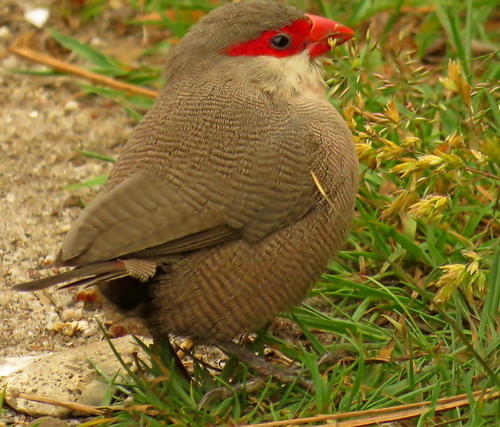 bico-de-lacre
Em resumo
A marca de campo mais confiável para separar o sociable weaver do bico-de-lacre é a ousada mancha preta no queixo e na garganta do sociable weaver, que nunca está presente no bico-de-lacre. Em contraste, o bico-de-lacre exibe um bico vermelho brilhante e uma faixa vermelha ao redor do olho, características ausentes no sociable weaver. Os bicos-de-lacre juvenis têm um bico preto e pouco ou nenhum vermelho na barriga, o que pode causar confusão, mas as costas escamosas e os flancos listrados do sociable weaver permanecem distintos. O tamanho também é uma pista forte: o sociable weaver é muito mais robusto e pesado do que o esbelto e delicado bico-de-lacre. Ambas as espécies podem ser vistas no sul da África, mas seus habitats preferidos e comportamentos sociais diferem marcadamente.
Dicas de identificação
- Mancha preta no queixo/garganta (apenas sociable weaver): Procure uma ousada mancha preta no queixo e na garganta—presente em todas as idades e sexos do sociable weaver, nunca no bico-de-lacre.
- Bico vermelho e faixa ocular (apenas bico-de-lacre): Os bicos-de-lacre adultos mostram um bico vermelho brilhante e uma faixa vermelha ao redor do olho. Os sociable weavers sempre têm um bico escuro e cônico e não apresentam vermelho no rosto.
- Costas escamosas e flancos listrados (sociable weaver): As costas do sociable weaver são escamosas (penas com bordas claras) e os flancos são listrados de preto—essas marcas estão ausentes no bico-de-lacre.
- Forma geral do corpo: O sociable weaver é robusto e robusto, com um pescoço grosso e uma construção pesada. O bico-de-lacre é esbelto, com uma estrutura fina e delicada e uma cauda mais longa e graduada.
- Confusão juvenil: Os bicos-de-lacre juvenis têm um bico preto e plumagem mais apagada, mas ainda carecem do queixo preto e das costas escamosas do sociable weaver. Se você ver um pássaro pequeno e simples com um bico preto e sem garganta preta, considere o bico-de-lacre juvenil.
- Forma da cauda: A cauda do sociable weaver é relativamente curta e com ponta quadrada, enquanto a do bico-de-lacre é mais longa e mais graduada.
- Tamanho em bandos mistos: Se ambas as espécies estiverem presentes, o sociable weaver parecerá muito maior e mais pesado—quase três vezes a massa de um bico-de-lacre.
- Contraste da plumagem: A plumagem do sociable weaver é mais padronizada e contrastante, com áreas pretas e claras. O bico-de-lacre é mais sutilmente listrado e tingido de vermelho ou rosa, especialmente na barriga e no rosto.
- Comportamento social: Grandes grupos barulhentos ao redor de enormes ninhos comunitários apontam para o sociable weaver. Bandos pequenos e soltos se alimentando silenciosamente de sementes de grama são mais típicos do bico-de-lacre.
- Contexto do habitat: Os sociable weavers estão quase sempre perto de seus enormes ninhos em savanas áridas; os bicos-de-lacre preferem áreas gramadas ou úmidas e são mais propensos a serem encontrados em parques urbanos ou perto da água.
- Estilo de voo: O bico-de-lacre tem um voo leve e flutuante; o voo do sociable weaver é mais pesado e direto.
- Forma do bico: O bico do sociable weaver é mais grosso e mais cônico, adequado para quebrar sementes; o do bico-de-lacre é mais fino e delicado.
- Sem vermelho no sociable weaver: Qualquer vermelho no bico ou no rosto elimina o sociable weaver.
- Sem garganta preta no bico-de-lacre: Qualquer mancha preta no queixo ou na garganta elimina o bico-de-lacre, independentemente da idade.
- Vocalizações: Se ouvido, os chamados agudos e trinado do bico-de-lacre e a canção nasal são distintos, mas a voz é menos confiável para o sociable weaver devido à falta de descrição nas notas.
Tamanho
O sociable weaver é substancialmente maior e mais pesado, com uma média de 27 g em comparação com os 8,2 g do bico-de-lacre. Em comprimento, o sociable weaver atinge cerca de 14 cm, enquanto o bico-de-lacre é menor, medindo de 9,5 a 13 cm. O sociable weaver é mais robusto, com uma construção mais robusta, enquanto o bico-de-lacre é esbelto e leve. O comprimento da cauda também é maior no sociable weaver (42–48 mm), e a impressão geral em campo é de um pássaro muito mais robusto para o sociable weaver em comparação com o delicado e de bico fino bico-de-lacre.
Plumagem
-
Juvenis: Os bicos-de-lacre juvenis não têm o bico vermelho e a faixa na barriga dos adultos, apresentando um bico preto e plumagem mais apagada, menos listrada, com pouco ou nenhum vermelho—potencialmente confuso, mas ainda carecem do queixo preto e da mancha na garganta do sociable weaver e das costas escamosas. Os juvenis do sociable weaver não são descritos como diferindo marcadamente dos adultos, então o queixo preto e os flancos listrados permanecem confiáveis.
-
Adultos: O sociable weaver tem um queixo e garganta pretos diagnósticos, flancos listrados de preto e uma costa escamosa (pena com bordas claras). Os adultos do bico-de-lacre são principalmente cinza-marrom com finas listras escuras, um bico vermelho brilhante, uma faixa ocular vermelha e frequentemente uma faixa na barriga avermelhada (variável por subespécie). O sociable weaver nunca mostra vermelho no bico ou no rosto, e o bico-de-lacre nunca mostra uma garganta ou queixo pretos. A plumagem do sociable weaver é mais padronizada e contrastante, enquanto o bico-de-lacre é mais sutilmente listrado e tingido de vermelho.
-
Padrão de voo/asa: Nenhuma marca distintiva de padrão de asa superior ou de voo é notada para qualquer uma das espécies que as separaria em voo por idade.
Comportamento
Os sociable weavers são altamente sociais e famosos por seus enormes ninhos comunitários, frequentemente vistos em grandes grupos barulhentos. Eles são tipicamente observados se agarrando ou forrageando perto desses ninhos, dando uma impressão de agitação. Os bicos-de-lacre também são sociais, geralmente vistos em pequenos bandos, mas não constroem ninhos comunitários. Seus movimentos são mais delicados e menos frenéticos, frequentemente se alimentando silenciosamente de sementes de grama. Em voo, os bicos-de-lacre parecem leves e flutuantes, enquanto os sociable weavers são mais pesados e diretos.
Habitat
Os sociable weavers são endêmicos de savanas áridas e florestas secas no sul da África, especialmente no Cabo do Norte, e estão intimamente associados a grandes ninhos comunitários em árvores ou em estruturas feitas pelo homem. Os bicos-de-lacre são encontrados em uma gama mais ampla de habitats abertos, incluindo campos, áreas úmidas e parques urbanos, e têm uma faixa muito mais ampla (frequentemente introduzida). No sul da África, os bicos-de-lacre são mais propensos a serem encontrados perto da água ou de áreas gramadas, enquanto os sociable weavers estão ligados a países mais secos e abertos e suas distintas colônias de ninhos.
Voz
O bico-de-lacre tem uma variedade de chamados trinado e zumbidos, além de um chamado de voo distintivo e agudo e uma canção nasal simples e áspera. As vocalizações do sociable weaver não são descritas nas notas fornecidas, então a voz é menos confiável para separação com base nas informações atuais.