

bentevizinho-de-asa-ferrugínea vs suiriri
Myiozetetes cayanensis versus Tyrannus melancholicus
Jogue um quiz com bentevizinho-de-asa-ferrugínea e suiriri
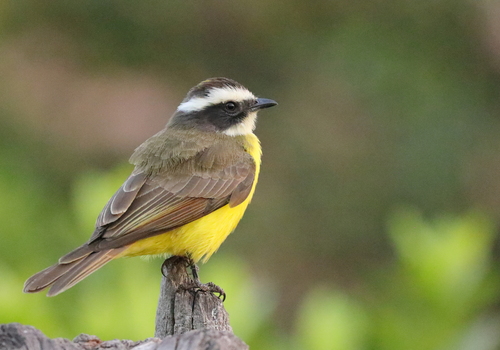 bentevizinho-de-asa-ferrugínea
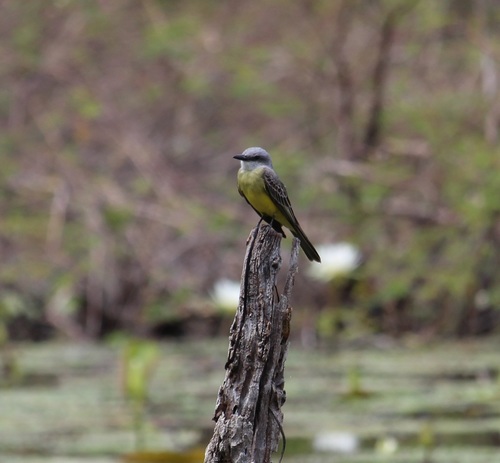 suiriri
Em resumo
A marca de campo mais confiável para separar o bentevizinho-de-asa-ferrugínea do suiriri é a presença de bordas ferrugíneas ou canela óbvias nas penas das asas do bentevizinho-de-asa-ferrugínea, especialmente em juvenis e algumas subespécies, em comparação com as asas marrons simples com apenas bordas buff pálidas nas coberturas das asas do jovem suiriri. O bentevizinho-de-asa-ferrugínea é menor e mais compacto, com um bico mais curto e grosso e uma cauda menos profundamente bifurcada. Em aves empoleiradas, note o forte supercílios brancos e o rosto mais escuro e contrastante do bentevizinho-de-asa-ferrugínea, em comparação com a cabeça cinza mais clara e a máscara menos distinta do suiriri. Ambas as espécies têm partes inferiores amarelas brilhantes, mas o suiriri é visivelmente maior e com cauda mais longa. Fique atento a essas diferenças tanto em voo quanto quando empoleiradas, pois a confusão é comum, especialmente com aves imaturas.
Dicas de identificação
- Bordas de asas ferrugíneas ou canela (bentevizinho-de-asa-ferrugínea): Procure por bordas óbvias ferrugíneas ou canela-rufas nas penas das asas, especialmente em juvenis e algumas subespécies. Isso está ausente no suiriri, que tem apenas bordas buff pálidas nas coberturas das asas em aves jovens.
- Cor e bordas da cauda: O bentevizinho-de-asa-ferrugínea pode mostrar bordas de oliva ou canela claras nas penas da cauda, especialmente em juvenis e certas subespécies; a cauda do suiriri é marron simples e mais profundamente bifurcada.
- Padrão da cabeça: O bentevizinho-de-asa-ferrugínea tem um forte supercílios brancos que se estende bem além do olho e uma coroa e rosto marrons escuros a preto, com uma mancha de coroa amarela/laranja quase oculta. O suiriri tem uma cabeça cinza clara, uma máscara ocular sutil mais escura e uma faixa de coroa laranja menos óbvia.
- Formato do bico: O bentevizinho-de-asa-ferrugínea tem um bico curto e grosso; o bico do suiriri é mais pesado, mais longo e cinza.
- Partes inferiores: Ambas têm barrigas amarelas brilhantes, mas o bentevizinho-de-asa-ferrugínea tem um queixo e garganta brancos, enquanto a garganta do suiriri é cinza clara, gradualmente se tornando oliva no peito.
- Cor das costas: O bentevizinho-de-asa-ferrugínea é marron simples a marron-oliva acima; o suiriri é verde-acinzentado.
- Tamanho e estrutura: O suiriri é maior, com cauda mais longa e mais esguio, com uma postura mais alongada. O bentevizinho-de-asa-ferrugínea é menor e mais compacto.
- Formato da cauda: A cauda do suiriri é mais profundamente bifurcada, especialmente óbvia em voo ou quando aberta; a cauda do bentevizinho-de-asa-ferrugínea é menos profundamente entalhada.
- Comportamento de empoleiramento: O suiriri frequentemente se empoleira mais alto e de forma mais conspícua, enquanto o bentevizinho-de-asa-ferrugínea pode estar mais baixo e menos ousado.
- Estilo de voo: O suiriri faz ataques mais longos e acrobáticos; o bentevizinho-de-asa-ferrugínea é mais rápido e direto.
- Confusão juvenil: Se você ver uma ave com extensas bordas ferrugíneas ou canela nas asas e cauda, especialmente em uma ave menor e compacta, prefira o bentevizinho-de-asa-ferrugínea. Se as asas forem marrons simples com apenas bordas buff pálidas nas coberturas, e a ave for grande e esguia, provavelmente é um jovem suiriri.
- Supercílios: O supercílios branco do bentevizinho-de-asa-ferrugínea é muito mais forte e mais extenso do que as marcas faciais sutis do suiriri.
- Mancha da coroa: A mancha de coroa amarela/laranja geralmente está oculta em ambas, mas se visível, a do bentevizinho-de-asa-ferrugínea é mais brilhante e central; a do suiriri é menos óbvia.
- Voz: Se você ouvir o trinado característico, é o suiriri; a voz do bentevizinho-de-asa-ferrugínea não é descrita aqui.
- Sobreposição de habitat: Ambas as espécies podem ocorrer juntas em áreas abertas com árvores, então confie em marcas estruturais e de plumagem em vez de habitat apenas.
Tamanho
O suiriri é claramente maior, com uma média de 22 cm de comprimento e cerca de 37–39 g de massa, com uma envergadura de 38–41 cm. O bentevizinho-de-asa-ferrugínea é menor, medindo 16,5–18 cm e 22–29,5 g. A diferença é frequentemente óbvia quando vistas lado a lado: o suiriri parece mais esguio, com uma cauda mais longa e bico mais pesado, enquanto o bentevizinho-de-asa-ferrugínea é mais compacto e com bico curto.
Plumagem
Juvenis e imaturos bentevizinhos-de-asa-ferrugínea mostram bordas extensas ferrugíneas-canela nas penas das asas e da cauda, que são mais óbvias em voo ou quando empoleiradas com as asas dobradas. Essa borda ferrugínea está presente, mas menos pronunciada em adultos, e varia por subespécie: algumas têm rufos muito proeminentes nas asas e cauda. O suiriri, em contraste, tem asas e cauda marrons com apenas bordas buff pálidas nas coberturas das asas em juvenis, sem tons ferrugíneos ou rufos. Em adultos, a cabeça do bentevizinho-de-asa-ferrugínea é marrom escuro a preto com um forte supercílios branco e uma mancha de coroa amarela ou laranja quase oculta; o rosto é contrastantemente escuro. O suiriri tem uma cabeça cinza clara, uma máscara ocular sutil mais escura e uma faixa de coroa laranja menos óbvia. As partes inferiores são amarelas brilhantes em ambas, mas o bentevizinho-de-asa-ferrugínea tem um queixo e garganta brancos, enquanto a garganta do suiriri é cinza clara, misturando-se com oliva no peito. As costas do bentevizinho-de-asa-ferrugínea são marrons simples a marron-oliva; as costas do suiriri são verde-acinzentadas.
Comportamento
Ambas as espécies são conspícuas, frequentemente empoleirando-se em locais abertos. O suiriri normalmente escolhe poleiros mais altos e proeminentes e faz ataques mais longos e acrobáticos para insetos, às vezes pairando. O bentevizinho-de-asa-ferrugínea também é ativo, mas tende a ser menos ousado, frequentemente empoleirando-se mais baixo e aparecendo mais compacto na postura. Ambas as espécies atacam insetos, mas o tamanho maior e a cauda mais longa do suiriri lhe conferem um estilo de voo mais lânguido e amplo, enquanto o bentevizinho-de-asa-ferrugínea é mais rápido e direto.
Habitat
Ambas as espécies utilizam habitats abertos ou semi-abertos com árvores dispersas, incluindo jardins e beiras de estrada. O bentevizinho-de-asa-ferrugínea é amplamente distribuído no Panamá e na maior parte da América do Sul (exceto Chile e Uruguai), enquanto o suiriri se estende do sul dos EUA até a América Central e do Sul, até a Argentina central. Onde ambas ocorrem, podem compartilhar habitats semelhantes, mas o suiriri é frequentemente encontrado mais alto na copa das árvores ou em áreas mais abertas.
Voz
O suiriri tem um trinado característico agudo, tree-e-e-e-e-e-e, com machos cantando uma versão mais complexa ao amanhecer. Nenhuma descrição vocal é fornecida para o bentevizinho-de-asa-ferrugínea nestas notas, portanto, a voz não é um separador confiável com base nessas informações.
bentevizinho-de-asa-ferrugínea · suiriri · Minhas aves difíceis