

Motmot

キバラヒタキモドキ 対 オリーブタイランチョウ

Myiozetetes cayanensis 対 Tyrannus melancholicus

キバラヒタキモドキとオリーブタイランチョウのクイズ
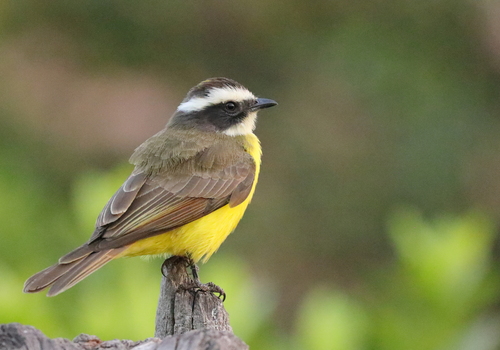
キバラヒタキモドキ (Myiozetetes cayanensis) キバラヒタキモドキ
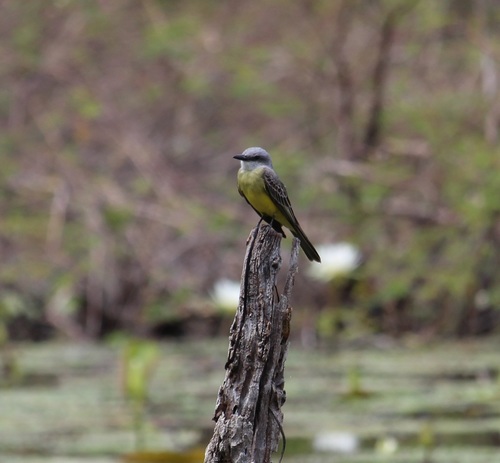
オリーブタイランチョウ (Tyrannus melancholicus) オリーブタイランチョウ

メディア

読み込み中…

要点

The most reliable field mark to separate Rusty-margined Flycatcher from Tropical Kingbird is the presence of obvious rusty or cinnamon edges on the wing feathers of Rusty-margined Flycatcher, especially in juveniles and some subspecies, versus the plain brown wings with only pale buff edges on the wing coverts in young Tropical Kingbird. Rusty-margined Flycatcher is smaller and more compact, with a shorter, stubbier bill and a less deeply forked tail. In perched birds, note the strong white supercilium and darker, more contrasting face of Rusty-margined Flycatcher, compared to the paler gray head and less distinct mask of Tropical Kingbird. Both species have bright yellow underparts, but Tropical Kingbird is noticeably larger and longer-tailed. Watch for these differences both in flight and when perched, as confusion is common, especially with immature birds.

識別のコツ

  1. Rusty or cinnamon wing edges (Rusty-margined Flycatcher): Look for obvious rusty or cinnamon-rufous edging on the wing feathers, especially in juveniles and some subspecies. This is absent in Tropical Kingbird, which has only pale buff edges on the wing coverts in young birds.
  2. Tail color and edging: Rusty-margined Flycatcher may show light olive or cinnamon edges on the tail feathers, especially in juveniles and certain subspecies; Tropical Kingbird's tail is plain brown and more deeply forked.
  3. Head pattern: Rusty-margined Flycatcher has a strong white supercilium extending well past the eye and a dark sooty brown to blackish brown crown and face, with a mostly hidden yellow/orange crown patch. Tropical Kingbird has a pale gray head, a subtle darker eye mask, and a less obvious orange crown stripe.
  4. Bill shape: Rusty-margined Flycatcher has a stubby, short black bill; Tropical Kingbird's bill is heavier, longer, and gray.
  5. Underparts: Both have bright yellow bellies, but Rusty-margined Flycatcher has a white chin and throat, while Tropical Kingbird's throat is pale gray, grading to olive on the breast.
  6. Back color: Rusty-margined Flycatcher is plain brown to olive-brown above; Tropical Kingbird is grayish-green.
  7. Size and structure: Tropical Kingbird is larger, longer-tailed, and lankier, with a more elongated posture. Rusty-margined Flycatcher is smaller and more compact.
  8. Tail shape: Tropical Kingbird's tail is more deeply forked, especially obvious in flight or when fanned; Rusty-margined Flycatcher's tail is less deeply notched.
  9. Perching behavior: Tropical Kingbird often perches higher and more conspicuously, while Rusty-margined Flycatcher may be lower and less bold.
  10. Flight style: Tropical Kingbird makes longer, more acrobatic sallies; Rusty-margined Flycatcher is quicker and more direct.
  11. Juvenile confusion: If you see a bird with extensive rusty or cinnamon on the wings and tail, especially in a smaller, compact bird, favor Rusty-margined Flycatcher. If the wings are plain brown with only pale buff edges on the coverts, and the bird is large and lanky, it's likely a young Tropical Kingbird.
  12. Supercilium: The white supercilium of Rusty-margined Flycatcher is much stronger and more extended than the subtle facial markings of Tropical Kingbird.
  13. Crown patch: The yellow/orange crown patch is usually hidden in both, but if visible, Rusty-margined Flycatcher's is brighter and more central; Tropical Kingbird's is less obvious.
  14. Voice: If you hear the distinctive twittering trill, it's Tropical Kingbird; Rusty-margined Flycatcher's voice is not described here.
  15. Habitat overlap: Both species can occur together in open areas with trees, so rely on structural and plumage marks rather than habitat alone.

大きさ

Tropical Kingbird is distinctly larger, averaging 22 cm in length and about 37–39 g in mass, with a wingspan of 38–41 cm. Rusty-margined Flycatcher is smaller at 16.5–18 cm and 22–29.5 g. The difference is often obvious when seen side-by-side: Tropical Kingbird appears lankier, with a longer tail and heavier bill, while Rusty-margined Flycatcher is more compact and stubby-billed.

羽色

Juvenile and immature Rusty-margined Flycatchers show extensive rusty-cinnamon edging on the wing and tail feathers, which is most obvious in flight or when perched with wings folded. This rusty edging is present but less bold in adults, and varies by subspecies: some have very prominent rufous on the wings and tail. Tropical Kingbird, by contrast, has brown wings and tail with only pale buff edges on the wing coverts in juveniles, lacking any rusty or rufous tones. In adults, the head of Rusty-margined Flycatcher is dark sooty brown to blackish brown with a strong white supercilium and a mostly hidden yellow or orange crown patch; the face is contrastingly dark. Tropical Kingbird has a pale gray head, a subtle darker eye mask, and a less obvious orange crown stripe. Underparts are bright yellow in both, but Rusty-margined Flycatcher has a white chin and throat, while Tropical Kingbird's throat is pale gray blending into olive on the breast. The back of Rusty-margined Flycatcher is plain brown to olive-brown; Tropical Kingbird's back is grayish-green.

行動

Both species are conspicuous, often perching in the open. Tropical Kingbird typically selects higher, more prominent perches and makes longer, more acrobatic sallies for insects, sometimes hovering. Rusty-margined Flycatcher is also active but tends to be less bold, often perching lower and appearing more compact in posture. Both species sally for insects, but the kingbird's larger size and longer tail give it a more languid, sweeping flight style, while the flycatcher is quicker and more direct.

生息環境

Both species use open or semi-open habitats with scattered trees, including gardens and roadsides. Rusty-margined Flycatcher is widespread in Panama and most of South America (except Chile and Uruguay), while Tropical Kingbird ranges from the southern US through Central and South America as far as central Argentina. Where both occur, they may share similar habitats, but Tropical Kingbird is often found higher in the canopy or in more open country.

声

Tropical Kingbird has a distinctive high-pitched twittering trill, tree-e-e-e-e-e-e, with males singing a more complex version at dawn. No vocal description is provided for Rusty-margined Flycatcher in these notes, so voice is not a reliable separator based on this information.

より良い説明を送る

比較と同じ項目を使ってください。文章はすぐに公開されます。

The most reliable field mark to separate Rusty-margined Flycatcher from Tropical Kingbird is the presence of obvious rusty or cinnamon edges on the wing feathers of Rusty-margined Flycatcher, especially in juveniles and some subspecies, versus the plain brown wings with only pale buff edges on the wing coverts in young Tropical Kingbird. Rusty-margined Flycatcher is smaller and more compact, with a shorter, stubbier bill and a less deeply forked tail. In perched birds, note the strong white supercilium and darker, more contrasting face of Rusty-margined Flycatcher, compared to the paler gray head and less distinct mask of Tropical Kingbird. Both species have bright yellow underparts, but Tropical Kingbird is noticeably larger and longer-tailed. Watch for these differences both in flight and when perched, as confusion is common, especially with immature birds.

  1. Rusty or cinnamon wing edges (Rusty-margined Flycatcher): Look for obvious rusty or cinnamon-rufous edging on the wing feathers, especially in juveniles and some subspecies. This is absent in Tropical Kingbird, which has only pale buff edges on the wing coverts in young birds.
  2. Tail color and edging: Rusty-margined Flycatcher may show light olive or cinnamon edges on the tail feathers, especially in juveniles and certain subspecies; Tropical Kingbird's tail is plain brown and more deeply forked.
  3. Head pattern: Rusty-margined Flycatcher has a strong white supercilium extending well past the eye and a dark sooty brown to blackish brown crown and face, with a mostly hidden yellow/orange crown patch. Tropical Kingbird has a pale gray head, a subtle darker eye mask, and a less obvious orange crown stripe.
  4. Bill shape: Rusty-margined Flycatcher has a stubby, short black bill; Tropical Kingbird's bill is heavier, longer, and gray.
  5. Underparts: Both have bright yellow bellies, but Rusty-margined Flycatcher has a white chin and throat, while Tropical Kingbird's throat is pale gray, grading to olive on the breast.
  6. Back color: Rusty-margined Flycatcher is plain brown to olive-brown above; Tropical Kingbird is grayish-green.
  7. Size and structure: Tropical Kingbird is larger, longer-tailed, and lankier, with a more elongated posture. Rusty-margined Flycatcher is smaller and more compact.
  8. Tail shape: Tropical Kingbird's tail is more deeply forked, especially obvious in flight or when fanned; Rusty-margined Flycatcher's tail is less deeply notched.
  9. Perching behavior: Tropical Kingbird often perches higher and more conspicuously, while Rusty-margined Flycatcher may be lower and less bold.
  10. Flight style: Tropical Kingbird makes longer, more acrobatic sallies; Rusty-margined Flycatcher is quicker and more direct.
  11. Juvenile confusion: If you see a bird with extensive rusty or cinnamon on the wings and tail, especially in a smaller, compact bird, favor Rusty-margined Flycatcher. If the wings are plain brown with only pale buff edges on the coverts, and the bird is large and lanky, it's likely a young Tropical Kingbird.
  12. Supercilium: The white supercilium of Rusty-margined Flycatcher is much stronger and more extended than the subtle facial markings of Tropical Kingbird.
  13. Crown patch: The yellow/orange crown patch is usually hidden in both, but if visible, Rusty-margined Flycatcher's is brighter and more central; Tropical Kingbird's is less obvious.
  14. Voice: If you hear the distinctive twittering trill, it's Tropical Kingbird; Rusty-margined Flycatcher's voice is not described here.
  15. Habitat overlap: Both species can occur together in open areas with trees, so rely on structural and plumage marks rather than habitat alone.

Tropical Kingbird is distinctly larger, averaging 22 cm in length and about 37–39 g in mass, with a wingspan of 38–41 cm. Rusty-margined Flycatcher is smaller at 16.5–18 cm and 22–29.5 g. The difference is often obvious when seen side-by-side: Tropical Kingbird appears lankier, with a longer tail and heavier bill, while Rusty-margined Flycatcher is more compact and stubby-billed.

Juvenile and immature Rusty-margined Flycatchers show extensive rusty-cinnamon edging on the wing and tail feathers, which is most obvious in flight or when perched with wings folded. This rusty edging is present but less bold in adults, and varies by subspecies: some have very prominent rufous on the wings and tail. Tropical Kingbird, by contrast, has brown wings and tail with only pale buff edges on the wing coverts in juveniles, lacking any rusty or rufous tones. In adults, the head of Rusty-margined Flycatcher is dark sooty brown to blackish brown with a strong white supercilium and a mostly hidden yellow or orange crown patch; the face is contrastingly dark. Tropical Kingbird has a pale gray head, a subtle darker eye mask, and a less obvious orange crown stripe. Underparts are bright yellow in both, but Rusty-margined Flycatcher has a white chin and throat, while Tropical Kingbird's throat is pale gray blending into olive on the breast. The back of Rusty-margined Flycatcher is plain brown to olive-brown; Tropical Kingbird's back is grayish-green.

Both species are conspicuous, often perching in the open. Tropical Kingbird typically selects higher, more prominent perches and makes longer, more acrobatic sallies for insects, sometimes hovering. Rusty-margined Flycatcher is also active but tends to be less bold, often perching lower and appearing more compact in posture. Both species sally for insects, but the kingbird's larger size and longer tail give it a more languid, sweeping flight style, while the flycatcher is quicker and more direct.

Both species use open or semi-open habitats with scattered trees, including gardens and roadsides. Rusty-margined Flycatcher is widespread in Panama and most of South America (except Chile and Uruguay), while Tropical Kingbird ranges from the southern US through Central and South America as far as central Argentina. Where both occur, they may share similar habitats, but Tropical Kingbird is often found higher in the canopy or in more open country.

Tropical Kingbird has a distinctive high-pitched twittering trill, tree-e-e-e-e-e-e, with males singing a more complex version at dawn. No vocal description is provided for Rusty-margined Flycatcher in these notes, so voice is not a reliable separator based on this information.

変更を破棄しますか?

保存していない編集があります。今離れると失われます。

キバラヒタキモドキ · オリーブタイランチョウ · 苦手な鳥