

Rusty-margined Flycatcher vs Tropical Kingbird
Myiozetetes cayanensis contro Tyrannus melancholicus
Fai un quiz con Rusty-margined Flycatcher e Tropical Kingbird
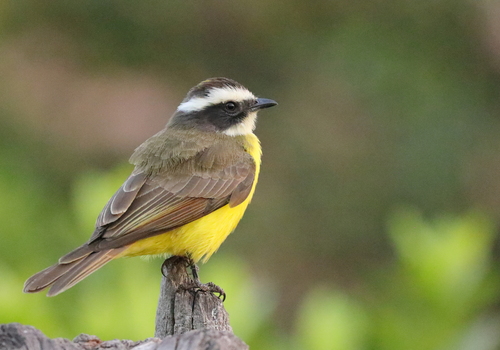 Rusty-margined Flycatcher
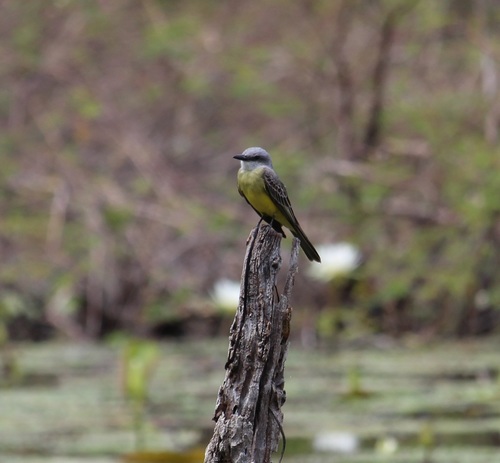 Tropical Kingbird
In breve
Il segno distintivo più affidabile per separare il Rusty-margined Flycatcher dal Tropical Kingbird è la presenza di evidenti bordi rugginosi o cannella sulle penne alari del Rusty-margined Flycatcher, specialmente nei giovani e in alcune sottospecie, rispetto alle ali marroni uniformi con solo bordi color crema sulle copritrici alari nei giovani Tropical Kingbird. Il Rusty-margined Flycatcher è più piccolo e compatto, con un becco più corto e tozzo e una coda meno profondamente biforcuta. Negli uccelli in posa, nota il forte sopracciglio bianco e il volto più scuro e contrastante del Rusty-margined Flycatcher, rispetto alla testa grigia più chiara e alla maschera meno distinta del Tropical Kingbird. Entrambe le specie hanno parti inferiori di un giallo brillante, ma il Tropical Kingbird è notevolmente più grande e con una coda più lunga. Fai attenzione a queste differenze sia in volo che quando sono in posa, poiché la confusione è comune, specialmente con gli uccelli immaturi.
Consigli di identificazione
- Bordi alari rugginosi o di cannella (Rusty-margined Flycatcher): Cerca evidenti bordi rugginosi o cannella sulle penne alari, specialmente nei giovani e in alcune sottospecie. Questo è assente nel Tropical Kingbird, che ha solo bordi color crema sulle copritrici alari nei giovani uccelli.
- Colore e bordi della coda: Il Rusty-margined Flycatcher può mostrare bordi di oliva chiaro o cannella sulle penne della coda, specialmente nei giovani e in alcune sottospecie; la coda del Tropical Kingbird è marrone uniforme e più profondamente biforcuta.
- Schema della testa: Il Rusty-margined Flycatcher ha un forte sopracciglio bianco che si estende ben oltre l'occhio e una corona e un volto di un marrone scuro fuligginoso a bruno nerastro, con una macchia coronale gialla/arancione per lo più nascosta. Il Tropical Kingbird ha una testa grigia chiara, una maschera oculare più scura e una striscia coronale arancione meno evidente.
- Forma del becco: Il Rusty-margined Flycatcher ha un becco tozzo e corto di colore nero; il becco del Tropical Kingbird è più pesante, più lungo e grigio.
- Parti inferiori: Entrambi hanno pance di un giallo brillante, ma il Rusty-margined Flycatcher ha un mento e una gola bianchi, mentre la gola del Tropical Kingbird è grigia chiara, che sfuma in oliva sul petto.
- Colore della schiena: Il Rusty-margined Flycatcher è marrone uniforme a marrone oliva sopra; il Tropical Kingbird è verde-grigiastro.
- Dimensioni e struttura: Il Tropical Kingbird è più grande, con una coda più lunga e un corpo più snello, con una postura più allungata. Il Rusty-margined Flycatcher è più piccolo e compatto.
- Forma della coda: La coda del Tropical Kingbird è più profondamente biforcuta, particolarmente evidente in volo o quando è aperta; la coda del Rusty-margined Flycatcher è meno profondamente incisa.
- Comportamento in posa: Il Tropical Kingbird spesso si posa più in alto e in modo più evidente, mentre il Rusty-margined Flycatcher può essere più in basso e meno audace.
- Stile di volo: Il Tropical Kingbird compie salti più lunghi e acrobatici; il Rusty-margined Flycatcher è più veloce e diretto.
- Confusione nei giovani: Se vedi un uccello con ampie aree rugginose o di cannella sulle ali e sulla coda, specialmente in un uccello più piccolo e compatto, favorisci il Rusty-margined Flycatcher. Se le ali sono marroni uniformi con solo bordi color crema sulle copritrici, e l'uccello è grande e snello, è probabile che sia un giovane Tropical Kingbird.
- Sopracciglio: Il sopracciglio bianco del Rusty-margined Flycatcher è molto più forte e più esteso rispetto ai segni facciali sottili del Tropical Kingbird.
- Macchia coronale: La macchia coronale gialla/arancione è solitamente nascosta in entrambi, ma se visibile, quella del Rusty-margined Flycatcher è più brillante e centrale; quella del Tropical Kingbird è meno evidente.
- Voce: Se senti il caratteristico trillante cinguettio, è il Tropical Kingbird; la voce del Rusty-margined Flycatcher non è descritta qui.
- Sovrapposizione dell'habitat: Entrambe le specie possono verificarsi insieme in aree aperte con alberi, quindi fai affidamento su segni strutturali e di piumaggio piuttosto che solo sull'habitat.
Taglia
Il Tropical Kingbird è nettamente più grande, con una lunghezza media di 22 cm e un peso di circa 37–39 g, con un'apertura alare di 38–41 cm. Il Rusty-margined Flycatcher è più piccolo, con una lunghezza di 16.5–18 cm e un peso di 22–29.5 g. La differenza è spesso evidente quando visti fianco a fianco: il Tropical Kingbird appare più snello, con una coda più lunga e un becco più pesante, mentre il Rusty-margined Flycatcher è più compatto e con un becco tozzo.
Piumaggio
I giovani e gli immaturi Rusty-margined Flycatchers mostrano ampie bordature rugginose-cannella sulle penne alari e della coda, che sono più evidenti in volo o quando sono in posa con le ali ripiegate. Questa bordatura rugginosa è presente ma meno audace negli adulti e varia a seconda della sottospecie: alcuni hanno un rugginoso molto prominente sulle ali e sulla coda. Il Tropical Kingbird, al contrario, ha ali e coda marroni con solo bordi color crema sulle copritrici alari nei giovani, privi di toni rugginosi o rufous. Negli adulti, la testa del Rusty-margined Flycatcher è di un marrone scuro fuligginoso a bruno nerastro con un forte sopracciglio bianco e una macchia coronale gialla o arancione per lo più nascosta; il volto è di un colore scuro contrastante. Il Tropical Kingbird ha una testa grigia chiara, una maschera oculare più scura e una striscia coronale arancione meno evidente. Le parti inferiori sono di un giallo brillante in entrambi, ma il Rusty-margined Flycatcher ha un mento e una gola bianchi, mentre la gola del Tropical Kingbird è grigia chiara che sfuma in oliva sul petto. La schiena del Rusty-margined Flycatcher è marrone uniforme a marrone oliva; la schiena del Tropical Kingbird è verde-grigiastro.
Comportamento
Entrambe le specie sono evidenti, spesso posandosi in aree aperte. Il Tropical Kingbird seleziona tipicamente posatoi più alti e prominenti e compie salti più lunghi e acrobatici per gli insetti, a volte rimanendo sospeso. Il Rusty-margined Flycatcher è anche attivo ma tende a essere meno audace, spesso posandosi più in basso e apparendo più compatto nella postura. Entrambe le specie si lanciano per gli insetti, ma la maggiore dimensione e la coda più lunga del kingbird gli conferiscono uno stile di volo più languido e ampio, mentre il flycatcher è più veloce e diretto.
Habitat
Entrambe le specie utilizzano habitat aperti o semi-aperti con alberi sparsi, inclusi giardini e bordi stradali. Il Rusty-margined Flycatcher è diffuso in Panama e nella maggior parte del Sud America (eccetto Cile e Uruguay), mentre il Tropical Kingbird si estende dal sud degli Stati Uniti attraverso l'America Centrale e del Sud fino all'Argentina centrale. Dove entrambe le specie si trovano, possono condividere habitat simili, ma il Tropical Kingbird è spesso trovato più in alto nella chioma degli alberi o in aree più aperte.
Voce
Il Tropical Kingbird ha un distintivo trillante cinguettio acuto, tree-e-e-e-e-e-e, con i maschi che cantano una versione più complessa all'alba. Nessuna descrizione vocale è fornita per il Rusty-margined Flycatcher in queste note, quindi la voce non è un separatore affidabile basato su queste informazioni.
Rusty-margined Flycatcher · Tropical Kingbird · I miei uccelli difficili