

socó-boi vs socó-boi-baio
Tigrisoma lineatum versus Botaurus pinnatus
Jogue um quiz com socó-boi e socó-boi-baio
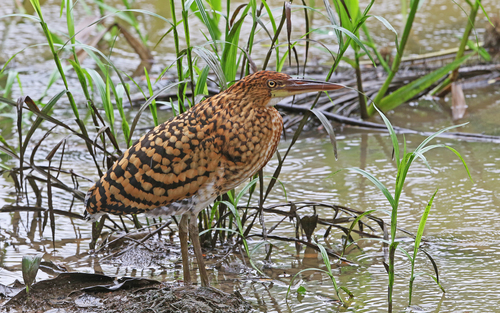 socó-boi
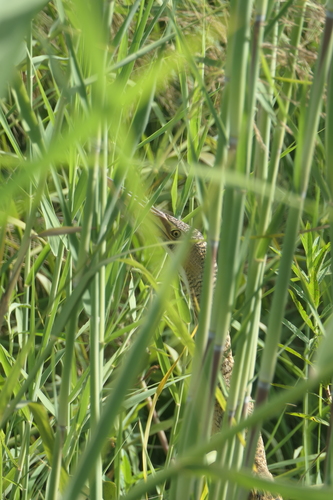 socó-boi-baio
Em resumo
A marca de campo mais confiável para separar o socó-boi imaturo do socó-boi-baio é a proeminente e grossa barragem preta e bege nas asas e corpo do socó-boi, especialmente óbvia em voo ou em juvenis empoleirados. Socós-boi-baio de todas as idades são mais discretamente listrados e carecem da bandagem pronunciada, mostrando em vez disso um padrão mais misturado e listrado e uma asa bicolor em voo devido às remiges cinza-ardósia. Adultos são mais fáceis: o socó-boi tem uma cabeça e pescoço ruivos ricos com uma faixa branca no pescoço, enquanto o socó-boi-baio permanece overall bege e listrado. Ambos são grandes e robustos, mas diferenças sutis na estrutura e comportamento podem ajudar quando a plumagem está obscurecida.
Dicas de identificação
- Padrão de asas e corpo juvenil: O juvenil do socó-boi mostra uma barragem preta e bege grossa e ousada nas asas e corpo, especialmente visível em voo ou quando empoleirado. Juvenis de socó-boi-baio são mais finamente listrados e barrados, com uma cor de fundo bege-avermelhada, mas nunca a bandagem dramática do socó-boi.
- Padrão de voo em imaturos: Em voo, o socó-boi-baio de todas as idades mostra uma asa bicolor devido às remiges cinza-ardósia contrastando com o resto da asa. O socó-boi carece desse efeito bicolor.
- Cor da cabeça e pescoço em adultos: O adulto do socó-boi tem uma cabeça, pescoço e peito ruivos ricos com uma faixa branca no pescoço. Adultos de socó-boi-baio são bege-marrom com listras pesadas e carecem de qualquer tom ruivo ou faixas brancas ousadas.
- Pescoço e garganta: Ambos têm gargantas brancas, mas o pescoço do socó-boi tem uma faixa central branca proeminente, enquanto o do socó-boi-baio é amplamente listrado com marrom claro.
- Padrão de flanco e barriga: Adultos do socó-boi têm flancos barrados em preto e branco e uma barriga bege-marrom, enquanto o socó-boi-baio é amplamente listrado com marrom claro no peito e barriga.
- Cor da cauda (adultos): Machos de socó-boi-baio têm caudas pretas, fêmeas marrons; o socó-boi tem uma cauda preta estreitamente barrada com branco, mas isso raramente é visível em campo.
- Bico e pele facial: Ambos têm bicos amarelados e pele facial amarela brilhante, mas o socó-boi-baio mostra uma linha marrom nas lore, que o socó-boi não possui.
- Cor das pernas: Ambas as espécies têm pernas amarelo-esverdeadas a verde opaco; não é um forte separador.
- Comportamento: O socó-boi-baio é extremamente secreto, muitas vezes congelando com o pescoço vertical e corpo agachado, e se assusta apenas a curta distância. O socó-boi pode ser visto mais abertamente nas bordas da água.
- Contexto de habitat: O socó-boi-baio prefere vegetação densa e alta (juncos, gramíneas), enquanto o socó-boi é mais frequentemente visto em wetlands abertas, mas ambos podem se sobrepor.
- Tamanho e estrutura: Ambos são grandes e robustos, com proporções semelhantes. Machos de socó-boi-baio podem ser mais pesados, mas isso não é aparente em campo.
- Diferenças sexuais: Apenas o socó-boi-baio mostra dimorfismo sexual na cor da cauda (machos pretos, fêmeas marrons), mas isso é sutil e raramente diagnóstico à distância.
- Progressão de idade: O socó-boi leva até cinco anos para alcançar a plumagem adulta, então a barragem forte pode persistir em subadultos. A plumagem juvenil do socó-boi-baio é menos dramaticamente diferente dos adultos, principalmente uma cor de fundo ligeiramente mais avermelhada.
- Armadilhas de plumagem: Não confie apenas na coloração bege geral ou no tamanho; concentre-se na presença ou ausência de barragens ousadas e na asa bicolor em voo.
- Quando em dúvida: Se você ver um grande heron listrado e criptico em juncos densos que se assusta apenas a curta distância e mostra uma asa bicolor, é provável que seja um socó-boi-baio. Se você ver uma barragem preta e bege forte, especialmente nas asas, ou um adulto com cabeça ruiva, é um socó-boi.
Tamanho
Ambas as espécies são grandes garças com faixas de tamanho sobrepostas: o socó-boi mede 66–76 cm (26–30 in) e pesa 630–980 g, enquanto o socó-boi-baio é 64–76 cm (25–30 in) e 554–1.157 g. Machos de socó-boi-baio são tipicamente mais pesados que as fêmeas, mas em campo, o tamanho sozinho não é um separador confiável. A estrutura é semelhante: ambos têm bicos robustos e pescoços longos, mas o socó-boi pode parecer ligeiramente mais compacto e com pescoço grosso quando empoleirado.
Plumagem
-
Pássaros juvenis/imaturos: Juvenis de socó-boi são bege-avermelhados com barragens pretas grossas e ousadas em todo o corpo e especialmente nas asas, criando uma aparência listrada impressionante. A garganta, o peito central e a barriga são brancos. Essa forte bandagem é a marca de campo chave e persiste por vários anos à medida que o pássaro amadurece. Juvenis de socó-boi-baio também são bege, mas têm uma cor de fundo mais avermelhada e são fortemente listrados e barrados com preto, não com bandagem grossa. Seu padrão é mais misturado e criptico, carecendo das dramáticas faixas de asas do socó-boi. Em voo, o socó-boi-baio mostra uma asa bicolor com remiges cinza-ardósia contrastando com o resto da asa, enquanto o socó-boi não tem esse recurso.
-
Adultos: O adulto do socó-boi é inconfundível com uma cabeça, pescoço e peito ruivos escuros, uma faixa branca descendo pelo pescoço, partes superiores marrons com finas vermiculações pretas e flancos barrados em preto e branco. A cauda é preta, estreitamente barrada com branco. Adultos de socó-boi-baio permanecem bege-marrom com listras pesadas e barragens, uma garganta branca, pescoço listrado com marrom claro e um pescoço bege com finas barragens pretas. A asa bicolor permanece uma característica em voo. Machos têm caudas pretas, fêmeas marrons.
-
Partes nuas: Ambos têm bicos amarelados e íris e pele facial amarelas brilhantes, mas o socó-boi-baio mostra uma linha marrom nas lore, que o socó-boi não possui.
Comportamento
O socó-boi-baio é extremamente secreto, muitas vezes congelando com seu corpo agachado e pescoço vertical quando alarmado, e se assusta apenas a curta distância. É em grande parte noturno e tipicamente solitário, às vezes se reunindo de forma solta em locais de alimentação. O socó-boi também é tímido, mas pode ser visto mais prontamente nas bordas da água ou em wetlands abertas, muitas vezes parado imóvel ou se movendo lentamente. Ambas as espécies podem ser difíceis de avistar, mas o socó-boi-baio é especialmente evasivo devido ao seu comportamento criptico e preferência por cobertura densa.
Habitat
Ambas as espécies habitam wetlands de água doce em toda a América Central e do Sul, mas o socó-boi-baio está mais intimamente ligado a leitos de juncos densos, pântanos de gramíneas altas e valas supercrescidas, favorecendo áreas com juncos altos, caniços ou taboas. Também utiliza campos de arroz e cana-de-açúcar. O socó-boi é encontrado em uma gama mais ampla de tipos de wetlands, incluindo pântanos abertos e pântanos florestais. A sobreposição de habitat é significativa, então o contexto sozinho raramente é diagnóstico.