

vira-pedras vs maçarico-de-bico-curvo
Arenaria interpres versus Calidris ferruginea
Jogue um quiz com vira-pedras e maçarico-de-bico-curvo
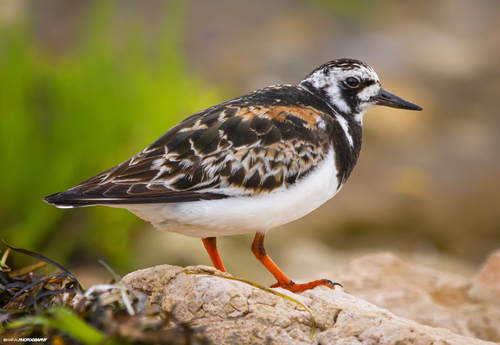 vira-pedras
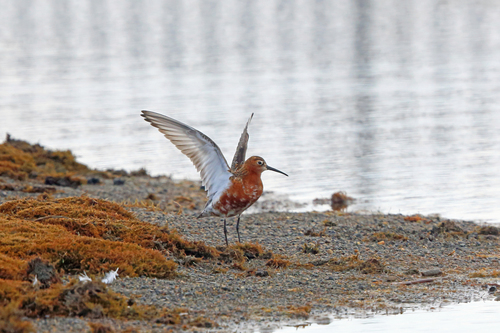 maçarico-de-bico-curvo
Em resumo
A maneira mais confiável de separar o vira-pedras do maçarico-de-bico-curvo é pela estrutura geral e forma do bico: o vira-pedras é uma ave robusta, de pernas curtas, com um bico curto, em forma de cunha, ligeiramente curvado para cima, enquanto o maçarico-de-bico-curvo é mais esbelto, de pernas mais longas, e tem um bico distintamente longo e curvado para baixo. Em voo, ambos mostram marcas brancas nas asas e uma rabadilha branca, mas a faixa alar do vira-pedras é mais ousada e sua cauda tem faixas escuras, enquanto a rabadilha do maçarico-de-bico-curvo é branca mais limpa e sua faixa alar é mais estreita. Os juvenis do vira-pedras parecem escamosos por cima, mas os juvenis do maçarico-de-bico-curvo também, então foque na estrutura e no bico. As pernas brilhantes e laranjas do vira-pedras e a plumagem de arlequim são únicas entre os limícolas; o maçarico-de-bico-curvo é muito mais simples, especialmente na plumagem não reprodutiva. Essas diferenças se mantêm em todas as idades, mas são especialmente claras em comparação direta.
Dicas de identificação
- Forma do bico: O vira-pedras tem um bico curto, em forma de cunha, ligeiramente curvado para cima; o maçarico-de-bico-curvo tem um bico longo, esbelto e distintamente curvado para baixo. Esta é a marca de campo mais confiável em todas as idades.
- Cor das pernas: O vira-pedras tem pernas brilhantes e laranjas em todas as plumagens; as pernas do maçarico-de-bico-curvo são cinza-escuro a pretas. Isso é visível quando as aves estão paradas ou andando.
- Estrutura do corpo: O vira-pedras é compacto, robusto e de pernas curtas, frequentemente parecendo encurvado; o maçarico-de-bico-curvo é esbelto, de pernas longas e se mantém mais ereto.
- Padrão de voo: Em voo, o vira-pedras mostra uma faixa alar branca ousada, uma mancha branca na base da asa, uma parte inferior das costas e rabadilha brancas, e uma cauda branca com faixas escuras. O maçarico-de-bico-curvo mostra uma rabadilha branca e uma faixa alar branca mais estreita, mas não possui as fortes faixas escuras na cauda.
- Partes superiores juvenis: Ambos podem parecer escamosos por cima, mas os juvenis do vira-pedras têm uma cabeça marrom clara e mais contraste; os juvenis do maçarico-de-bico-curvo são mais claros e menos marcados, com uma sobrancelha branca distinta.
- Padrão da cabeça: O vira-pedras tem um padrão de cabeça marcante na plumagem reprodutiva (branca com máscara e listras pretas), e mesmo na plumagem não reprodutiva é mais escura e mais padronizada do que o maçarico-de-bico-curvo, que tem uma cabeça cinza-marrom simples com uma sobrancelha branca.
- Padrão do peito: O vira-pedras sempre mostra uma faixa peitoral preta (mais larga na plumagem reprodutiva), enquanto o maçarico-de-bico-curvo tem peito liso ou, na reprodução, possui partes inferiores uniformemente avermelhadas.
- Cor das partes superiores: O vira-pedras reprodutivo é marrom-avermelhado por cima com marcas pretas; o maçarico-de-bico-curvo é ruivo por baixo e mais simples por cima. Na plumagem não reprodutiva, o vira-pedras é cinza-marrom escuro com manchas pretas; o maçarico-de-bico-curvo é cinza simples por cima.
- Padrão da cauda: A cauda do vira-pedras é branca com faixas escuras distintas; a cauda do maçarico-de-bico-curvo é principalmente branca com penas cinza-claro largas e não possui faixas fortes.
- Comportamento de forrageio: O vira-pedras vira pedras e detritos, frequentemente em costas rochosas; o maçarico-de-bico-curvo investiga lama ou areia, raramente manipula objetos.
- Habitat: O vira-pedras prefere costas rochosas ou cobertas de detritos; o maçarico-de-bico-curvo prefere planícies de lama e estuários arenosos.
- Tamanho e aparência: O vira-pedras é mais robusto e de pernas curtas; o maçarico-de-bico-curvo é mais delicado e de pernas longas.
- Voz: O chamado do vira-pedras é um estalido rítmico, especialmente na época de reprodução; o chamado do maçarico-de-bico-curvo é mais suave e menos distintivo.
- Variação de sexo e idade: A fêmea do vira-pedras é mais apagada, mas ainda assim padronizada; a fêmea do maçarico-de-bico-curvo é menos ruiva na plumagem reprodutiva. As diferenças juvenis são sutis—estrutura e bico permanecem as melhores pistas.
- Armadilhas: Ambos os juvenis podem parecer escamosos por cima; sempre verifique a forma do bico, a cor das pernas e a estrutura do corpo antes de confiar na plumagem.
Tamanho
O vira-pedras é ligeiramente maior e muito mais robusto: 22–24 cm de comprimento, 85–150 g, com uma envergadura de 50–57 cm [wikipedia]. O maçarico-de-bico-curvo é mais esbelto e leve: 18–23 cm de comprimento, 44–117 g, envergadura 38–46 cm [wikipedia]. No campo, o vira-pedras parece compacto e robusto, enquanto o maçarico-de-bico-curvo é mais delicado e alongado, especialmente em pernas e bico longos.
Plumagem
- Juvenil/Primeiro inverno: Ambas as espécies mostram franjas claras nas partes superiores, criando uma aparência escamosa. No entanto, os juvenis do vira-pedras têm uma cabeça marrom clara e uma aparência mais contrastante e padronizada, enquanto os juvenis do maçarico-de-bico-curvo são mais claros e menos contrastantes, com um dorso mais uniformemente escamoso e uma sobrancelha branca distinta.
- Em voo (todas as idades): O vira-pedras mostra uma faixa alar branca ousada, uma mancha branca na base da asa e uma parte inferior das costas, rabadilha e cauda brancas com faixas escuras perto da ponta. O maçarico-de-bico-curvo também tem uma rabadilha branca e uma faixa alar branca, mas a cauda é principalmente branca com penas cinza-claro largas e não possui as fortes faixas escuras da cauda do vira-pedras.
- Adulto reprodutivo: O vira-pedras é marcadamente padronizado com partes superiores marrom-avermelhadas, uma cabeça branca com listras e máscara pretas, e uma faixa peitoral preta. O maçarico-de-bico-curvo na plumagem reprodutiva é principalmente avermelhado por baixo e na cabeça, com um ventre branco e um dorso menos contrastante.
- Adulto não reprodutivo: O vira-pedras torna-se mais apagado, mas mantém uma cabeça e partes superiores escuras e padronizadas com algum branco; o maçarico-de-bico-curvo é cinza simples por cima e branco por baixo, com uma sobrancelha branca e pouco padrão na cabeça.
- Diferenças de sexo: A fêmea do vira-pedras é ligeiramente mais apagada e marronada do que o macho; a fêmea do maçarico-de-bico-curvo é menos intensamente ruiva na plumagem reprodutiva do que o macho.
Comportamento
O vira-pedras é frequentemente visto ativamente virando pedras, algas ou detritos para encontrar comida, usando seu bico de várias maneiras (virando, empurrando, bicando, investigando, martelando). É ousado e frequentemente forrageia em grupos, às vezes mostrando comportamento agressivo e dominante. O maçarico-de-bico-curvo se alimenta investigando e pegando na lama ou água rasa, movendo-se de forma mais delicada e frequentemente em bandos com outros pequenos limícolas. A forrageio do vira-pedras é mais enérgico e envolve mais manipulação de objetos; o maçarico-de-bico-curvo é mais típico de maçaricos, investigando invertebrados.
Habitat
O vira-pedras é mais frequentemente encontrado em costas rochosas ou de seixos, molhes e praias, especialmente onde há detritos ou algas para virar. O maçarico-de-bico-curvo prefere planícies de lama, salinas e estuários arenosos, raramente aventurando-se em costas rochosas. Se você ver uma ave em rochas ou entre pilhas de algas, o vira-pedras é muito mais provável; em lama ou areia abertas, especialmente com outros pequenos limícolas, o maçarico-de-bico-curvo é o padrão.
Voz
O vira-pedras tem um chamado estalado e rítmico e um alarme tagarelando, mais frequentemente ouvido na época de reprodução. Os chamados do maçarico-de-bico-curvo não são descritos em detalhes nessas notas, mas são geralmente mais suaves e menos rítmicos do que os do vira-pedras. Em bandos mistos, o chamado do vira-pedras é mais provável de se destacar.