

gavião-carijó vs maitaca-de-cabeça-azul/maitaca-de-barriga-azul
Rupornis magnirostris versus Pionus menstruus
Jogue um quiz com gavião-carijó e maitaca-de-cabeça-azul/maitaca-de-barriga-azul
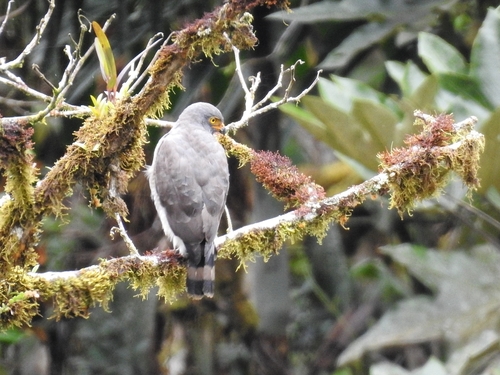 gavião-carijó
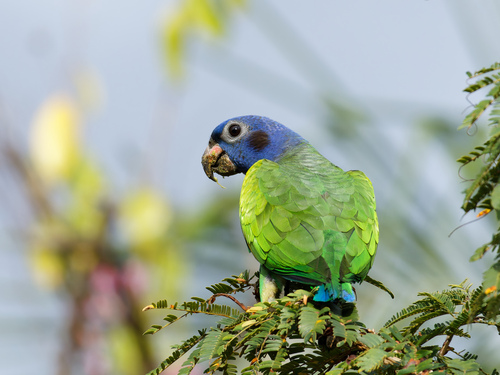 maitaca-de-cabeça-azul/maitaca-de-barriga-azul
Em resumo
A marca de campo mais confiável é a cabeça azul e as coberturas de cauda vermelhas da maitaca-de-cabeça-azul, que nunca são exibidas pelo gavião-carijó de qualquer idade. Em voo, o gavião-carijó (todas as idades) exibe uma cauda longa e listrada e asas curtas e largas com possíveis tons ruivos, enquanto a maitaca-de-cabeça-azul tem um corpo compacto e verde e uma cabeça azul, sem listras nas partes inferiores ou na cauda. O gavião-carijó é um pequeno e esbelto rapinante com um bico curvado e olhos amarelos ou esbranquiçados, frequentemente visto empoleirado de forma ereta ou planando; o papagaio é um pássaro robusto e de cauda curta com um bico truncado e curvado e olhos escuros, geralmente em bandos e frequentemente barulhento. Ambos são comuns em suas áreas, mas suas formas, estilos de voo e coloração são tão diferentes que a confusão é mais provável à distância ou em luz fraca.
Dicas de identificação
- Cor da cabeça: A maitaca-de-cabeça-azul sempre tem uma cabeça, pescoço e peito superiores de um azul brilhante (menos azul em juvenis), nunca exibido pelo gavião-carijó.
- Coberturas de cauda: O papagaio exibe coberturas de cauda vermelhas, uma marca única visível quando empoleirado ou em voo. O gavião-carijó nunca mostra isso.
- Padrão da cauda: O gavião-carijó (todas as idades) tem uma cauda longa com 4–5 barras cinzas distintas; a cauda do papagaio é curta, verde e sem listras.
- Partes inferiores: O gavião-carijó é listrado de marrom e branco por baixo; a maitaca-de-cabeça-azul é verde lisa por baixo, sem listras.
- Forma do bico: O gavião tem um bico curvado e relativamente longo; o bico do papagaio é curto, profundo e truncado, com uma mandíbula superior escura e lados avermelhados.
- Cor dos olhos: O gavião-carijó adulto tem olhos amarelos ou esbranquiçados; os olhos do papagaio são escuros.
- Cor das asas em voo: O gavião-carijó pode mostrar tons ruivos nas asas (especialmente em voo); as asas do papagaio são verdes com um pouco de amarelo nas coberturas.
- Estilo de voo: O gavião planam ou desliza com batidas de asas lentas e profundas e uma cauda longa arrastando; o papagaio voa com batidas de asas rápidas e diretas, frequentemente em bandos.
- Postura empoleirada: O gavião empoleira-se ereto, frequentemente exposto; o papagaio senta-se mais horizontalmente, frequentemente em grupos.
- Vocalizações: O gavião emite um piado agudo e estridente; o papagaio é muito mais barulhento, com chamadas repetidas de 'sweenk', especialmente em bandos.
- Papagaio juvenil: Pode ter menos azul na cabeça e um pouco de vermelho/rosado ao redor do cera, mas ainda é verde e nunca listrado por baixo ou na cauda.
- Gavião juvenil: Semelhante ao adulto, mas pode ser mais pálido por baixo; sempre mostra cauda listrada e nunca plumagem azul ou vermelha.
- Contexto de habitat: O gavião é frequentemente solitário ou em pares, empoleirado em locais abertos, às vezes ao longo de estradas; o papagaio geralmente está em bandos barulhentos, especialmente em árvores frutíferas ou poleiros.
- Comportamento alimentar: O gavião caça pequenos animais de poleiros ou em voo; o papagaio se alimenta de frutas e sementes, frequentemente na copa das árvores.
- Risco de confusão: À distância, um gavião empoleirado pode parecer esverdeado em luz forte ou sombra, mas a forma (cauda longa, postura ereta) e a falta de azul/vermelho rapidamente descartam o papagaio. Em voo, a cauda listrada do gavião e os tons ruivos nas asas nunca são igualados pelo papagaio.
Tamanho
gavião-carijó is slightly larger and heavier (31–41 cm, 250–300 g) than maitaca-de-cabeça-azul/maitaca-de-barriga-azul (about 27–28 cm, 245 g), but the difference is subtle and not always apparent in the field, especially if seen separately. The hawk appears longer and slimmer, with a proportionally longer tail and shorter wings, while the parrot is more compact and chunky, with a short tail and broad wings. Sexes are similar in both, though female hawks are larger than males by about 20%.
Plumagem
- Marcas juvenis/imaturas: Sem padrão específico de asa ou cauda por idade na maitaca-de-cabeça-azul; os juvenis são mais apagados, com menos azul na cabeça e um pouco de vermelho/rosado ao redor do cera, mas ainda são verdes no geral. Os juvenis do gavião-carijó se assemelham aos adultos, mas podem ser mais pálidos ou menos distintamente listrados por baixo, ainda mostrando a cauda listrada e possíveis tons ruivos nas asas em voo.
- Adultos: O gavião-carijó é marrom ou cinza por cima, com partes inferiores listradas de marrom e branco e uma cauda com 4–5 barras cinzas. Em voo, procure tons ruivos nas asas e uma cauda longa e listrada. Os olhos são amarelos ou esbranquiçados. A maitaca-de-cabeça-azul é verde no geral, com uma cabeça, pescoço e peito superiores de azul brilhante, coberturas de cauda vermelhas e um pouco de amarelo nas coberturas das asas. O bico é escuro com lados avermelhados, e a mancha da orelha é escura. Sem listras nas partes inferiores ou na cauda. Ambos os sexos se parecem em ambas as espécies.
- Voo: A cauda longa do gavião-carijó e as asas curtas e largas contrastam com a cauda curta e as asas largas e arredondadas do papagaio. A cabeça azul do papagaio é visível mesmo em voo, especialmente em boa luz.
Comportamento
O gavião-carijó é frequentemente visto empoleirado de forma ereta em galhos expostos, fios ou postes, escaneando em busca de presas, ou planando com batidas de asas lentas e deliberadas. Ele raramente paira. A maitaca-de-cabeça-azul geralmente está em bandos barulhentos, voando diretamente com batidas de asas rápidas, frequentemente vista se deslocando para ou de poleiros comunitários. Os papagaios são muito mais sociais e vocais, enquanto o gavião é geralmente solitário ou em pares. O comportamento alimentar também é distinto: os gaviões caçam pequenos animais, enquanto os papagaios se alimentam de frutas e sementes, frequentemente na copa das árvores.
Habitat
Ambas as espécies ocorrem em uma ampla gama de habitats abertos e semi-abertos, incluindo bordas de florestas e áreas cultivadas, mas o gavião-carijó é especialmente comum ao longo de beiras de estrada, matas abertas e savanas, enquanto a maitaca-de-cabeça-azul está mais ligada a florestas úmidas ou semi-úmidas, bordas de florestas e áreas ribeirinhas, às vezes aventurando-se em zonas mais secas ao longo de rios. O papagaio é mais provável de ser encontrado em bandos e em árvores frutíferas, enquanto o gavião é frequentemente solitário e empoleirado em vista aberta.
Voz
O gavião-carijó emite um piado muito agudo e penetrante, frequentemente repetido e que se propaga longe. A maitaca-de-cabeça-azul é extremamente barulhenta, especialmente em voo ou em poleiros, com chamadas leves e agudas de 'sweenk', frequentemente dadas em séries rápidas. As chamadas do papagaio são mais variadas e sociais, enquanto as do gavião são mais agudas e solitárias.
gavião-carijó · maitaca-de-cabeça-azul/maitaca-de-barriga-azul · Minhas aves difíceis