

オオハシノスリ 対 アケボノインコ
Rupornis magnirostris 対 Pionus menstruus
オオハシノスリとアケボノインコのクイズ
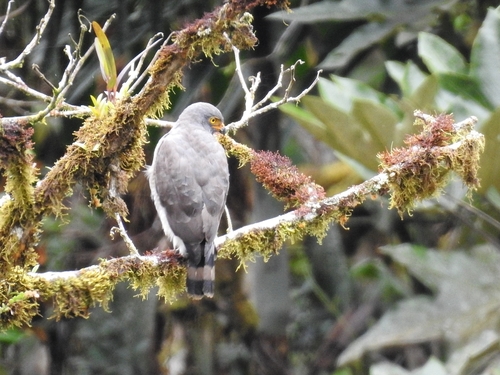 オオハシノスリ
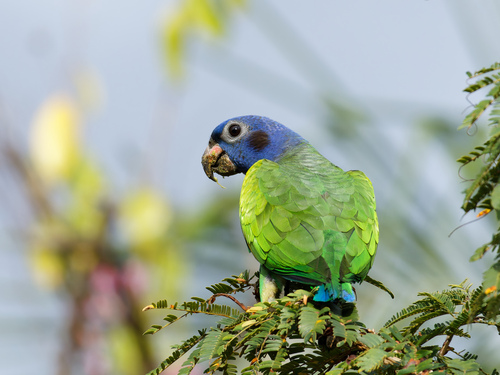 アケボノインコ
要点
The most reliable field mark is the blue head and red undertail coverts of the Blue-headed Parrot, which are never shown by Roadside Hawk of any age. In flight, Roadside Hawk (all ages) shows a long, banded tail and short, broad wings with possible rufous tones, while Blue-headed Parrot has a compact, green body and blue head, with no barring on the underparts or tail. Roadside Hawk is a small, slim raptor with a hooked bill and yellow or whitish eyes, often seen perched upright or soaring; the parrot is a chunky, short-tailed bird with a blunt, curved bill and dark eyes, usually in flocks and often noisy. Both are common in their ranges, but their shapes, flight styles, and coloration are so different that confusion is most likely at a distance or in poor light.
識別のコツ
- Head color: Blue-headed Parrot always has a bright blue head, neck, and upper breast (less blue in juveniles), never shown by Roadside Hawk.
- Undertail coverts: Parrot shows red undertail coverts, a unique mark visible when perched or in flight. Roadside Hawk never shows this.
- Tail pattern: Roadside Hawk (all ages) has a long tail with 4–5 distinct grey bars; parrot's tail is short, green, and unbarred.
- Underparts: Roadside Hawk is barred brown-and-white below; Blue-headed Parrot is plain green below with no barring.
- Bill shape: Hawk has a hooked, relatively long bill; parrot's bill is short, deep, and blunt with a dark upper mandible and reddish sides.
- Eye color: Adult Roadside Hawk has yellow or whitish eyes; parrot's eyes are dark.
- Wing color in flight: Roadside Hawk may show rufous tones in the wings (especially in flight); parrot's wings are green with some yellowish on the coverts.
- Flight style: Hawk soars or glides with slow, deep wingbeats and a long tail trailing; parrot flies with rapid, direct wingbeats, often in flocks.
- Perched posture: Hawk perches upright, often exposed; parrot sits more horizontally, often in groups.
- Vocalizations: Hawk gives a sharp, high-pitched squeak; parrot is much noisier, with repeated squeaky 'sweenk' calls, especially in flocks.
- Juvenile parrot: May have less blue on the head and some red/pinkish around the cere, but still green and never barred below or on the tail.
- Juvenile hawk: Similar to adult but may be paler below; always shows banded tail and never blue or red plumage.
- Habitat context: Hawk is often alone or in pairs, perched in open, sometimes along roads; parrot is usually in noisy flocks, especially at fruiting trees or roosts.
- Feeding behavior: Hawk hunts small animals from perches or in flight; parrot feeds on fruit and seeds, often in the canopy.
- Confusion risk: At a distance, a perched hawk may seem greenish in strong light or shadow, but the shape (long tail, upright posture) and lack of blue/red quickly rule out parrot. In flight, the hawk's banded tail and rufous wing tones are never matched by the parrot.
大きさ
Roadside Hawk is slightly larger and heavier (31–41 cm, 250–300 g) than Blue-headed Parrot (about 27–28 cm, 245 g), but the difference is subtle and not always apparent in the field, especially if seen separately. The hawk appears longer and slimmer, with a proportionally longer tail and shorter wings, while the parrot is more compact and chunky, with a short tail and broad wings. Sexes are similar in both, though female hawks are larger than males by about 20%.
羽色
- Juvenile/immature marks: No age-specific upperwing or tail pattern in Blue-headed Parrot; juveniles are duller with less blue on the head and some red/pinkish around the cere, but still green overall. Roadside Hawk juveniles resemble adults but may be paler or less distinctly barred below, still showing the banded tail and possible rufous in the wings in flight.
- Adults: Roadside Hawk is brown or grey above, with barred brown-and-white underparts and a tail with 4–5 grey bars. In flight, look for rufous tones in the wings and a long, banded tail. The eyes are yellow or whitish. Blue-headed Parrot is green overall with a bright blue head, neck, and upper breast, red undertail coverts, and some yellowish on the wing coverts. The bill is dark with reddish sides, and the ear patch is dark. No barring on the underparts or tail. Both sexes look alike in both species.
- Flight: Roadside Hawk's long tail and short, broad wings contrast with the parrot's short tail and broad, rounded wings. The parrot's blue head is visible even in flight, especially in good light.
行動
Roadside Hawk is often seen perched upright on exposed branches, wires, or poles, scanning for prey, or soaring with slow, deliberate wingbeats and glides. It rarely hovers. Blue-headed Parrot is usually in noisy flocks, flying directly with rapid wingbeats, often seen commuting to or from communal roosts. Parrots are much more social and vocal, while the hawk is usually solitary or in pairs. Feeding behavior is also distinct: hawks hunt small animals, while parrots feed on fruit and seeds, often in the canopy.
生息環境
Both species occur in a wide range of open and semi-open habitats, including forest edges and cultivated areas, but Roadside Hawk is especially common along roadsides, open woodland, and savanna, while Blue-headed Parrot is more tied to humid or semi-humid forests, forest edges, and riverine areas, sometimes venturing into drier zones along rivers. The parrot is more likely in flocks and at fruiting trees, while the hawk is often solitary and perched in open view.
声
Roadside Hawk gives a very high-pitched, piercing squeak, often repeated and carrying far. Blue-headed Parrot is extremely noisy, especially in flight or at roosts, with light, high-pitched squeaky 'sweenk' calls, often given in rapid series. The parrot's calls are more varied and social, while the hawk's are sharper and more solitary.