

rhinoceros auklet vs marbled murrelet
Cerorhinca monocerata versus Brachyramphus marmoratus
Jogue um quiz com rhinoceros auklet e marbled murrelet
 rhinoceros auklet
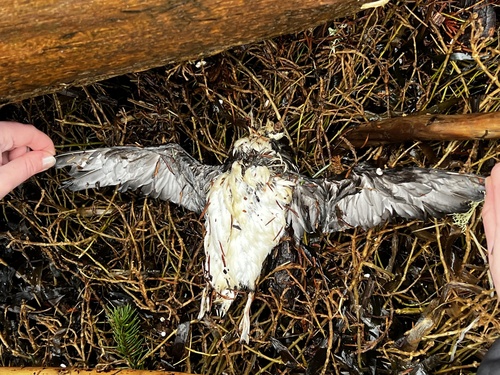 marbled murrelet
Em resumo
A marca de campo mais confiável para separar o rhinoceros auklet do marbled murrelet é a estrutura do bico: o auklet tem um bico grosso e profundo, de cor laranja-escura, com um 'chifre' proeminente em adultos em reprodução, enquanto o murrelet tem um bico esbelto e preto. Em voo ou na água, o auklet parece mais volumoso e maior, com um ventre claro e partes superiores escuras, enquanto o murrelet é menor, mais robusto e apresenta uma aparência mais delicada e pontuda. A plumagem de reprodução pode causar confusão, pois ambos ficam mais escuros e mais manchados, mas as plumas faciais brancas e o chifre do auklet são únicos. Aves imaturas e não reprodutoras são melhor separadas pelo tamanho geral, forma do bico e padrão facial. Sempre verifique o chifre do auklet na temporada, mas esteja ciente de que ele está ausente em aves não reprodutoras.
Dicas de identificação
- Forma e cor do bico: O rhinoceros auklet sempre tem um bico grosso, profundo e laranja-escuro (com um chifre em adultos em reprodução), enquanto o marbled murrelet tem um bico esbelto e preto. Isso é confiável em todas as idades e estações.
- Chifre do bico: Apenas os rhinoceros auklets adultos em reprodução mostram a projeção semelhante a um chifre no bico. Se presente, a identificação é certa. A ausência de chifre não exclui o auklet fora da temporada de reprodução.
- Plumas faciais: O rhinoceros auklet em reprodução tem plumas brancas acima do olho e atrás do bico; o marbled murrelet nunca mostra essas. Na temporada não reprodutora, o auklet perde as plumas.
- Padrão facial (não reprodutor): O marbled murrelet no inverno tem um colar branco no pescoço e partes inferiores brancas com uma coroa e nuca pretas. O rhinoceros auklet não tem o colar branco e apresenta um padrão mais contrastante de escuro acima/claro abaixo.
- Tamanho e volume geral: O rhinoceros auklet é muito maior e mais volumoso que o marbled murrelet. Se vistos juntos, a diferença é óbvia; sozinhos, procure uma aparência mais robusta e menos delicada no auklet.
- Forma do corpo: O marbled murrelet é compacto e robusto, com um pescoço e cauda curtos; o rhinoceros auklet tem um corpo mais longo e mais robusto.
- Plumagem na temporada de reprodução: O marbled murrelet é marrom manchado por toda parte na plumagem de reprodução, sem as plumas faciais brancas e o chifre do auklet. O rhinoceros auklet permanece escuro acima e claro abaixo, com plumas brancas e chifre.
- Plumagem na temporada não reprodutora: Ambos são mais escuros acima e mais claros abaixo, mas o marbled murrelet tem um colar branco no pescoço e mais branco extenso no rosto; o auklet não tem.
- Contexto de habitat: Uma ave vista voando para dentro ou para fora de uma floresta, ou longe da costa, é quase certamente um marbled murrelet. Auklets são estritamente costeiros e marinhos.
- Comportamento de nidificação: Se observada em um buraco ou caverna, especialmente em uma encosta costeira, é provável que seja um rhinoceros auklet. O marbled murrelet nunca usa buracos.
- Comportamento alimentar: O rhinoceros auklet carrega múltiplos peixes em seu bico (como os puffins), enquanto o marbled murrelet carrega apenas um peixe por vez.
- Estilo de voo: O auklet é um mau voador e pode parecer esforçado ao decolar; o murrelet é mais ágil e direto no voo, especialmente ao voar para o interior.
- Sexo e idade: Não há dimorfismo sexual forte em nenhuma das espécies; chifre e plumas no auklet apenas em adultos em reprodução. Juvenis e imaturos são melhor separados pela forma e tamanho do bico.
- Armadilhas: Em luz fraca ou à distância, o chifre e as plumas do auklet podem ser perdidos; sempre verifique a espessura do bico e o tamanho geral. Murrelets em reprodução podem parecer mais escuros e manchados, mas nunca mostram plumas faciais brancas ou um chifre.
- Quando em dúvida: Foque na estrutura do bico (grosso e profundo vs. esbelto e curto), presença ou ausência de chifre/plumas e tamanho geral. Habitat e comportamento podem fornecer pistas de apoio fortes.
Tamanho
O rhinoceros auklet é substancialmente mais pesado (483 g) e overall maior que o marbled murrelet, que é descrito como um auk pequeno e robusto. O tamanho do auklet é óbvio em comparação direta ou com experiência, parecendo mais robusto e menos delicado que o murrelet. O murrelet é notavelmente menor e mais leve, com uma construção mais compacta e comprimento total mais curto. O tamanho do bico também reflete essa diferença: o bico do auklet é grosso e profundo, enquanto o bico do murrelet é esbelto e curto.
Plumagem
-
Juvenil/imaturo/primeiro inverno: Nenhuma diferença específica de padrão na asa superior é descrita para essas idades em nenhuma das espécies. A separação depende da estrutura e forma do bico em todas as idades.
-
Adulto em reprodução: Os adultos do rhinoceros auklet têm partes superiores escuras e partes inferiores claras, com plumas brancas distintas acima dos olhos e atrás do bico, e uma projeção semelhante a um chifre no bico (presente apenas em adultos em reprodução). O marbled murrelet na plumagem de reprodução é marrom manchado em geral, sem plumas faciais brancas e chifre. O rosto e o corpo do murrelet são mais uniformemente manchados de marrom, enquanto o auklet mantém um ventre claro contrastante e costas escuras.
-
Adulto não reprodutor: O rhinoceros auklet perde o chifre e as plumas faciais; ainda mostra um bico grosso e profundo e um padrão contrastante de escuro acima/claro abaixo. O marbled murrelet na plumagem não reprodutora é branco abaixo com uma coroa, nuca, asas e costas pretas, e um colar branco no pescoço (não presente no auklet). O bico do murrelet permanece esbelto e preto.
Comportamento
O rhinoceros auklet é um mau voador, frequentemente visto decolando de um terreno inclinado ou da água com esforço, e tende a nidificar em buracos ou cavidades naturais. É monogâmico e altamente social em colônias. O marbled murrelet é mais ágil em voo, frequentemente visto voando para o interior ao amanhecer ou ao anoitecer para nidificar em florestas de crescimento antigo, às vezes longe da costa. O murrelet não nidifica em colônias ou buracos, mas individualmente em grandes galhos cobertos de musgo ou no chão em áreas do norte. O comportamento alimentar difere: o auklet carrega múltiplos peixes em seu bico, o murrelet carrega um único peixe por vez.
Habitat
O rhinoceros auklet nidifica em buracos ou cavernas costeiras, geralmente em ilhas ou encostas costeiras, e é quase sempre visto no mar ou perto de colônias de nidificação. O marbled murrelet é único entre os alcídeos por nidificar em florestas de crescimento antigo, às vezes até 80 km para o interior, ou no chão no extremo norte; no mar, é encontrado em águas costeiras, frequentemente perto de costas florestadas. Ver uma ave no interior ou em habitat florestal favorece fortemente o marbled murrelet.