

tordo-de-garganta-ruiva vs tordo-de-naumann
Turdus ruficollis versus Turdus naumanni
Jogue um quiz com tordo-de-garganta-ruiva e tordo-de-naumann
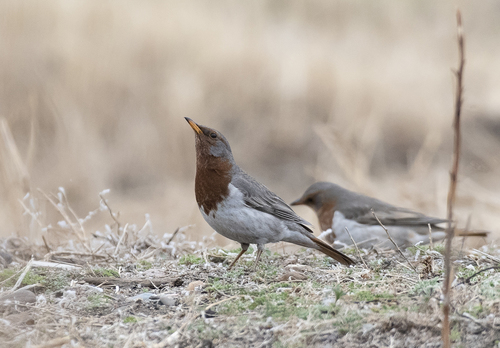 tordo-de-garganta-ruiva
 tordo-de-naumann
Em resumo
A marca de campo mais confiável entre o tordo-de-garganta-ruiva e o tordo-de-naumann é a cor e a distribuição dos tons avermelhados: os machos do tordo-de-garganta-ruiva têm uma garganta vermelha distinta (fêmeas e imaturos não têm isso, mas apresentam partes inferiores estriadas), enquanto o tordo-de-naumann apresenta avermelhado no rosto, peito, flancos e rabo, com costas e cabeça de um marrom pálido. Ambas as espécies têm asas inferiores avermelhadas, mas o tordo-de-naumann é mais extensivamente ruivo abaixo e no rabo. Imaturos e fêmeas do tordo-de-garganta-ruiva podem ser especialmente complicados, pois não têm a garganta vermelha e, em vez disso, apresentam partes inferiores estriadas, portanto, atenção cuidadosa ao padrão geral e à distribuição da coloração avermelhada é fundamental. A estrutura e o tamanho são semelhantes, então a plumagem é o principal separador em campo.
Dicas de identificação
- Garganta vermelha em machos adultos: Apenas os machos do tordo-de-garganta-ruiva mostram uma clara mancha de garganta vermelha. Se você ver um pássaro com uma garganta vermelha, é um macho do tordo-de-garganta-ruiva. Essa marca está ausente no tordo-de-naumann de qualquer idade ou sexo.
- Rosto, peito, flancos e rabo avermelhados no Naumann's: O tordo-de-naumann apresenta avermelhado no rosto, peito, flancos e rabo, com costas e cabeça de um marrom pálido. Se o avermelhado estiver amplamente distribuído e não apenas na garganta, favoreça o tordo-de-naumann.
- Costas cinzas lisas vs costas marrons pálidas: O tordo-de-garganta-ruiva tem costas cinzas lisas, enquanto o tordo-de-naumann tem costas e cabeça marrons pálidas. Isso pode ajudar em boa luz, especialmente em pássaros empoleirados.
- Asas inferiores avermelhadas em ambos: Ambas as espécies mostram asas inferiores avermelhadas em voo, então isso não é um separador.
- Partes inferiores estriadas em fêmeas/imaturos do tordo-de-garganta-ruiva: Fêmeas e imaturos do tordo-de-garganta-ruiva não têm a garganta vermelha, mas têm partes inferiores estriadas em preto. Os imaturos do tordo-de-naumann têm um padrão mais fraco e avermelhado mais extenso abaixo.
- Barriga e subcauda brancos no Naumann's: O tordo-de-naumann tem uma barriga e subcauda brancos, contrastando com os flancos e rabo avermelhados. O tordo-de-garganta-ruiva não apresenta esse forte contraste.
- Rabo avermelhado no Naumann's: O avermelhado no rabo é uma característica do tordo-de-naumann, não do tordo-de-garganta-ruiva.
- Supercílios: O tordo-de-naumann tem um supercílios pálido (sobrancelha), que pode ser uma marca sutil, mas útil, se visível.
- Sem diferenças estruturais fortes: Ambos são semelhantes em tamanho e construção; não confie em jizz ou estrutura para separação.
- Armadilhas relacionadas à idade: Imaturos e fêmeas do tordo-de-garganta-ruiva podem ser confundidos com o tordo-de-naumann devido à falta de garganta vermelha e à presença de estrias. Sempre verifique a distribuição do avermelhado e a presença/ausência de estrias.
- Contexto sazonal: Ambas as espécies são raros vagantes na Europa; o contexto não ajuda muito, a menos que você esteja em suas áreas principais de reprodução ou invernada.
- Composição do bando: O tordo-de-naumann pode ser visto em pequenos bandos no inverno, mas isso não é um forte separador.
- Sobreposição de habitat: Ambas usam habitats semelhantes, então não use habitat como uma marca de campo primária.
- Voz não diagnóstica: Nenhuma diferença vocal é descrita para separação em campo.
- Quando em dúvida, concentre-se na garganta e na extensão do avermelhado abaixo: A combinação da cor da garganta (vermelha apenas no macho do tordo-de-garganta-ruiva), extensão do avermelhado nas partes inferiores e rabo (mais no tordo-de-naumann) e presença de estrias (fêmea/imaturo do tordo-de-garganta-ruiva) são as pistas mais confiáveis.
Tamanho
Ambas as espécies são tordos de tamanho médio e são semelhantes em estrutura e massa geral. O tordo-de-garganta-ruiva é descrito como um grande tordo, enquanto o tordo-de-naumann é chamado de tamanho médio, mas robusto, lembrando um pequeno tordo-zornal. Na prática, o tamanho não é um separador confiável entre esses dois, especialmente à distância ou em bandos mistos.
Plumagem
- Imaturos e Fêmeas: Fêmeas e jovens do tordo-de-garganta-ruiva não têm a garganta vermelha e, em vez disso, têm partes inferiores estriadas em preto. Os imaturos do tordo-de-naumann têm um padrão mais fraco do que os adultos, mas ainda mostram avermelhado no rosto, peito, flancos e rabo, com costas e cabeça de um marrom pálido. Ambos têm asas inferiores avermelhadas, mas o tordo-de-naumann é mais extensivamente ruivo abaixo e no rabo.
- Machos Adultos: Os machos do tordo-de-garganta-ruiva têm uma clara garganta vermelha (a característica que dá nome), costas cinzas lisas e asas inferiores avermelhadas. Os machos do tordo-de-naumann não têm garganta vermelha, mas têm avermelhado no rosto, peito, flancos e rabo, com costas e cabeça de um marrom pálido, e barriga e subcauda brancos. O avermelhado é mais amplamente distribuído no tordo-de-naumann, enquanto no tordo-de-garganta-ruiva está concentrado na garganta (machos) ou ausente (fêmeas/imaturos).
- Em Voo: Ambos mostram asas inferiores avermelhadas, então isso não é um separador. Procure a extensão do avermelhado no rabo e flancos (mais no tordo-de-naumann) e a presença ou ausência de uma garganta vermelha (apenas macho do tordo-de-garganta-ruiva).
Comportamento
Ambas as espécies são migratórias e podem ser vistas em pequenos bandos durante a migração ou inverno. O tordo-de-naumann é notado por às vezes formar pequenos bandos no inverno. Não há diferenças comportamentais fortes observadas para separação em campo.
Habitat
Ambas as espécies se reproduzem em áreas de floresta aberta na Sibéria e Manchúria, com faixas sobrepostas. Ambas são raros vagantes na Europa ocidental. O habitat não é um separador confiável em campo, especialmente durante a migração ou em áreas de invernada.
Voz
Nenhuma diferença vocal diagnóstica é descrita entre essas duas espécies nas notas fornecidas. Ambas podem ter canções que lembram outros tordos, mas estas não são detalhadas ou contrastadas aqui.
tordo-de-garganta-ruiva · tordo-de-naumann · Minhas aves difíceis