

Tordo golarossa vs Cesena di Naumann
Turdus ruficollis contro Turdus naumanni
Fai un quiz con Tordo golarossa e Cesena di Naumann
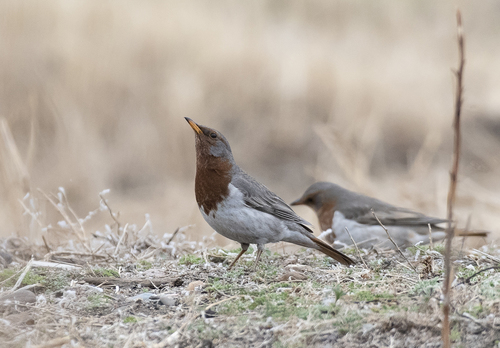 Tordo golarossa
 Cesena di Naumann
In breve
Il segno distintivo più affidabile tra il Tordo golarossa e la Cesena di Naumann è il colore e la distribuzione delle tonalità rossastre: i maschi del Tordo golarossa hanno una gola rossa distintiva (le femmine e gli immaturi non la possiedono, ma mostrano parti inferiori striate), mentre la Cesena di Naumann mostra rossastro sul viso, sul petto, sui fianchi e sul coda, con un dorso e una testa di colore marrone chiaro. Entrambe le specie hanno ali inferiori rossastre, ma la Cesena di Naumann è più estensivamente rufosa sotto e sulla coda. I Tordi golarossa immaturi e femminili possono essere particolarmente difficili, poiché mancano della gola rossa e mostrano invece parti inferiori striate, quindi prestare attenzione al modello generale e alla distribuzione del colore rossastro è fondamentale. La struttura e la dimensione sono simili, quindi il piumaggio è il principale separatore sul campo.
Consigli di identificazione
- Gola rossa nei maschi adulti: Solo i maschi del Tordo golarossa mostrano una chiara macchia di gola rossa. Se vedi un uccello con la gola rossa, è un maschio di Tordo golarossa. Questo segno è assente nella Cesena di Naumann di qualsiasi età o sesso.
- Viso, petto, fianchi e coda rossastri nella Cesena: La Cesena di Naumann mostra rossastro sul viso, sul petto, sui fianchi e sulla coda, con un dorso e una testa di colore marrone chiaro. Se il rossastro è ampiamente distribuito e non solo sulla gola, favorisci la Cesena.
- Dorso grigio uniforme vs dorso marrone chiaro: Il Tordo golarossa ha un dorso grigio uniforme, mentre la Cesena ha un dorso e una testa di colore marrone chiaro. Questo può aiutare in buona luce, specialmente sugli uccelli in posa.
- Ali inferiori rossastre in entrambe: Entrambe le specie mostrano ali inferiori rossastre in volo, quindi questo non è un separatore.
- Parti inferiori striate nelle femmine/immaturi di Tordo golarossa: Le femmine e gli immaturi di Tordo golarossa mancano della gola rossa ma hanno parti inferiori striate di nero. Gli immaturi della Cesena hanno una patterning più debole e un rossastro più esteso sotto.
- Pancia e sottocoda bianchi nella Cesena: La Cesena di Naumann ha una pancia e una sottocoda bianche, in contrasto con i fianchi e la coda rossastri. Il Tordo golarossa non mostra questo forte contrasto.
- Coda rossastra nella Cesena: Il rossastro sulla coda è una caratteristica della Cesena di Naumann, non del Tordo golarossa.
- Supercilio: La Cesena di Naumann ha un supercilio pallido (sopracciglio), che può essere un segno sottile ma utile se visibile.
- Nessuna forte differenza strutturale: Entrambe sono simili in dimensioni e struttura; non fare affidamento su jizz o struttura per la separazione.
- Trappole legate all'età: I Tordi golarossa immaturi e femminili possono essere confusi con la Cesena di Naumann a causa della mancanza di gola rossa e della presenza di striature. Controlla sempre la distribuzione del rossastro e la presenza/assenza di striature.
- Contesto stagionale: Entrambe le specie sono rare vaganti in Europa; il contesto non aiuta molto a meno che tu non sia nelle loro aree di nidificazione o svernamento principali.
- Composizione del gruppo: La Cesena di Naumann può essere vista in piccoli gruppi in inverno, ma questo non è un forte separatore.
- Sovrapposizione dell'habitat: Entrambe utilizzano habitat simili, quindi non utilizzare l'habitat come segno distintivo principale.
- Voce non diagnostica: Non sono descritte differenze vocali per la separazione.
- In caso di dubbio, concentrati sulla gola e sull'estensione del rossastro sotto: La combinazione del colore della gola (rossa solo nel maschio di Tordo golarossa), l'estensione del rossastro sulle parti inferiori e sulla coda (più nella Cesena), e la presenza di striature (femmina/immaturo di Tordo golarossa) sono gli indizi più affidabili.
Taglia
Entrambe le specie sono tordi di dimensioni medie e sono simili nella struttura e nella massa complessiva. Il Tordo golarossa è descritto come un grande tordo, mentre la Cesena di Naumann è chiamata di dimensioni medie ma robusta, simile a una piccola Cesena. In pratica, la dimensione non è un separatore affidabile tra questi due, specialmente a distanza o in gruppi misti.
Piumaggio
- Immaturi e femmine: Le femmine di Tordo golarossa e gli uccelli giovani mancano della gola rossa e hanno invece parti inferiori striate di nero. Gli immaturi della Cesena di Naumann hanno una patterning più debole rispetto agli adulti ma mostrano ancora rossastro sul viso, sul petto, sui fianchi e sulla coda, con un dorso e una testa di colore marrone chiaro. Entrambi hanno ali inferiori rossastre, ma la Cesena è più estensivamente rufosa sotto e sulla coda.
- Maschi adulti: I maschi del Tordo golarossa hanno una chiara gola rossa (la caratteristica che dà il nome), un dorso grigio uniforme e ali inferiori rossastre. I maschi della Cesena di Naumann mancano di gola rossa ma hanno rossastro sul viso, sul petto, sui fianchi e sulla coda, con un dorso e una testa di colore marrone chiaro, e pancia e sottocoda bianchi. Il rossastro è più ampiamente distribuito nella Cesena, mentre nel Tordo golarossa è concentrato sulla gola (maschi) o assente (femmine/immaturi).
- In volo: Entrambi mostrano ali inferiori rossastre, quindi questo non è un separatore. Cerca l'estensione del rossastro sulla coda e sui fianchi (più nella Cesena) e la presenza o assenza di una gola rossa (solo maschio di Tordo golarossa).
Comportamento
Entrambe le specie sono migratorie e possono essere viste in piccoli gruppi durante la migrazione o in inverno. La Cesena di Naumann è nota per formare a volte piccoli gruppi in inverno. Non sono state notate forti differenze comportamentali per la separazione sul campo.
Habitat
Entrambe le specie nidificano in aree boschive aperte attraverso la Siberia e la Manciuria, con aree sovrapposte. Entrambe sono rare vaganti in Europa occidentale. L'habitat non è un separatore affidabile sul campo, specialmente durante la migrazione o nelle aree di svernamento.
Voce
Non sono descritte differenze vocali diagnostiche tra queste due specie nelle note fornite. Entrambe possono avere canti che ricordano altri tordi, ma questi non sono dettagliati o contrastati qui.
Tordo golarossa · Cesena di Naumann · I miei uccelli difficili