

Zorzal Papirrojo vs Zorzal de Naumann
Turdus ruficollis frente a Turdus naumanni
Juega un quiz con Zorzal Papirrojo y Zorzal de Naumann
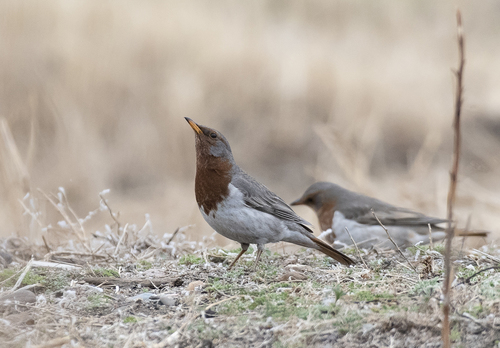 Zorzal Papirrojo
 Zorzal de Naumann
En breve
La marca de campo más confiable entre el Zorzal Papirrojo y el Zorzal de Naumann es el color y la distribución de los tonos rojizos: los machos de Zorzal Papirrojo tienen una garganta roja distintiva (las hembras y los inmaduros carecen de esto, pero muestran partes inferiores estriadas), mientras que el Zorzal de Naumann muestra rojizo en la cara, el pecho, los flancos y el rabadilla, con un dorso y cabeza de color marrón pálido. Ambas especies tienen alas inferiores rojizas, pero el Zorzal de Naumann es más extensamente rufo por debajo y en el rabadilla. Los Zorzales Papirrojos inmaduros y hembras pueden ser especialmente complicados, ya que carecen de la garganta roja y en su lugar muestran partes inferiores estriadas, por lo que prestar atención cuidadosa al patrón general y la distribución de la coloración rojiza es clave. La estructura y el tamaño son similares, por lo que el plumaje es el principal separador en el campo.
Consejos de identificación
- Garganta roja en machos adultos: Solo los machos de Zorzal Papirrojo muestran una clara mancha de garganta roja. Si ves un pájaro con una garganta roja, es un macho de Zorzal Papirrojo. Esta marca está ausente en el Zorzal de Naumann de cualquier edad o sexo.
- Cara, pecho, flancos y rabadilla rojizos en Naumann's: El Zorzal de Naumann muestra rojizo en la cara, el pecho, los flancos y el rabadilla, con un dorso y cabeza de color marrón pálido. Si el rojizo está ampliamente distribuido y no solo en la garganta, favorece a Naumann's.
- Dorso gris liso vs dorso marrón pálido: El Zorzal Papirrojo tiene un dorso gris liso, mientras que el de Naumann tiene un dorso y cabeza marrón pálido. Esto puede ayudar en buena luz, especialmente en pájaros posados.
- Alas inferiores rojizas en ambos: Ambas especies muestran alas inferiores rojizas en vuelo, por lo que esto no es un separador.
- Partes inferiores estriadas en hembras/inmaduros de Zorzal Papirrojo: Las hembras y los Zorzales Papirrojos inmaduros carecen de la garganta roja pero tienen partes inferiores estriadas en negro. Los inmaduros de Naumann tienen un patrón más débil y más rojizo por debajo.
- Vientre y subcola blancos en Naumann's: El Zorzal de Naumann tiene un vientre y subcola blancos, contrastando con los flancos y rabadilla rojizos. El Zorzal Papirrojo no muestra este fuerte contraste.
- Rabadilla rojiza en Naumann's: El rojizo en el rabadilla es una característica del Zorzal de Naumann, no del Papirrojo.
- Supercilio: El Zorzal de Naumann tiene un supercilio pálido (ceja), que puede ser una marca sutil pero útil si es visible.
- Sin diferencias estructurales fuertes: Ambos son similares en tamaño y construcción; no confíes en la apariencia o estructura para la separación.
- Trampas relacionadas con la edad: Los Zorzales Papirrojos inmaduros y hembras pueden confundirse con Naumann's debido a la falta de garganta roja y la presencia de estrías. Siempre verifica la distribución de lo rojizo y la presencia/ausencia de estrías.
- Contexto estacional: Ambas especies son vagabundas raras en Europa; el contexto no ayuda mucho a menos que estés en sus áreas de cría o invernada principales.
- Composición de bandada: El Zorzal de Naumann puede verse en pequeñas bandadas en invierno, pero esto no es un fuerte separador.
- Superposición de hábitat: Ambas utilizan hábitats similares, así que no uses el hábitat como una marca de campo primaria.
- Voz no diagnóstica: No se describen diferencias vocales para la separación en campo.
- Cuando tengas dudas, enfócate en la garganta y la extensión de lo rojizo por debajo: La combinación del color de la garganta (rojo solo en macho Zorzal Papirrojo), la extensión de lo rojizo en las partes inferiores y el rabadilla (más en Naumann's), y la presencia de estrías (hembra/inmaduro Zorzal Papirrojo) son las pistas más confiables.
Tamaño
Ambas especies son zorzales de tamaño mediano y son similares en estructura y masa general. El Zorzal Papirrojo se describe como un zorzal grande, mientras que el Zorzal de Naumann se llama de tamaño mediano pero robusto, reminiscentes de un pequeño Zorzal Real. En la práctica, el tamaño no es un separador confiable entre estos dos, especialmente a distancia o en bandadas mixtas.
Plumaje
- Inmaduros y Hembras: Las hembras y los jóvenes Zorzales Papirrojos carecen de la garganta roja y en su lugar tienen partes inferiores estriadas en negro. Los inmaduros del Zorzal de Naumann tienen un patrón más débil que los adultos pero aún muestran rojizo en la cara, el pecho, los flancos y el rabadilla, con un dorso y cabeza de color marrón pálido. Ambos tienen alas inferiores rojizas, pero el de Naumann es más extensamente rufo por debajo y en el rabadilla.
- Machos Adultos: Los machos de Zorzal Papirrojo tienen una clara garganta roja (la característica que da nombre), dorso gris liso y alas inferiores rojizas. Los machos de Zorzal de Naumann carecen de garganta roja pero tienen rojizo en la cara, el pecho, los flancos y el rabadilla, con un dorso y cabeza de color marrón pálido, y vientre y subcola blancos. El rojizo está más ampliamente distribuido en Naumann's, mientras que en el Zorzal Papirrojo está concentrado en la garganta (machos) o ausente (hembras/inmaduros).
- En Vuelo: Ambos muestran alas inferiores rojizas, por lo que esto no es un separador. Busca la extensión de lo rojizo en el rabadilla y los flancos (más en Naumann's) y la presencia o ausencia de una garganta roja (solo macho Zorzal Papirrojo).
Comportamiento
Ambas especies son migratorias y pueden verse en pequeñas bandadas durante la migración o el invierno. El Zorzal de Naumann es conocido por formar a veces pequeñas bandadas en invierno. No se han notado diferencias comportamentales fuertes para la separación en campo.
Hábitat
Ambas especies crían en áreas de bosques abiertos a través de Siberia y Manchuria, con rangos superpuestos. Ambas son vagabundas raras en Europa occidental. El hábitat no es un separador confiable en el campo, especialmente durante la migración o en áreas de invernada.
Voz
No se describen diferencias vocales diagnósticas entre estas dos especies en las notas proporcionadas. Ambas pueden tener cantos que recuerdan a otros zorzales, pero estos no están detallados o contrastados aquí.