

plume-toed swiftlet vs black-nest swiftlet
Collocalia affinis versus Aerodramus maximus
Jogue um quiz com plume-toed swiftlet e black-nest swiftlet
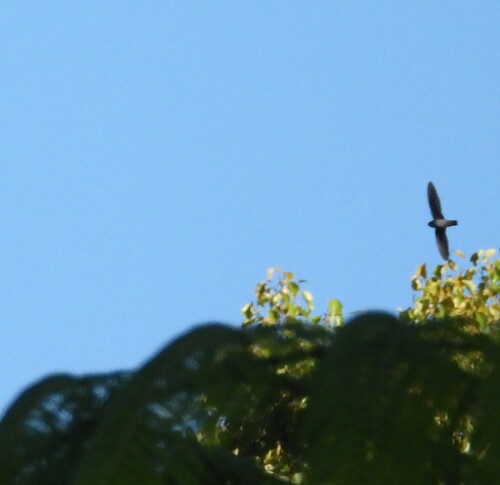 plume-toed swiftlet
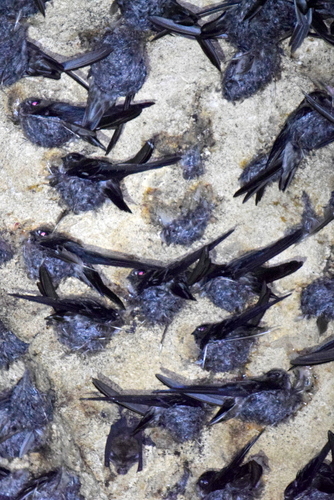 black-nest swiftlet
Em resumo
A marca de campo mais confiável entre o Plume-toed swiftlet e o black-nest swiftlet é a presença de um costas e asas verde-azuladas brilhantes e escuras sem manchas claras na região do rabo ou na cauda no Plume-toed, em contraste com a aparência geralmente mais opaca e menos brilhante do Black-nest, que também não possui manchas claras na região do rabo e na cauda. O Plume-toed é menor e mais compacto, com uma cauda quadrada e um tufo único de penas no dedo traseiro (hallux), enquanto o Black-nest é maior e com asas mais longas. Ambas as espécies podem parecer semelhantes em voo, especialmente à distância, mas atenção cuidadosa ao tamanho, brilho e detalhes sutis da plumagem pode ajudar a separá-las. Padrões de asas específicos de juvenis não são descritos para nenhuma das espécies, então concentre-se na plumagem e estrutura de adultos.
Dicas de identificação
- Tamanho e estrutura: O Plume-toed swiftlet é distintamente menor e mais compacto que o Black-nest. Em comparação direta, procure um corpo e cauda visivelmente mais curtos.
- Formato da cauda: O Plume-toed tem uma cauda quadrada, que pode ser vista em boas vistas de voo. A cauda do Black-nest também é quadrada ou apenas ligeiramente recortada, então isso é um suporte, mas não definitivo.
- Brilho das partes superiores: O Plume-toed apresenta um forte brilho verde-azulado escuro nas costas e nas asas superiores em boa luz. O Black-nest é geralmente mais opaco e carece desse brilho intenso.
- Manchas na região do rabo e na cauda: Ambas as espécies não possuem uma região do rabo clara e manchas brancas na cauda, então a ausência dessas marcas não ajuda a separá-las; cuidado para não confundir com outros swiftlets que apresentam essas características.
- Padrão das partes inferiores: O Plume-toed tem cinza escuro na garganta e no peito superior, fundindo-se em grandes chevrons cinza claro no peito inferior e flancos, com a barriga frequentemente branca. O Black-nest é mais uniformemente escuro na parte inferior, com menos contraste e chevrons menos óbvios.
- Tufo no hallux: Apenas o Plume-toed tem um tufo de pequenas penas no dedo traseiro (hallux), mas isso quase nunca é visível em campo e não é uma marca de campo prática.
- Estilo de voo: O tamanho menor do Plume-toed proporciona um voo mais leve e ágil, com batidas de asas rápidas e rasas. O Black-nest parece mais estável e poderoso em voo.
- Habitat e distribuição: Se estiver em floresta de planície na Península Malaia, Sumatra ou Bornéu, ambas as espécies são possíveis, mas o Plume-toed é mais restrito às planícies. O Black-nest é mais amplamente distribuído e também ocorre em florestas montanas.
- Sem diferença de padrão de asas juvenil/imaturo: Não há marcas de asas ou cauda específicas para juvenis descritas para nenhuma das espécies, então todas as idades são separadas por características semelhantes às de adultos.
- Sem manchas claras na região do rabo ou na cauda: Se você vê uma região do rabo clara ou manchas na cauda, você está olhando para uma espécie de swiftlet diferente.
- Sem diferenças vocais confiáveis descritas: Vocalizações não são descritas nas notas e não devem ser usadas para separação.
- Contexto em bandos mistos: Em bandos mistos de swiftlets, use tamanho e brilho para identificar o Plume-toed entre os black-nest swiftlets maiores e mais opacos.
- Condições de iluminação: O brilho verde-azulado do Plume-toed é melhor visto em boa luz; em luz fraca, ambas as espécies podem parecer uniformemente escuras, dificultando a separação.
- Cuidado com a sobreposição com outros swiftlets: Ambas as espécies podem ser confundidas com outros swiftlets de Collocalia e Aerodramus; sempre elimine a possibilidade de regiões do rabo e manchas na cauda claras antes de se concentrar nessas duas.
- Sem dimorfismo sexual: Ambos os sexos se parecem em cada espécie, então o sexo não é uma marca de campo útil.
Tamanho
O Plume-toed swiftlet é visivelmente menor, medindo 9–10 cm de comprimento [wikipedia], e parece compacto na mão ou a curta distância. O black-nest swiftlet é maior, embora medidas precisas não sejam fornecidas nas notas; é geralmente descrito como um swiftlet de médio a grande porte. Em bandos mistos, o Plume-toed parecerá distintamente menor e com cauda mais curta em comparação ao Black-nest.
Plumagem
- Plumagem juvenil/imatura: Nenhuma marca de voo específica de asas ou relacionadas à idade é descrita para nenhuma das espécies, então a separação depende de características semelhantes às de adultos, mesmo em aves jovens.
- Adultos: O Plume-toed swiftlet apresenta um brilho uniforme verde-azulado escuro nas costas e nas asas superiores, com uma cauda quadrada e sem região do rabo clara ou manchas brancas na cauda. Suas partes inferiores são cinza escuro na garganta e no peito superior, fundindo-se em grandes chevrons cinza no peito inferior e flancos, geralmente tornando-se branca na barriga. O black-nest swiftlet é geralmente mais opaco no geral, carecendo do forte brilho verde-azulado; suas partes inferiores são menos distintamente chevronadas e mais uniformemente escuras. Ambas as espécies carecem de manchas claras na região do rabo e na cauda, então isso não é uma característica de separação.
- Tufo no hallux: Apenas o Plume-toed tem um tufo visível de pequenas penas no dedo traseiro (hallux), mas isso raramente é visível em campo.
Comportamento
Ambas as espécies são insetívoras aéreas e passam a maior parte do tempo em voo, frequentemente em bandos mistos. O Plume-toed swiftlet, sendo menor, pode parecer mais leve e ágil, com batidas de asas rápidas e rasas. O black-nest swiftlet, sendo maior, tipicamente apresenta um voo mais estável e poderoso. Ambas as espécies raramente pousam em locais abertos, então a maioria das vistas será de aves em voo.
Habitat
O Plume-toed swiftlet é encontrado em ilhas do Oceano Índico oriental, na Península Malaia, em Sumatra e no Bornéu de planície, preferindo florestas tropicais ou subtropicais úmidas de planície. O black-nest swiftlet tem uma distribuição mais ampla, incluindo Brunei, Indonésia, Malásia, Mianmar, Filipinas, Cingapura, Tailândia e Vietnã, ocorrendo tanto em florestas úmidas de planície quanto montanas. Em áreas de sobreposição (Península Malaia, Bornéu), o habitat sozinho não é diagnóstico, mas o Plume-toed é mais restrito às planícies.
plume-toed swiftlet · black-nest swiftlet · Minhas aves difíceis