

Plume-toed Swiftlet vs Black-nest Swiftlet
Collocalia affinis contro Aerodramus maximus
Fai un quiz con Plume-toed Swiftlet e Black-nest Swiftlet
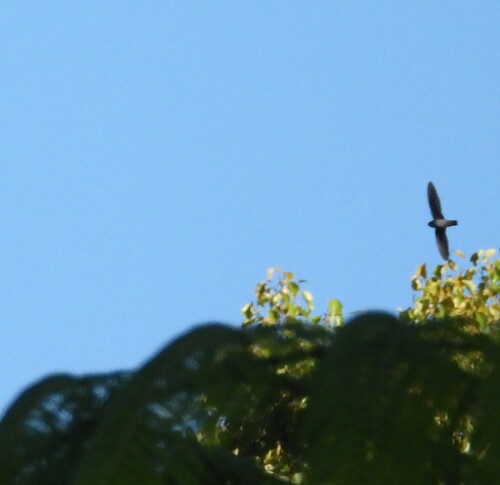 Plume-toed Swiftlet
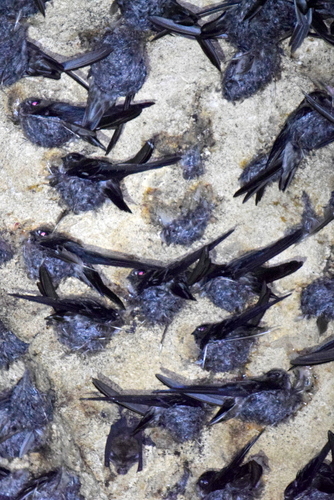 Black-nest Swiftlet
In breve
Il segno distintivo più affidabile tra Plume-toed Swiftlet e Black-nest Swiftlet è la presenza di un dorso e ali verde-blu scuro e lucido senza macchie chiare sulla coda o sul posteriore su Plume-toed, rispetto all'aspetto generalmente più opaco e meno lucido di Black-nest, che manca anche di macchie chiare sulla coda e sul posteriore. Plume-toed è più piccolo e compatto, con una coda quadrata e un ciuffo unico di piume sul dito posteriore (hallux), mentre Black-nest è più grande e ha ali più lunghe. Entrambe le specie possono apparire simili in volo, specialmente a distanza, ma un'attenta attenzione a dimensioni, lucentezza e dettagli del piumaggio può aiutare a separarle. I modelli specifici delle ali superiori per i giovani non sono descritti per nessuna delle due specie, quindi concentrati sul piumaggio e sulla struttura degli adulti.
Consigli di identificazione
- Dimensioni e struttura: Plume-toed Swiftlet è nettamente più piccolo e compatto rispetto a Black-nest. In un confronto diretto, cerca un corpo e una coda visibilmente più corti.
- Forma della coda: Plume-toed ha una coda quadrata, che può essere vista in buone viste di volo. Anche la coda di Black-nest è quadrata o solo leggermente incisa, quindi questo è un supporto ma non definitivo.
- Lucentezza delle parti superiori: Plume-toed mostra una forte lucentezza verde-blu scuro sul dorso e sulle ali superiori in buona luce. Black-nest è generalmente più opaco e manca di questa intensa lucentezza.
- Macchie sul posteriore e sulla coda: Entrambe le specie mancano di un posteriore chiaro e di macchie bianche sulla coda, quindi l'assenza di questi segni non aiuta a separarle; fai attenzione a confonderle con altre swiftlet che mostrano queste caratteristiche.
- Modello delle parti inferiori: Plume-toed ha grigio scuro sulla gola e sul petto superiore, che si fonde in grandi chevron grigi chiari sul petto inferiore e sui fianchi, con la pancia spesso bianca. Black-nest è più uniformemente scuro sotto, con meno contrasto e chevron meno evidenti.
- Ciuffo dell'hallux: Solo Plume-toed ha un ciuffo di piccole piume sul dito posteriore (hallux), ma questo è quasi mai visibile nel campo e non è un segno pratico per il campo.
- Stile di volo: La dimensione più piccola di Plume-toed gli conferisce un volo più fluttuante e agile con battiti d'ali rapidi e superficiali. Black-nest appare più stabile e potente in volo.
- Habitat e distribuzione: Se ci si trova in una foresta di pianura nella Penisola Malese, a Sumatra o a Borneo, entrambe le specie sono possibili, ma Plume-toed è più limitato alle pianure. Black-nest è più diffuso e si trova anche in foreste montane.
- Nessuna differenza nel modello delle ali per i giovani/immaturi: Non ci sono segni descritti specifici per i giovani sulle ali superiori o sulla coda per nessuna delle due specie, quindi tutte le età sono separate da caratteristiche simili agli adulti.
- Nessun posteriore chiaro o macchie sulla coda: Se vedi un posteriore chiaro o macchie sulla coda, stai guardando una specie di swiftlet diversa.
- Nessuna differenza vocale affidabile descritta: Le vocalizzazioni non sono descritte nelle note e non dovrebbero essere utilizzate per la separazione.
- Contesto in stormi misti: In stormi misti di swiftlet, usa dimensioni e lucentezza per individuare Plume-toed tra i più grandi e opachi Black-nest Swiftlets.
- Condizioni di illuminazione: La lucentezza verde-blu di Plume-toed è meglio visibile in buona luce; in scarsa luce, entrambe le specie possono apparire uniformemente scure, rendendo difficile la separazione.
- Attenzione alla sovrapposizione con altre swiftlet: Entrambe le specie possono essere confuse con altre swiftlet di Collocalia e Aerodramus; escludi sempre il posteriore chiaro e le macchie sulla coda prima di concentrarti su queste due.
- Nessun dimorfismo sessuale: Entrambi i sessi sembrano simili in ciascuna specie, quindi il sesso non è un segno utile per il campo.
Taglia
Plume-toed Swiftlet è visibilmente più piccolo, misurando 9–10 cm di lunghezza [wikipedia], e appare compatto a mano o da vicino. Black-nest Swiftlet è più grande, anche se le misurazioni precise non sono fornite nelle note; è generalmente descritto come un swiftlet di dimensioni medie-grandi. In stormi misti, Plume-toed apparirà nettamente più piccolo e con una coda più corta rispetto a Black-nest.
Piumaggio
- Piumaggio giovanile/immaturo: Non ci sono segni specifici delle ali superiori o segni di volo legati all'età descritti per nessuna delle due specie, quindi la separazione si basa su caratteristiche simili agli adulti anche nei giovani uccelli.
- Adulti: Plume-toed Swiftlet mostra una lucentezza uniforme verde-blu scuro sul dorso e sulle ali superiori, con una coda quadrata e senza posteriore chiaro o macchie bianche sulla coda. Le sue parti inferiori sono grigio scuro sulla gola e sul petto superiore, che si fonde in grandi chevron grigi sul petto inferiore e sui fianchi, diventando solitamente bianchi sulla pancia. Black-nest Swiftlet è generalmente più opaco nel complesso, mancando della forte lucentezza verde-blu; le sue parti inferiori sono meno distintamente chevronate e più uniformemente scure. Entrambe le specie mancano di macchie chiare sul posteriore e sulla coda, quindi questo non è un segno di separazione.
- Ciuffo dell'hallux: Solo Plume-toed ha un ciuffo visibile di piccole piume sul dito posteriore (hallux), ma questo è raramente visibile sul campo.
Comportamento
Entrambe le specie sono insettivori aerei e trascorrono la maggior parte del loro tempo in volo, spesso in stormi misti. Plume-toed Swiftlet, essendo più piccolo, può apparire più fluttuante e agile, con battiti d'ali rapidi e superficiali. Black-nest Swiftlet, essendo più grande, mostra tipicamente un volo più stabile e potente. Entrambe le specie raramente si posano in aperto, quindi la maggior parte delle viste saranno di uccelli in volo.
Habitat
Plume-toed Swiftlet si trova sulle isole dell'Oceano Indiano orientale, nella Penisola Malese, a Sumatra e a Borneo, preferendo foreste umide tropicali o subtropicali di pianura. Black-nest Swiftlet ha una gamma più ampia, inclusi Brunei, Indonesia, Malesia, Myanmar, Filippine, Singapore, Thailandia e Vietnam, e si trova sia in foreste umide di pianura che montane. Nelle aree di sovrapposizione (Penisola Malese, Borneo), l'habitat da solo non è diagnostico, ma Plume-toed è più limitato alle pianure.
Plume-toed Swiftlet · Black-nest Swiftlet · I miei uccelli difficili