

Motmot

ハネアシユビアナツバメ 対 オオアナツバメ

Collocalia affinis 対 Aerodramus maximus

ハネアシユビアナツバメとオオアナツバメのクイズ
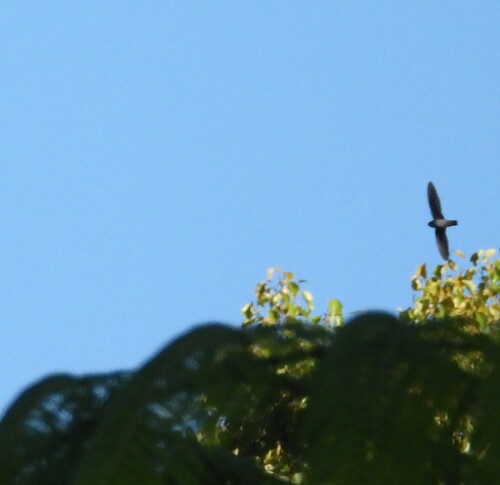
ハネアシユビアナツバメ (Collocalia affinis) ハネアシユビアナツバメ
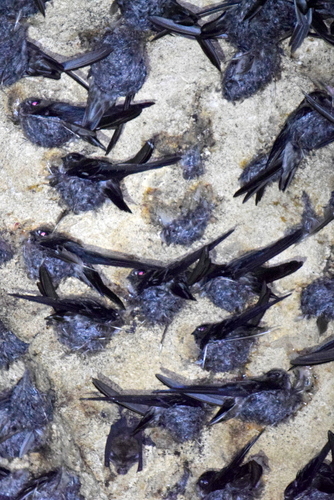
オオアナツバメ (Aerodramus maximus) オオアナツバメ

メディア

読み込み中…

要点

ハネアシユビアナツバメ と オオアナツバメ の間で最も信頼できるフィールドマークは、Plume-toed に見られる 暗い光沢のある緑がかった青の背中と翼で、淡い尾羽や尾の斑点がないこと です。対して、Black-nest は一般的に鈍い外観で、光沢が少なく、淡い尾羽や尾の斑点もありません。Plume-toed は小さくてコンパクトで、四角い尾と後ろの足(ハルクス)に独特の羽毛の房がありますが、Black-nest は大きくて長い翼を持っています。両種は飛行中に似て見えることがありますが、サイズ、光沢、微妙な羽毛の詳細に注意を払うことで区別できます。幼鳥特有の上翼パターンはどちらの種にも記載されていないため、成鳥と一般的な羽毛および構造に焦点を当ててください。

識別のコツ

  1. Size and structure: ハネアシユビアナツバメ は Black-nest よりも明らかに小さくてコンパクトです。直接比較する際には、体と尾が明らかに短いことを探してください。
  2. Tail shape: Plume-toed は四角い尾を持ち、良好な飛行ビューで見ることができます。Black-nest の尾も四角いか、わずかに切れ込みがあるため、これは支持的ですが決定的ではありません。
  3. Upperparts gloss: Plume-toed は良好な光の下で背中と上翼に強い暗い緑がかった青の光沢を示します。Black-nest は一般的に鈍く、この強い光沢がありません。
  4. Rump and tail spots: 両種は淡い尾羽と白い尾の斑点がないため、これらのマークの欠如は区別に役立ちません。他の尾羽や尾の斑点を持つアナツバメと混同しないように注意してください。
  5. Underparts pattern: Plume-toed は喉と上胸に暗い灰色があり、下胸と側面に大きな淡い灰色の逆V字型があり、腹部はしばしば白くなります。Black-nest は下部がより均一に暗く、コントラストが少なく、逆V字型もあまり目立ちません。
  6. Hallux tuft: Only Plume-toed has a tuft of small feathers on the rear toe (hallux), but this is almost never visible in the field and is not a practical field mark.
  7. Flight style: Plume-toed の小さいサイズは、よりひらひらとした敏捷な飛行を与え、急速で浅い羽ばたきをします。Black-nest は飛行中により安定していて力強く見えます。
  8. Habitat and range: マレー半島、スマトラ、ボルネオの低地森林にいる場合、両種が可能ですが、Plume-toed は低地により制限されています。Black-nest はより広範囲に分布し、山地の森林にも生息しています。
  9. No juvenile/immature wing pattern difference: どちらの種にも幼鳥特有の上翼や尾のマークは記載されていないため、すべての年齢は成鳥の特徴で区別されます。
  10. No pale rump or tail spots: 淡い尾羽や尾の斑点が見られる場合は、異なるアナツバメの種を見ています。
  11. No reliable vocal differences described: 音声はメモに記載されておらず、区別のために頼るべきではありません。
  12. Context in mixed flocks: 混合アナツバメの群れの中で、サイズと光沢を使って、より大きく鈍い オオアナツバメ の中から Plume-toed を見つけてください。
  13. Lighting conditions: Plume-toed の緑がかった青の光沢は良好な光の下で最もよく見えます。悪い光の下では、両種は均一に暗く見えることがあり、区別が難しくなります。
  14. Beware of overlap with other swiftlets: 両種は他の Collocalia や Aerodramus のアナツバメと混同されることがあります。これらの2種に焦点を当てる前に、淡い尾羽や尾の斑点を常に除外してください。
  15. No sexual dimorphism: 両種の両性は似ているため、性別は有用なフィールドマークではありません。

大きさ

ハネアシユビアナツバメ は明らかに小さく、長さは 9–10 cm [wikipedia] で、手の中や近距離でコンパクトに見えます。オオアナツバメ は大きいですが、正確な測定値はメモに記載されていません。一般的には中型から大型のアナツバメとして説明されています。混合群れの中では、Plume-toed は Black-nest と比較して明らかに小さく、短い尾を持っているように見えます。

羽色

行動

両種は空中の昆虫食であり、ほとんどの時間を飛行中に過ごし、しばしば混合群れで見られます。ハネアシユビアナツバメ は小さいため、よりひらひらとした敏捷な飛行をすることがあり、急速で浅い羽ばたきをします。オオアナツバメ は大きいため、通常はより安定していて力強い飛行を示します。両種は開けた場所に止まることはほとんどないため、ほとんどの視界は飛行中の鳥になります。

生息環境

ハネアシユビアナツバメ はインド洋の東部の島々、マレー半島、スマトラ、低地ボルネオに生息し、亜熱帯または熱帯の湿った低地森林を好みます。オオアナツバメ はより広範囲に分布し、ブルネイ、インドネシア、マレーシア、ミャンマー、フィリピン、シンガポール、タイ、ベトナムを含み、低地と山地の湿った森林の両方に生息しています。重複する地域(マレー半島、ボルネオ)では、ハビタットだけでは診断できませんが、Plume-toed は低地により制限されています。

より良い説明を送る

比較と同じ項目を使ってください。文章はすぐに公開されます。

The most reliable field mark between Plume-toed Swiftlet and Black-nest Swiftlet is the presence of a dark, glossy greenish-blue back and wings with no pale rump or tail spots on Plume-toed, versus the generally duller, less glossy appearance of Black-nest, which also lacks pale rump and tail spots. Plume-toed is smaller and more compact, with a square tail and a unique tuft of feathers on the rear toe (hallux), while Black-nest is larger and longer-winged. Both species can appear similar in flight, especially at a distance, but careful attention to size, gloss, and subtle plumage details can help separate them. Juvenile-specific upperwing patterns are not described for either species, so focus on adult and general plumage and structure.

  1. Size and structure: Plume-toed Swiftlet is distinctly smaller and more compact than Black-nest. In direct comparison, look for a noticeably shorter body and tail.
  2. Tail shape: Plume-toed has a square tail, which can be seen in good flight views. Black-nest's tail is also square or only slightly notched, so this is supportive but not definitive.
  3. Upperparts gloss: Plume-toed shows a strong dark greenish-blue gloss on the back and upper wings in good light. Black-nest is generally duller and lacks this intense gloss.
  4. Rump and tail spots: Both species lack a pale rump and white tail spots, so the absence of these marks does not help separate them; beware of confusing with other swiftlets that do show these features.
  5. Underparts pattern: Plume-toed has dark grey on the throat and upper breast, merging into large, pale grey chevrons on the lower breast and flanks, with the belly often white. Black-nest is more uniformly dark below, with less contrast and less obvious chevrons.
  6. Hallux tuft: Only Plume-toed has a tuft of small feathers on the rear toe (hallux), but this is almost never visible in the field and is not a practical field mark.
  7. Flight style: Plume-toed's smaller size gives it a more fluttery, agile flight with rapid, shallow wingbeats. Black-nest appears steadier and more powerful in flight.
  8. Habitat and range: If in lowland forest on the Malay Peninsula, Sumatra, or Borneo, both species are possible, but Plume-toed is more restricted to lowlands. Black-nest is more widespread and also occurs in montane forests.
  9. No juvenile/immature wing pattern difference: There are no described juvenile-specific upperwing or tail marks for either species, so all ages are separated by adult-like features.
  10. No pale rump or tail spots: If you see a pale rump or tail spots, you are looking at a different swiftlet species.
  11. No reliable vocal differences described: Vocalizations are not described in the notes and should not be relied upon for separation.
  12. Context in mixed flocks: In mixed swiftlet flocks, use size and gloss to pick out Plume-toed among larger, duller Black-nest Swiftlets.
  13. Lighting conditions: The greenish-blue gloss of Plume-toed is best seen in good light; in poor light, both species may appear uniformly dark, making separation difficult.
  14. Beware of overlap with other swiftlets: Both species can be confused with other Collocalia and Aerodramus swiftlets; always rule out pale rump and tail spots before focusing on these two.
  15. No sexual dimorphism: Both sexes look alike in each species, so sex is not a useful field mark.

Plume-toed Swiftlet is noticeably smaller, measuring 9–10 cm in length [wikipedia], and appears compact in the hand or at close range. Black-nest Swiftlet is larger, though precise measurements are not provided in the notes; it is generally described as a medium-large swiftlet. In mixed flocks, Plume-toed will look distinctly smaller and shorter-tailed compared to Black-nest.

  • Juvenile/immature plumage: No specific upperwing or age-related flight marks are described for either species, so separation relies on adult-like features even in young birds.
  • Adults: Plume-toed Swiftlet shows a uniform dark greenish-blue gloss on the back and upper wings, with a square tail and no pale rump or white tail spots. Its underparts are dark grey on the throat and upper breast, merging into large grey chevrons on the lower breast and flanks, usually becoming white on the belly. Black-nest Swiftlet is generally duller overall, lacking the strong greenish-blue gloss; its underparts are less distinctly chevroned and more uniformly dark. Both species lack pale rump patches and tail spots, so this is not a separating feature.
  • Hallux tuft: Only Plume-toed has a visible tuft of small feathers on the rear toe (hallux), but this is rarely visible in the field.

Both species are aerial insectivores and spend most of their time on the wing, often in mixed flocks. Plume-toed Swiftlet, being smaller, may appear more fluttery and agile, with rapid, shallow wingbeats. Black-nest Swiftlet, being larger, typically shows steadier, more powerful flight. Both species rarely perch in the open, so most views will be of birds in flight.

Plume-toed Swiftlet is found on eastern Indian Ocean islands, the Malay Peninsula, Sumatra, and lowland Borneo, favoring subtropical or tropical moist lowland forests. Black-nest Swiftlet has a broader range, including Brunei, Indonesia, Malaysia, Myanmar, the Philippines, Singapore, Thailand, and Vietnam, and occurs in both lowland and montane moist forests. In areas of overlap (Malay Peninsula, Borneo), habitat alone is not diagnostic, but Plume-toed is more restricted to lowlands.

変更を破棄しますか?

保存していない編集があります。今離れると失われます。

ハネアシユビアナツバメ · オオアナツバメ · 苦手な鳥