

plain prinia vs orange-bellied flowerpecker
Prinia inornata versus Dicaeum trigonostigma
Jogue um quiz com plain prinia e orange-bellied flowerpecker
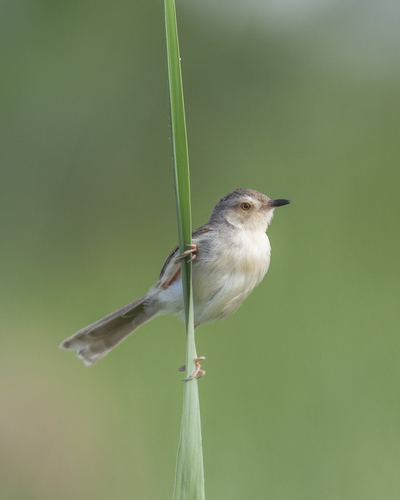 plain prinia
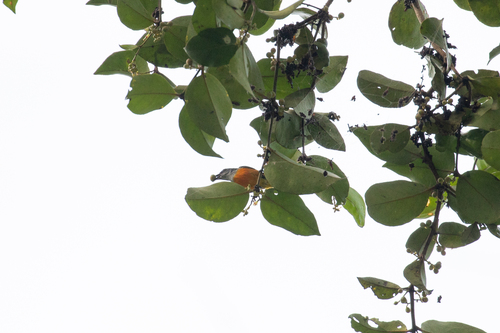 orange-bellied flowerpecker
Em resumo
A marca de campo mais confiável para separar a plain prinia da orange-bellied flowerpecker é a coloração e estrutura geral: a plain prinia é uma warbler esbelta, de cauda longa e marrom, com um supercílios pálido e partes inferiores simples, enquanto a orange-bellied flowerpecker é um pássaro compacto, de cauda curta, com um bico pequeno e ligeiramente curvado e, nos machos, uma coloração azul e laranja marcante. As fêmeas da flowerpecker são mais apagadas, mas ainda mostram uma barriga amarela e um rabo laranja, nunca as partes inferiores uniformemente buffy da prinia. Em voo ou empoleirada, a longa cauda da prinia e sua postura ereta contrastam fortemente com o perfil atarracado e arredondado da flowerpecker. Ambas as espécies podem ser encontradas em regiões sobrepostas do Sudeste Asiático, mas sua estrutura e plumagem são distintas em todas as idades e estações.
Dicas de identificação
- Comprimento e forma da cauda: A plain prinia tem uma cauda longa e graduada, frequentemente mantida ereta ou aberta; a orange-bellied flowerpecker tem uma cauda muito curta e atarracada. Esta é a verificação estrutural mais rápida, especialmente em voo ou quando empoleirada.
- Construção geral: A prinia é esbelta e alongada, com pernas fortes e um bico fino e reto. A flowerpecker é compacta, arredondada, com um bico curto e ligeiramente curvado.
- Forma do bico: O bico da prinia é reto, fino e preto; o da flowerpecker é mais curto, mais grosso na base e ligeiramente curvado na ponta—útil mesmo à distância.
- Supercílios: A plain prinia apresenta um supercílios branco curto distinto acima do olho; a flowerpecker não possui nenhuma sobrancelha pálida.
- Coloração do macho da flowerpecker: Os machos são inconfundíveis—azul-ardósia acima, com uma grande mancha laranja no manto e partes inferiores laranja a amarelas. Nenhuma prinia apresenta azul ou laranja.
- Fêmea da flowerpecker: As fêmeas são oliva-marrom acima, amarelas abaixo, com um rabo laranja pálido. Elas não possuem o supercílios branco da prinia e nunca mostram partes inferiores uniformemente buffy.
- Partes inferiores da prinia: Sempre brancas a buff, nunca amarelas ou laranja brilhantes. As partes inferiores são simples, sem manchas de cor.
- Cor das asas e costas: A prinia é marrom-cinza acima, com bordas ruivas nas asas fechadas (na plumagem de reprodução). Os machos da flowerpecker são azuis acima; as fêmeas são oliva-marrom.
- Mudança sazonal na prinia: No inverno, a prinia torna-se marrom mais quente acima e mais buffy abaixo, com uma cauda mais longa. Isso pode fazer com que pareça ainda menos uma flowerpecker.
- Diferenças sexuais: A flowerpecker apresenta um forte dimorfismo sexual; os sexos da prinia são idênticos.
- Comportamento: A prinia é frequentemente vista em áreas abertas e gramadas, empoleirada ereta e balançando sua cauda. A flowerpecker é mais propensa a estar em árvores, movendo-se rapidamente, às vezes pairando sobre flores.
- Contexto do habitat: A prinia em campo aberto, a flowerpecker em florestas ou jardins—use o habitat como uma pista de apoio.
- Postura empoleirada: A prinia empoleira-se ereta, frequentemente em caules expostos; a flowerpecker é mais horizontal, agarrando-se a galhos ou flores.
- Estilo de voo: O voo da prinia é fraco e ondulante, com a longa cauda evidente; o voo da flowerpecker é saltitante e direto, com uma aparência compacta e de cauda curta.
- Sem laranja ou azul na prinia: Qualquer indício de azul ou laranja no pássaro elimina imediatamente a possibilidade de ser uma prinia.
Tamanho
A plain prinia é ligeiramente maior e mais alongada, medindo cerca de 13–14 cm de comprimento, com uma cauda notavelmente longa e uma construção esbelta [wikipedia]. A orange-bellied flowerpecker é menor e muito mais compacta, com uma massa corporal de cerca de 7 g [wikidata], e uma cauda curta e atarracada. As proporções gerais da flowerpecker são mais arredondadas e robustas, enquanto a prinia parece esbelta e alongada, especialmente quando a cauda está ereta ou aberta.
Plumagem
- Juvenil/imaturo/primeiro inverno: Nenhum padrão específico de asa juvenil é descrito para ambas as espécies, mas as diferenças relacionadas à idade são mais sutis nas fêmeas da flowerpecker (mais apagadas, oliva-marrom com barriga amarela e rabo laranja) e nas prinias não reprodutoras (marrom mais quente acima, mais buffy abaixo, cauda mais longa).
- Plumagem de reprodução adulta: A plain prinia é marrom-cinza acima com um supercílios branco, bordas de asas ruivas e partes inferiores brancas a buff; os sexos são idênticos. Os machos da orange-bellied flowerpecker são inconfundíveis: partes superiores azul-ardósia, grande mancha laranja no manto, partes inferiores laranja a amarelas, e uma garganta e peito superiores azul-cinza pálido. As fêmeas são oliva-marrom acima, amarelas abaixo, com um rabo laranja pálido—nunca mostrando as partes inferiores buffy simples ou o supercílios branco da prinia.
- Mudança sazonal: A plain prinia torna-se marrom mais quente acima e mais buffy abaixo no inverno, com uma cauda mais longa. A subespécie do Sri Lanka mantém a plumagem de verão durante todo o ano. A flowerpecker mostra pouca mudança sazonal, mas as diferenças sexuais são fortes.
Comportamento
A plain prinia é frequentemente vista empoleirada ereta em caules de grama ou arbustos baixos, frequentemente balançando ou abrindo sua longa cauda. Ela se move ativamente através de campos abertos, frequentemente em pares ou pequenos grupos. A orange-bellied flowerpecker é mais arbórea, tipicamente forrageando na copa ou nos níveis médios das árvores, movendo-se rapidamente e muitas vezes pairando brevemente sobre flores ou frutas. Seus movimentos são mais saltitantes e menos ativos com a cauda do que a prinia. A alimentação da flowerpecker é mais especializada em néctar e frutas, enquanto a prinia coleta insetos da folhagem e da grama.
Habitat
Ambas as espécies ocorrem no Sudeste Asiático, mas a plain prinia prefere campos abertos, pastagens, arbustos e bordas de áreas úmidas—raramente aventurando-se em florestas densas. A orange-bellied flowerpecker está mais intimamente ligada a habitats florestais, jardins e plantações, especialmente onde árvores em flor ou frutíferas estão presentes. Ver um pássaro em grama alta ou arbustos abertos favorece fortemente a prinia; na copa ou em árvores floridas, a flowerpecker é mais provável.
plain prinia · orange-bellied flowerpecker · Minhas aves difíceis