

pink-necked green-pigeon vs ashy-headed green-pigeon
Treron vernans versus Treron phayrei
Jogue um quiz com pink-necked green-pigeon e ashy-headed green-pigeon
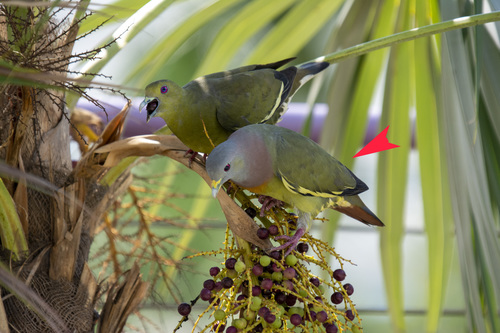 pink-necked green-pigeon
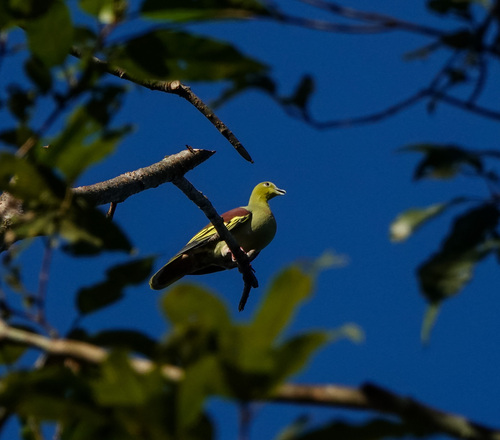 ashy-headed green-pigeon
Em resumo
A marca de campo mais confiável entre o pink-necked green-pigeon e o ashy-headed green-pigeon é o pescoço rosa e o peito laranja do macho pink-necked, que o ashy-headed nunca apresenta. Em voo, o pink-necked também exibe uma faixa amarela na asa (das tertiais com bordas amarelas), visível em ambos os sexos e especialmente em juvenis e fêmeas, enquanto o ashy-headed não possui esse recurso. Fêmeas e imaturos de ambas as espécies são verdes no geral e podem ser confusos, mas o pink-necked é geralmente mais brilhante por baixo e apresenta uma barriga amarelada, enquanto o ashy-headed é mais opaco. Ambos são pombos verdes de tamanho médio, mas o pink-necked é ligeiramente maior e mais provável de ser encontrado em habitats de baixada, abertos ou urbanos, enquanto o ashy-headed é mais restrito a áreas florestadas mais ao norte e oeste na Ásia.
Dicas de identificação
- Macho Pink-necked: pescoço rosa e peito laranja – Apenas o macho pink-necked green-pigeon apresenta um pescoço rosado e peito laranja com uma cabeça cinza; machos ashy-headed nunca mostram isso, permanecendo verdes com uma cabeça acinzentada.
- Faixa amarela na asa em voo (todas as idades, ambos os sexos, especialmente juvenis/fêmeas): O pink-necked exibe uma distinta faixa amarela na asa (das tertiais com bordas amarelas) em voo ou quando as asas estão parcialmente abertas. O ashy-headed não possui essa faixa amarela, então qualquer pombo verde com uma faixa amarela na asa é um pink-necked.
- Barriga e partes inferiores (fêmeas/imaturos): Fêmeas e juvenis pink-necked são mais brilhantes por baixo, com uma barriga e garganta amareladas, enquanto o ashy-headed é verde mais opaco e carece de tons amarelos fortes.
- Padrão da cauda: O pink-necked tem uma cauda cinza com uma faixa terminal preta e coberturas superiores da cauda castanhas; procure por esse contraste quando empoleirado. A cauda do ashy-headed é menos contrastante.
- Cor da cabeça (fêmeas/imaturos): Fêmeas pink-necked têm uma coroa e nuca esverdeadas, misturando-se ao rosto e garganta amarelados. Fêmeas ashy-headed são mais uniformemente verdes opacas, com um tom acinzentado na cabeça.
- Tamanho: O pink-necked é ligeiramente maior e mais pesado, mas isso é sutil e geralmente não é diagnóstico, a menos que ambas as espécies estejam lado a lado.
- Habitat: O pink-necked é muito mais provável de ser encontrado em habitats abertos, de baixada ou urbanos (jardins, parques, plantações, manguezais), enquanto o ashy-headed prefere florestas ou bordas florestais, especialmente em regiões montanhosas ou de sopé.
- Distribuição geográfica: Se estiver nas Filipinas, Indonésia ou sul da Malásia/Singapura, é um pink-necked. O ashy-headed é encontrado mais ao norte e oeste (Nepal, NE da Índia, Bangladesh, SW da China, Mianmar, Tailândia, Laos, Vietnã). A sobreposição é possível na Tailândia e no Vietnã, então use a plumagem e o habitat.
- Tamanho do grupo: O pink-necked frequentemente forma bandos maiores, especialmente em árvores frutíferas ou poleiros; o ashy-headed geralmente é solitário ou em pequenos grupos.
- Comportamento: Ambas as espécies se alimentam de frutas e sementes e têm um voo rápido e direto, mas o pink-necked é mais conspícuo e tolerante à presença humana.
- Voz: Não é confiável para separação; ambos são geralmente silenciosos, com o pink-necked às vezes emitindo um suave chamado de assobio ou 'krrak krrak' em poleiros comunitários.
- Dimorfismo sexual: Apenas o pink-necked apresenta um forte dimorfismo sexual (macho com pescoço rosa/peito laranja); os sexos do ashy-headed são semelhantes.
- Confusão juvenil: O imaturo pink-necked se assemelha à fêmea adulta, mas é mais acinzentado por cima; o imaturo ashy-headed é verde opaco no geral. A faixa amarela na asa em voo ainda é um bom separador.
- Cor das pernas e bico: O pink-necked tem pernas rosa ou avermelhadas e um bico pálido (branco, azul-esverdeado ou cinza); a cor das pernas e do bico do ashy-headed não é descrita, mas não é uma marca de campo primária.
- Quando em dúvida: Se você ver um pombo verde com uma faixa amarela na asa ou um macho com pescoço rosa e peito laranja, é um pink-necked. Se o pássaro for verde opaco com uma cabeça acinzentada e sem faixa amarela na asa, especialmente em habitat florestal ao norte da Península da Malásia, é provavelmente um ashy-headed.
Tamanho
O pink-necked green-pigeon é ligeiramente maior, medindo 25–30 cm de comprimento e pesando 105–160 g [wikipedia]. O ashy-headed green-pigeon é semelhante em estrutura, mas geralmente é um pouco menor e mais esguio, embora medidas exatas não sejam fornecidas nas notas. No campo, a diferença de tamanho é sutil e muitas vezes não confiável, a menos que ambos sejam vistos juntos.
Plumagem
- Contraste juvenil e feminino: Ambas as espécies são verdes no geral, mas fêmeas e juvenis pink-necked são mais brilhantes, com uma barriga e garganta amareladas, e uma coroa e nuca esverdeadas. Fêmeas e imaturos ashy-headed são verdes mais opacos e carecem dos fortes tons amarelos abaixo.
- Contraste masculino: Apenas o macho pink-necked apresenta um pescoço rosado e peito laranja, com uma cabeça cinza. Machos ashy-headed não mostram essas cores e permanecem mais uniformemente verdes com uma cabeça acinzentada.
- Padrão da asa em voo (todas as idades): O pink-necked exibe uma faixa amarela na asa (das tertiais com bordas amarelas), visível em voo em ambos os sexos e juvenis. O ashy-headed não possui essa faixa amarela, tornando isso uma marca de campo chave quando os pássaros estão voando ou empoleirados com as asas parcialmente abertas.
- Cauda: O pink-necked tem uma cauda cinza com uma faixa terminal preta e coberturas superiores da cauda castanhas, que podem ser visíveis quando empoleirado. O padrão da cauda do ashy-headed não é descrito em detalhes, mas carece do forte contraste do pink-necked.
Comportamento
Ambas as espécies se alimentam de frutas e sementes e têm um voo rápido e direto típico dos pombos Treron. O pink-necked é frequentemente visto em bandos maiores e mais conspícuos, especialmente em árvores frutíferas ou poleiros comunitários, e é mais provável de ser encontrado em ambientes abertos ou urbanos. O ashy-headed geralmente é solitário ou em pequenos grupos e tende a ser mais discreto, preferindo florestas densas ou bordas florestais.
Habitat
O pink-necked green-pigeon é amplamente distribuído e comum no Sudeste Asiático, favorecendo áreas de baixada, bordas florestais, manguezais, jardins, plantações e até parques urbanos. É especialmente provável em habitats abertos ou modificados pelo homem. O ashy-headed green-pigeon é encontrado mais ao norte e oeste (Nepal, NE da Índia, Bangladesh, SW da China, Mianmar, Tailândia, Laos, Vietnã) e é mais restrito a áreas florestadas, frequentemente em florestas montanhosas ou de sopé. A sobreposição é possível na Tailândia e no Vietnã, mas a preferência de habitat pode ajudar: pink-necked em aberto/urbano, ashy-headed em floresta.
Voz
Ambas as espécies são geralmente silenciosas. O pink-necked green-pigeon não é muito vocal, mas os machos podem emitir um chamado de assobio tri-silábico que termina em um coo, e um 'krrak krrak' áspero às vezes, principalmente em poleiros comunitários ou ao encontrar comida. Nenhuma vocalização distintiva é descrita para o ashy-headed nas notas, mas os pombos Treron normalmente têm chamados suaves, de assobio ou grasnido, em vez de coos clássicos de pombo. A voz não é um separador confiável no campo.
pink-necked green-pigeon · ashy-headed green-pigeon · Minhas aves difíceis