

Pink-necked Green-Pigeon vs Ashy-headed Green-Pigeon
Treron vernans contro Treron phayrei
Fai un quiz con Pink-necked Green-Pigeon e Ashy-headed Green-Pigeon
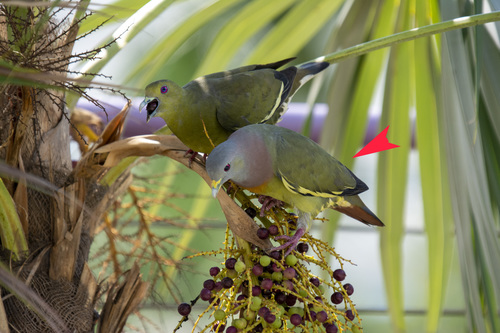 Pink-necked Green-Pigeon
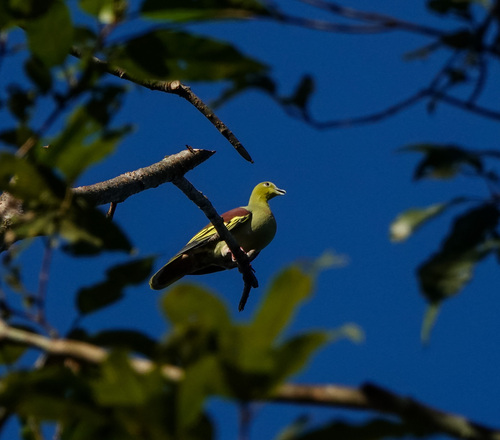 Ashy-headed Green-Pigeon
In breve
Il segno distintivo più affidabile tra il Piccione Verde dal collo rosa e il Piccione Verde dalla testa cenere è il collo rosa distintivo e il petto arancione del maschio del Piccione Verde dal collo rosa, che il Piccione Verde dalla testa cenere non mostra mai. In volo, il Piccione Verde dal collo rosa mostra anche una barra gialla attraverso l'ala (dai terziali con bordo giallo), visibile in entrambi i sessi e specialmente nei giovani e nelle femmine, mentre il Piccione Verde dalla testa cenere manca di questa caratteristica. Le femmine e gli immaturi di entrambe le specie sono verdi nel complesso e possono essere confusi, ma il Piccione Verde dal collo rosa è generalmente più luminoso sotto e mostra un ventre giallastro, mentre il Piccione Verde dalla testa cenere è più opaco. Entrambi sono piccioni verdi di taglia media, ma il Piccione Verde dal collo rosa è leggermente più grande e più probabile in habitat di pianura, aperti o urbani, mentre il Piccione Verde dalla testa cenere è più ristretto a zone forestali più a nord e a ovest in Asia.
Consigli di identificazione
- Maschio Piccione Verde dal collo rosa: collo rosa e petto arancione – Solo il maschio del Piccione Verde dal collo rosa mostra un collo rosa e un petto arancione con una testa grigia; i maschi del Piccione Verde dalla testa cenere non mostrano mai questo, rimanendo verdi con una testa cenere (grigia).
- Barra gialla sull'ala in volo (tutte le età, entrambi i sessi, specialmente giovani/femmine): Il Piccione Verde dal collo rosa mostra una barra gialla distintiva attraverso l'ala (dai terziali con bordo giallo) in volo o quando le ali sono parzialmente aperte. Il Piccione Verde dalla testa cenere manca di questa barra gialla, quindi qualsiasi piccione verde con una barra gialla è un Piccione Verde dal collo rosa.
- Ventre e parti inferiori (femmine/immaturi): Le femmine e i giovani del Piccione Verde dal collo rosa sono più luminosi sotto, con un ventre e una gola giallastri, mentre il Piccione Verde dalla testa cenere è verde più opaco e manca di forti toni gialli.
- Schema della coda: Il Piccione Verde dal collo rosa ha una coda grigia con una banda terminale nera e copritrici della coda castagne; cerca questo contrasto quando è posato. La coda del Piccione Verde dalla testa cenere è meno contrastante.
- Colore della testa (femmine/immaturi): Le femmine del Piccione Verde dal collo rosa hanno una corona e una nuca verdastre, che si fondono nel viso e nella gola giallastri. Le femmine del Piccione Verde dalla testa cenere sono più uniformemente verdi opache, con una sfumatura cenere sulla testa.
- Dimensioni: Il Piccione Verde dal collo rosa è leggermente più grande e pesante, ma questo è sottile e di solito non è diagnostico a meno che entrambe le specie non siano affiancate.
- Habitat: Il Piccione Verde dal collo rosa è molto più probabile in habitat aperti, di pianura o urbani (giardini, parchi, piantagioni, mangrovie), mentre il Piccione Verde dalla testa cenere preferisce foreste o margini forestali, specialmente in regioni collinari o di piede di collina.
- Distribuzione geografica: Se sei nelle Filippine, in Indonesia o nel sud della Malesia/Singapore, è un Piccione Verde dal collo rosa. Il Piccione Verde dalla testa cenere si trova più a nord e a ovest (Nepal, NE India, Bangladesh, SW Cina, Myanmar, Thailandia, Laos, Vietnam). È possibile sovrapposizione in Thailandia e Vietnam, quindi usa il piumaggio e l'habitat.
- Dimensione del gruppo: Il Piccione Verde dal collo rosa forma spesso stormi più grandi, specialmente presso alberi fruttiferi o posatoi; il Piccione Verde dalla testa cenere è di solito solitario o in piccoli gruppi.
- Comportamento: Entrambe le specie si nutrono di frutta e semi e hanno un volo veloce e diretto, ma il Piccione Verde dal collo rosa è più appariscente e tollerante della presenza umana.
- Voce: Non è affidabile per la separazione; entrambi sono generalmente silenziosi, con il Piccione Verde dal collo rosa che a volte emette un richiamo fischiante morbido o 'krrak krrak' nei posatoi comuni.
- Dimorfismo sessuale: Solo il Piccione Verde dal collo rosa mostra un forte dimorfismo sessuale (maschio con collo rosa/petto arancione); i sessi del Piccione Verde dalla testa cenere sono simili.
- Confusione giovanile: L'immaturo del Piccione Verde dal collo rosa assomiglia alla femmina adulta ma è più grigio sopra; l'immaturo del Piccione Verde dalla testa cenere è verde opaco nel complesso. La barra gialla sull'ala in volo è ancora un buon separatore.
- Colore delle gambe e del becco: Il Piccione Verde dal collo rosa ha gambe rosa o rosse e un becco chiaro (bianco, blu-verde o grigio); il colore delle gambe e del becco del Piccione Verde dalla testa cenere non è descritto ma non è un segno distintivo primario.
- Quando hai dubbi: Se vedi un piccione verde con una barra gialla sull'ala o un maschio con un collo rosa e un petto arancione, è un Piccione Verde dal collo rosa. Se l'uccello è verde opaco con una testa cenere e senza barra gialla sull'ala, specialmente in habitat forestali a nord della Penisola Malese, è probabile che sia un Piccione Verde dalla testa cenere.
Taglia
Il Piccione Verde dal collo rosa è leggermente più grande, misurando 25–30 cm di lunghezza e pesando 105–160 g [wikipedia]. Il Piccione Verde dalla testa cenere è simile nella struttura ma generalmente è un po' più piccolo e snello, anche se le misure esatte non sono fornite nelle note. Sul campo, la differenza di dimensioni è sottile e spesso non è affidabile a meno che entrambi non siano visti insieme.
Piumaggio
- Contrasto tra giovani e femmine: Entrambe le specie sono verdi nel complesso, ma le femmine e i giovani del Piccione Verde dal collo rosa sono più luminosi, con un ventre e una gola giallastri, e una corona e una nuca verdastre. Le femmine e gli immaturi del Piccione Verde dalla testa cenere sono verdi più opachi e mancano dei forti toni gialli sotto.
- Contrasto maschile: Solo il maschio del Piccione Verde dal collo rosa mostra un collo rosa e un petto arancione, con una testa grigia. I maschi del Piccione Verde dalla testa cenere non mostrano questi colori e rimangono più uniformemente verdi con una testa cenere (grigia).
- Schema dell'ala in volo (tutte le età): Il Piccione Verde dal collo rosa mostra una barra gialla attraverso l'ala (dai terziali con bordo giallo), visibile in volo in entrambi i sessi e nei giovani. Il Piccione Verde dalla testa cenere manca di questa barra gialla, rendendo questo un segno distintivo chiave quando gli uccelli volano o sono posati con le ali parzialmente aperte.
- Coda: Il Piccione Verde dal collo rosa ha una coda grigia con una banda terminale nera e copritrici della coda castagne, che possono essere visibili quando è posato. Lo schema della coda del Piccione Verde dalla testa cenere non è descritto in dettaglio, ma manca del forte contrasto del Piccione Verde dal collo rosa.
Comportamento
Entrambe le specie si nutrono di frutta e semi e hanno un volo veloce e diretto tipico dei piccioni Treron. Il Piccione Verde dal collo rosa è spesso visto in stormi più grandi e più appariscenti, specialmente presso alberi fruttiferi o posatoi comuni, ed è più probabile trovarlo in ambienti aperti o urbani. Il Piccione Verde dalla testa cenere è di solito solitario o in piccoli gruppi e tende a essere più riservato, preferendo foreste più dense o margini forestali.
Habitat
Il Piccione Verde dal collo rosa è diffuso e comune nel Sud-est asiatico, preferendo aree di pianura, margini forestali, mangrovie, giardini, piantagioni e persino parchi urbani. È particolarmente probabile in habitat aperti o modificati dall'uomo. Il Piccione Verde dalla testa cenere si trova più a nord e a ovest (Nepal, NE India, Bangladesh, SW Cina, Myanmar, Thailandia, Laos, Vietnam) ed è più ristretto a zone forestali, spesso in foreste collinari o di piede di collina. È possibile sovrapposizione in Thailandia e Vietnam, ma la preferenza per l'habitat può aiutare: Piccione Verde dal collo rosa in aperto/urbano, Piccione Verde dalla testa cenere in foresta.
Voce
Entrambe le specie sono generalmente silenziose. Il Piccione Verde dal collo rosa non è molto vocale, ma i maschi possono emettere un richiamo fischiante trisillabico che termina in un coo, e un 'krrak krrak' stridente a volte, principalmente nei posatoi comuni o quando trovano cibo. Nessuna vocalizzazione distintiva è descritta per il Piccione Verde dalla testa cenere nelle note, ma i piccioni Treron hanno tipicamente richiami morbidi, fischianti o quack piuttosto che i classici coo dei piccioni. La voce non è un separatore affidabile sul campo.
Pink-necked Green-Pigeon · Ashy-headed Green-Pigeon · I miei uccelli difficili