

Motmot

コアオバト 対 ハイガシラアオバト

Treron vernans 対 Treron phayrei

コアオバトとハイガシラアオバトのクイズ
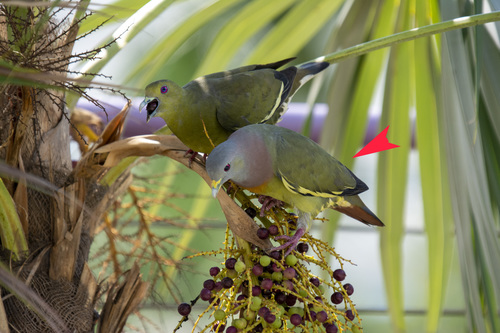
コアオバト (Treron vernans) コアオバト
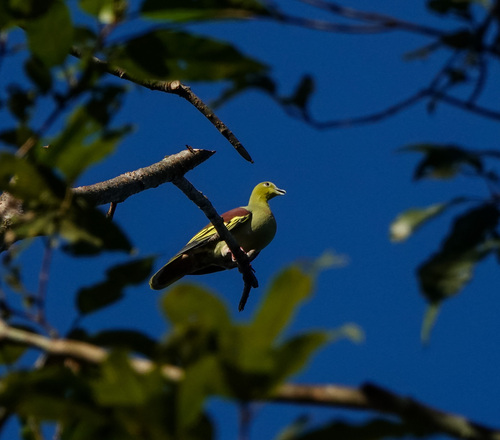
ハイガシラアオバト (Treron phayrei) ハイガシラアオバト

メディア

読み込み中…

要点

コアオバトとハイガシラアオバトの最も信頼できるフィールドマークは、オスのコアオバトの特徴的なピンクがかった首とオレンジ色の胸であり、ハイガシラはこれを示さない。飛行中、コアオバトは翼に黄色のバー(黄色の縁取りのある三次羽から)を示し、両性に見られ、特に幼鳥や雌に顕著であるが、ハイガシラはこの特徴を欠いている。両種の雌と幼鳥は全体的に緑色で混乱を招くことがあるが、コアオバトは一般的に下側が明るく、黄色がかった腹部を示し、ハイガシラは鈍い色合いである。両者は中型の緑色の鳩であるが、コアオバトはやや大きく、低地、開けた場所、または都市環境で見られる可能性が高いのに対し、ハイガシラはアジアの北部や西部の森林地域により制限されている。

識別のコツ

  1. オスのコアオバト:ピンクの首とオレンジ色の胸 – オスのコアオバトだけが灰色の頭を持つピンクがかった首とオレンジ色の胸を示す; ハイガシラのオスはこれを示さず、灰色がかった頭を持つ緑色のままである。
  2. 飛行中の黄色の翼バー(すべての年齢、両性、特に幼鳥/雌): コアオバトは飛行中または翼が部分的に開いているときに翼に黄色のバー(黄色の縁取りのある三次羽から)を示す。ハイガシラはこの黄色のバーを欠いているため、黄色の翼バーを持つ緑色の鳩はコアオバトである。
  3. 腹部と下側(雌/幼鳥): 雌と幼鳥のコアオバトは下側が明るく、黄色がかった腹部と喉を持ち、ハイガシラは鈍い緑色で強い黄色のトーンを欠いている。
  4. 尾のパターン: コアオバトは黒い端帯と栗色の上尾羽覆いを持つ灰色の尾を持ち、止まっているときにこのコントラストを探す。ハイガシラの尾はコントラストが少ない。
  5. 頭の色(雌/幼鳥): コアオバトの雌は緑がかった冠と後頭部を持ち、黄色がかった顔と喉に溶け込んでいる。ハイガシラの雌はより均一に鈍い緑色で、頭に灰色がかった色合いがある。
  6. サイズ: コアオバトはやや大きく、重いが、これは微妙であり、通常は両種が並んでいない限り診断的ではない。
  7. 生息地: コアオバトは開けた低地や都市環境(庭、公園、プランテーション、マングローブ)で見られる可能性が高いが、ハイガシラは特に丘陵地や山麓地域の森林や森林の縁を好む。
  8. 地理的範囲: フィリピン、インドネシア、またはマレーシア/シンガポール南部にいる場合はコアオバトである。ハイガシラは北部と西部(ネパール、北東インド、バングラデシュ、西南中国、ミャンマー、タイ、ラオス、ベトナム)に見られる。タイとベトナムでは重複が可能なので、羽毛と生息地を使用する。
  9. 群れのサイズ: コアオバトは果実を実らせる木や休息所で特に大きな群れを形成することが多い; ハイガシラは通常孤独または小さな群れである。
  10. 行動: 両種は果物や種子を食べ、速く直接的な飛行を持つが、コアオバトはより目立ち、人間の存在に対して寛容である。
  11. 声: 分離には信頼できない; 両者は一般的に静かで、コアオバトは時々柔らかい口笛のような鳴き声や「クラック クラック」を与えることがある。
  12. 性的二形性: コアオバトだけが強い性的二形性を示す(オスはピンクの首/オレンジ色の胸を持つ); ハイガシラの性別は似ている。
  13. 幼鳥の混乱: 幼いコアオバトは成鳥の雌に似ているが、上面がより灰色がかっている; ハイガシラの幼鳥は全体的に鈍い緑色である。飛行中の黄色の翼バーは依然として良い分離要素である。
  14. 足とくちばしの色: コアオバトはピンクまたは赤みがかった足と淡いくちばし(白、青緑、または灰色)を持つ; ハイガシラの足とくちばしの色は記述されていないが、主要なフィールドマークではない。
  15. 疑わしい場合: 黄色の翼バーを持つ緑色の鳩やピンクの首とオレンジ色の胸を持つオスを見た場合はコアオバトである。もし鳥が鈍い緑色で灰色がかった頭を持ち、特にマレー半島の北の森林生息地において黄色の翼バーがない場合は、ハイガシラである可能性が高い。

大きさ

コアオバトはやや大きく、全長25〜30 cm、体重105〜160 gである [wikipedia]。ハイガシラアオバトは構造は似ているが、一般的にやや小さく、スリムであるが、正確な測定値はメモに提供されていない。フィールドでは、サイズの違いは微妙であり、両者が一緒に見られない限り信頼できないことが多い。

羽色

行動

両種は果物や種子を食べ、トレロンの鳩に典型的な速く直接的な飛行を持つ。コアオバトは果実を実らせる木や共同の休息所で特に大きな、より目立つ群れで見られることが多く、開けた場所や都市環境で見られる可能性が高い。ハイガシラは通常孤独または小さな群れであり、より秘密主義的で、より密な森林や森林の縁を好む。

生息環境

コアオバトは東南アジアで広く一般的であり、低地、森林の縁、マングローブ、庭、プランテーション、さらには都市公園を好む。特に開けた場所や人間が修正した生息地で見られる可能性が高い。ハイガシラアオバトは北部と西部(ネパール、北東インド、バングラデシュ、西南中国、ミャンマー、タイ、ラオス、ベトナム)に見られ、森林地域により制限されており、丘陵や山麓の森林にしばしば見られる。タイとベトナムでは重複が可能だが、生息地の好みが役立つ: コアオバトは開けた/都市部に、ハイガシラは森林にいる。

声

両種は一般的に静かである。コアオバトはあまり声を出さないが、オスは三音節の口笛のような鳴き声を出し、時には「クラック クラック」といった音を出すことがあり、主に共同の休息所や食べ物を見つけるときに行う。ハイガシラに関しては、メモに特定の鳴き声は記述されていないが、トレロンの鳩は通常、クラシックな鳩の鳴き声ではなく、柔らかい口笛やクワックのような鳴き声を持つ。声はフィールドでの信頼できる分離要素ではない。

より良い説明を送る

比較と同じ項目を使ってください。文章はすぐに公開されます。

The most reliable field mark between Pink-necked Green-Pigeon and Ashy-headed Green-Pigeon is the male Pink-necked's distinctive pinkish neck and orange breast, which Ashy-headed never shows. In flight, Pink-necked also shows a yellow bar across the wing (from yellow-edged tertials), visible in both sexes and especially in juveniles and females, while Ashy-headed lacks this feature. Females and immatures of both species are green overall and can be confusing, but Pink-necked is generally brighter below and shows a yellowish belly, while Ashy-headed is duller. Both are medium-sized green pigeons, but Pink-necked is slightly larger and more likely in lowland, open, or urban habitats, while Ashy-headed is more restricted to forested areas further north and west in Asia.

  1. Male Pink-necked: pink neck and orange breast – Only male Pink-necked Green-Pigeon shows a pinkish neck and orange breast with a grey head; Ashy-headed males never show this, remaining green with an ashy (greyish) head.
  2. Yellow wing bar in flight (all ages, both sexes, especially juveniles/females): Pink-necked shows a distinct yellow bar across the wing (from yellow-edged tertials) in flight or when wings are partially open. Ashy-headed lacks this yellow bar, so any green pigeon with a yellow wing bar is Pink-necked.
  3. Belly and underparts (females/immatures): Female and juvenile Pink-necked are brighter below, with a yellowish belly and throat, while Ashy-headed is duller green and lacks strong yellow tones.
  4. Tail pattern: Pink-necked has a grey tail with a black terminal band and chestnut uppertail coverts; look for this contrast when perched. Ashy-headed's tail is less contrasting.
  5. Head color (females/immatures): Pink-necked females have a greenish crown and nape, blending into the yellowish face and throat. Ashy-headed females are more uniformly dull green, with an ashy tinge to the head.
  6. Size: Pink-necked is slightly larger and heavier, but this is subtle and not usually diagnostic unless both species are side by side.
  7. Habitat: Pink-necked is much more likely in open, lowland, or urban habitats (gardens, parks, plantations, mangroves), while Ashy-headed prefers forest or forest edge, especially in hilly or foothill regions.
  8. Geographic range: If in the Philippines, Indonesia, or southern Malaysia/Singapore, it's Pink-necked. Ashy-headed is found further north and west (Nepal, NE India, Bangladesh, SW China, Myanmar, Thailand, Laos, Vietnam). Overlap is possible in Thailand and Vietnam, so use plumage and habitat.
  9. Group size: Pink-necked often forms larger flocks, especially at fruiting trees or roosts; Ashy-headed is usually solitary or in small groups.
  10. Behavior: Both species feed on fruit and seeds and have fast, direct flight, but Pink-necked is more conspicuous and tolerant of human presence.
  11. Voice: Not reliable for separation; both are generally quiet, with Pink-necked sometimes giving a soft whistling call or 'krrak krrak' at communal roosts.
  12. Sexual dimorphism: Only Pink-necked shows strong sexual dimorphism (male with pink neck/orange breast); Ashy-headed sexes are similar.
  13. Juvenile confusion: Immature Pink-necked resembles adult female but is greyer above; Ashy-headed immature is dull green overall. The yellow wing bar in flight is still a good separator.
  14. Leg and bill color: Pink-necked has pink or reddish legs and a pale bill (white, blue-green, or grey); Ashy-headed's leg and bill color is not described but is not a primary field mark.
  15. When in doubt: If you see a green pigeon with a yellow wing bar or a male with a pink neck and orange breast, it's Pink-necked. If the bird is dull green with an ashy head and no yellow wing bar, especially in forested habitat north of the Malay Peninsula, it's likely Ashy-headed.

Pink-necked Green-Pigeon is slightly larger, measuring 25–30 cm in length and weighing 105–160 g [wikipedia]. Ashy-headed Green-Pigeon is similar in structure but is generally a bit smaller and slimmer, though exact measurements are not provided in the notes. In the field, size difference is subtle and often not reliable unless both are seen together.

  • Juvenile and female contrast: Both species are green overall, but Pink-necked females and juveniles are brighter, with a yellowish belly and throat, and a greenish crown and nape. Ashy-headed females and immatures are duller green and lack the strong yellow tones below.
  • Male contrast: Only male Pink-necked shows a pinkish neck and orange breast, with a grey head. Ashy-headed males do not show these colors and remain more uniformly green with an ashy (greyish) head.
  • Wing pattern in flight (all ages): Pink-necked shows a yellow bar across the wing (from yellow-edged tertials), visible in flight in both sexes and juveniles. Ashy-headed lacks this yellow wing bar, making this a key field mark when birds are flying or perched with wings partially open.
  • Tail: Pink-necked has a grey tail with a black terminal band and chestnut uppertail coverts, which can be visible when perched. Ashy-headed's tail pattern is not described in detail, but lacks the strong contrast of Pink-necked.

Both species feed on fruit and seeds and have a fast, direct flight typical of Treron pigeons. Pink-necked is often seen in larger, more conspicuous flocks, especially at fruiting trees or communal roosts, and is more likely to be found in open or urban settings. Ashy-headed is usually solitary or in small groups and tends to be more secretive, preferring denser forest or forest edge.

Pink-necked Green-Pigeon is widespread and common in Southeast Asia, favoring lowland areas, forest edge, mangroves, gardens, plantations, and even urban parks. It is especially likely in open or human-modified habitats. Ashy-headed Green-Pigeon is found further north and west (Nepal, NE India, Bangladesh, SW China, Myanmar, Thailand, Laos, Vietnam) and is more restricted to forested areas, often in hill or foothill forests. Overlap is possible in Thailand and Vietnam, but habitat preference can help: Pink-necked in open/urban, Ashy-headed in forest.

Both species are generally quiet. Pink-necked Green-Pigeon is not very vocal, but males may give a tri-syllabic whistling call ending in a coo, and a rasping 'krrak krrak' at times, mostly at communal roosts or when finding food. No distinctive vocalization is described for Ashy-headed in the notes, but Treron pigeons typically have soft, whistling or quacking calls rather than classic pigeon coos. Voice is not a reliable separator in the field.

変更を破棄しますか?

保存していない編集があります。今離れると失われます。

コアオバト · ハイガシラアオバト · 苦手な鳥