

pomba-galega vs red-billed pigeon
Patagioenas cayennensis versus Patagioenas flavirostris
Jogue um quiz com pomba-galega e red-billed pigeon
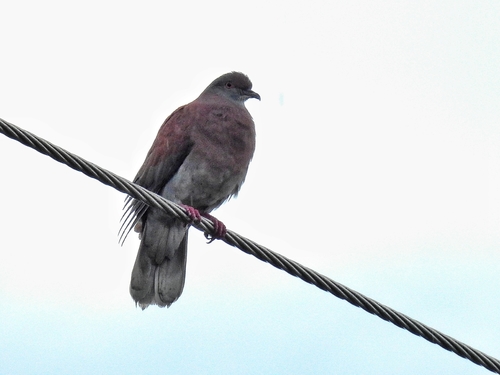 pomba-galega
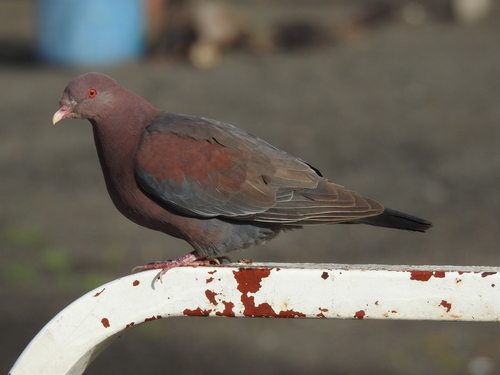 red-billed pigeon
Em resumo
A marca de campo mais confiável entre a pomba-galega e o red-billed pigeon é a cor do bico: a pomba-galega sempre tem um bico preto, enquanto o red-billed pigeon apresenta um bico vermelho distinto com uma ponta amarela em todas as idades. As pombas-galegas adultas também têm um ventre e uma região ventral inferiores mais claros, muitas vezes esbranquiçados ou cinza claro, contrastando com o ventre azul-cinza do red-billed. As aves juvenis e imaturas de ambas as espécies são mais apagadas, mas as imaturas do red-billed tendem a mostrar asas e manto mais marrons, e a cor do bico ainda é diagnóstica. Ambas as espécies são pombas grandes e robustas de tamanho semelhante, mas a coloração da cabeça e das partes inferiores, bem como diferenças sutis na cor dos olhos e das pernas, podem ajudar em observações mais próximas. O comportamento de voo e o habitat se sobrepõem, mas a pomba-galega é mais provável em áreas úmidas ou semi-abertas, enquanto o red-billed prefere florestas secas e margens de rios.
Dicas de identificação
- A cor do bico é diagnóstica: A pomba-galega sempre tem um bico preto; o red-billed pigeon tem um bico vermelho com uma ponta amarela, mesmo nas imaturas. Esta é a marca mais confiável em qualquer idade ou estação.
- Cor das partes inferiores: A pomba-galega adulta apresenta um ventre e uma região ventral inferiores cinza claro a brancos (especialmente em aves do sul), contrastando com o ventre e as coberturas da cauda azul-cinza do red-billed pigeon.
- Tons da cabeça e do pescoço: Os machos da pomba-galega têm uma cabeça e um peito roxos apagados com brilho cobre na nuca; o red-billed tem uma cabeça e um pescoço marrom a roxo, muitas vezes mais ricos em tom, mas não possui plumagem iridescente no colar.
- Coloração juvenil/imatura: As pombas-galegas imaturas são mais uniformemente marrons e cinzentas e não apresentam tons avermelhados ou marrom.
- Cor da garganta: A pomba-galega tem uma garganta esbranquiçada, que pode contrastar com o peito roxo; a garganta do red-billed não é distintamente clara.
- Cor das costas: O red-billed pigeon tem uma parte de trás menos marrom do que a maioria das outras pombas, mas isso é sutil em comparação com a pomba-galega.
- Olho e anel orbital: Ambos têm olhos vermelhos claros, mas o anel orbital do red-billed é laranja, enquanto o da pomba-galega é vermelho. Isso pode ser difícil de ver em campo.
- Cor das pernas: Ambos têm pernas vermelhas, não sendo um separador forte.
- Comportamento de voo: Ambas as espécies voam alto e rápido com batidas diretas das asas, mas a pomba-galega pode mostrar um deslizamento semicircular em exibição. Não é uma marca de campo forte para separação.
- Ruído das asas: O red-billed pigeon produz um som de palmas com suas asas ao decolar, o que não é notado para a pomba-galega.
- Voz: A pomba-galega emite um suave 'kuk kuk croo-ooos' com um distinto 'kuk' inicial; o chamado do red-billed é um longo e alto 'coooo' com três notas 'cuk-c'-c'-coo'. Use o chamado se as aves estiverem vocalizando.
- Habitat: Em florestas abertas ou margens de rios mais secas, suspeite do red-billed; em áreas tropicais úmidas, de borda de floresta ou semi-abertas, a pomba-galega é mais provável. Há sobreposição, então use com cautela.
- Diferenças sexuais: As fêmeas de ambas as espécies são mais apagadas do que os machos, mas a cor do bico permanece diagnóstica.
- Tamanho: Ambas são pombas grandes com faixas de tamanho sobrepostas; não use o tamanho para separação.
- Variação de subespécies: A pomba-galega do sul (P. c. andersoni) pode ser especialmente pálida na parte inferior, o que pode ajudar no extremo sul da área de distribuição.
Tamanho
Ambas as espécies são pombas grandes, com faixas de tamanho sobrepostas. A pomba-galega mede tipicamente 30–32 cm de comprimento e pesa 230–250 g [wikipedia], enquanto o red-billed pigeon mede 30–37 cm e 230–425 g [wikipedia]. No campo, o tamanho sozinho não é um separador confiável, pois ambas podem parecer igualmente robustas e de tamanho médio a grande entre as pombas.
Plumagem
- Aves juvenis/imaturas: Ambas são mais apagadas do que os adultos, mas as imaturas do red-billed pigeon são especialmente marrons no manto e nas asas, com ombros escuros. As imaturas da pomba-galega são cinza-marrons no geral, sem tons avermelhados ou marrom, e seu bico permanece preto.
- Adultos: Os machos da pomba-galega têm uma cabeça, peito e partes superiores roxas apagadas com brilho cobre na nuca, uma garganta esbranquiçada e partes inferiores cinza claro a brancas (especialmente nas subespécies do sul). Os adultos do red-billed pigeon têm uma cabeça, pescoço e coberturas das asas marrom a roxas, mas seu ventre e coberturas da cauda são azul-cinza, e suas costas são menos marrons do que outras pombas. O bico é sempre vermelho com uma ponta amarela no red-billed, preto na pomba-galega. Ambos os sexos de cada espécie são semelhantes, mas as fêmeas são mais apagadas. A cor dos olhos é vermelha clara em ambos, mas o anel orbital é laranja no red-billed e vermelho na pomba-galega.
Comportamento
Ambas as espécies são frequentemente vistas voando alto e rápido com batidas diretas e poderosas das asas, típicas de grandes pombas. A pomba-galega pode realizar um deslizamento semicircular como parte de seu voo de exibição. Ambas podem ser vistas longe de florestas densas, às vezes em pequenos bandos em fontes de água. As asas do red-billed pigeon fazem um som de palmas ao decolar, o que não é notado para a pomba-galega. Ambas as espécies são bastante solitárias, mas podem se reunir em locais de alimentação ou bebida.
Habitat
A pomba-galega prefere bordas de florestas, margens de rios e áreas parcialmente abertas com árvores dispersas, principalmente em regiões tropicais úmidas ou semiúmidas. O red-billed pigeon é mais típico de florestas secas, florestas ribeirinhas e áreas de planície, especialmente no México costeiro e na América Central. Há alguma sobreposição em habitats ribeirinhos ou de borda, mas o red-billed é mais provável em florestas abertas e secas, enquanto a pomba-galega é comum em regiões mais úmidas e florestadas.
Voz
O chamado da pomba-galega é uma série de suaves 'kuk kuk croo-ooos', com o 'kuk' inicial sendo distintivo para o grupo de espécies. O red-billed pigeon emite um 'coooo' longo e agudo seguido de três notas 'cuk-c'-c'-coo', com um padrão ascendente. Os chamados são bastante diferentes em ritmo e tom, e o do red-billed é mais prolongado e mais alto. O red-billed também produz um aplauso de asas ao decolar, o que a pomba-galega não faz.