

Motmot

ムラサキバト 対 アカハシバト

Patagioenas cayennensis 対 Patagioenas flavirostris

ムラサキバトとアカハシバトのクイズ
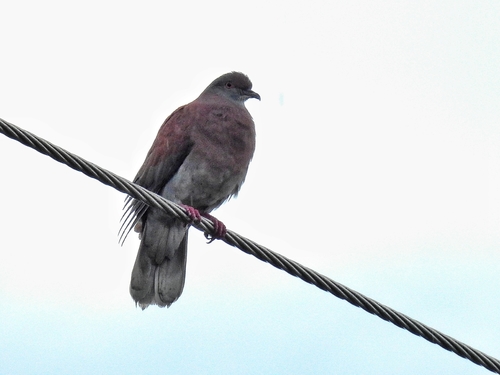
ムラサキバト (Patagioenas cayennensis) ムラサキバト
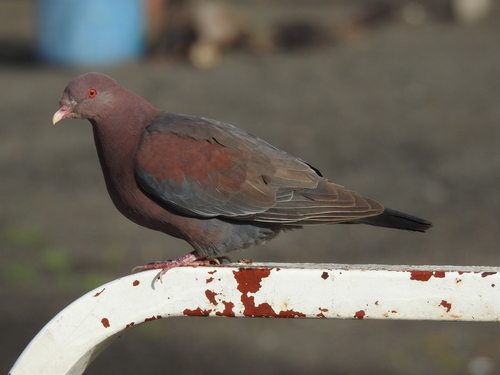
アカハシバト (Patagioenas flavirostris) アカハシバト

メディア

読み込み中…

要点

ムラサキバトとアカハシバトの最も信頼できるフィールドマークはくちばしの色です:ムラサキバトは常に黒いくちばしを持ち、アカハシバトはすべての年齢で黄色い先端を持つ特徴的な赤いくちばしを示します。成鳥のムラサキバトは、しばしば白っぽいまたは淡い灰色の下腹部と肛門を持ち、アカハシバトの青灰色の腹部と対照的です。両種の幼鳥と未成熟の鳥は鈍い色合いですが、アカハシバトの未成熟はより茶色い翼と背中を示す傾向があり、くちばしの色は依然として診断的です。両種は大きく、頑丈な鳩でサイズは似ていますが、頭部と下部の色合いや、目と足の色の微妙な違いが近くでの観察に役立ちます。飛行の特徴と生息地は重なりますが、ムラサキバトは湿ったまたは半開放的な地域で見られる可能性が高く、アカハシバトは乾燥した森林や河川の近くを好みます。

識別のコツ

  1. くちばしの色は診断的:ムラサキバトは常に黒いくちばしを持ち、アカハシバトは未成熟でも黄色い先端を持つ赤いくちばしを持っています。これは年齢や季節に関係なく最も信頼できるマークです。
  2. 下部の色:成鳥のムラサキバトは淡い灰色から白の下腹部と肛門を示し(特に南部の鳥で)、アカハシバトの青灰色の腹部と尾羽の覆い羽と対照的です。
  3. 頭部と首の色合い:ムラサキバトのオスは鈍い紫色の頭と胸を持ち、後頭部には銅色の光沢があります;アカハシバトはマルーンから紫色の頭と首を持ち、色合いが豊かですが、虹色の襟羽毛はありません。
  4. 幼鳥/未成熟の色合い:未成熟のアカハシバトは背中と翼がより茶色く、肩は暗い色合いです;ムラサキバトの未成熟はより均一に灰褐色で、赤やマルーンの色合いはありません。
  5. 喉の色:ムラサキバトは白っぽい喉を持ち、紫色の胸と対照的です;アカハシバトの喉は明確に淡くありません。
  6. 背中の色:アカハシバトは他のほとんどの鳩よりも背中が茶色くありませんが、これはムラサキバトと比較すると微妙です。
  7. 目と眼窩の輪:両種とも淡い赤い目を持ちますが、アカハシバトの眼窩の輪はオレンジ色で、ムラサキバトのは赤です。これはフィールドでは見えにくいことがあります。
  8. 足の色:両種とも赤い足を持ち、強い区別にはなりません。
  9. 飛行の特徴:両種は高く速く飛び、直接的な羽ばたきが典型的ですが、ムラサキバトはディスプレイの一環として半円形の滑空を示すことがあります。これは区別のための強いフィールドマークではありません。
  10. 翼の音:アカハシバトは離陸時に翼で拍手音を出しますが、ムラサキバトではそのような音は記録されていません。
  11. 声:ムラサキバトは柔らかい「ククク・クルーウス」を出し、最初の「クク」がこの種群の特徴です;アカハシバトの鳴き声は長く高い「クー」と、三つの「クク・ク・クー」の音が続きます。鳥が鳴いている場合は鳴き声を使ってください。
  12. 生息地:乾燥した開放的な森林や河川の近くではアカハシバトを疑い、湿った森林の端や半開放的な熱帯地域ではムラサキバトがより可能性があります。重なりがあるため、注意して使用してください。
  13. 性差:両種の雌は雄よりも鈍いですが、くちばしの色は診断的です。
  14. サイズ:両種はサイズ範囲が重なっている大きな鳩です;サイズを区別に使わないでください。
  15. 亜種の変異:南部のムラサキバト(P. c. andersoni)は特に下部が淡いことがあり、分布の南端で役立つかもしれません。

大きさ

両種は大きな鳩で、サイズ範囲が重なっています。ムラサキバトは通常30〜32 cmの長さで、230〜250 gの重さです [wikipedia]、一方、アカハシバトは30〜37 cmで230〜425 gです [wikipedia]。フィールドでは、サイズだけでは信頼できる区別にはならず、両方が鳩の中で似たように頑丈で中〜大に見えることがあります。

羽色

行動

両種はしばしば高く速く飛び、直接的で強力な羽ばたきが大きな鳩の典型です。ムラサキバトはディスプレイ飛行の一環として半円形の滑空を行うことがあります。両種は密な森林から離れた場所で見られることがあり、時には水源で小さな群れで見られます。アカハシバトの翼は離陸時に拍手音を出し、ムラサキバトではそのような音は記録されていません。両種は比較的孤独ですが、餌や水を飲む場所で集まることがあります。

生息環境

ムラサキバトは森林の端、河川の岸、散在する木々のある部分的に開放的な地域を好み、主に湿ったまたは半湿った熱帯地域に生息します。アカハシバトは乾燥した森林、河川の森林、低地地域に典型的で、特にメキシコ沿岸や中央アメリカに見られます。河川や端の生息地には重なりがありますが、アカハシバトは乾燥した開放的な森林で見られる可能性が高く、ムラサキバトはより湿った森林地域で一般的です。

声

ムラサキバトの鳴き声は柔らかい「ククク・クルーウス」の連続で、最初の「クク」がこの種群の特徴です。アカハシバトは長く高い「クー」を出し、その後に三つの「クク・ク・クー」の音が続き、上昇するパターンを持ちます。鳴き声はリズムと音程がかなり異なり、アカハシバトの方がより引き伸ばされて高いです。アカハシバトは離陸時に翼で拍手音を出し、ムラサキバトではそのような音はありません。

より良い説明を送る

比較と同じ項目を使ってください。文章はすぐに公開されます。

The most reliable field mark between Pale-vented Pigeon and Red-billed Pigeon is the bill color: Pale-vented always has a black bill, while Red-billed shows a distinctive red bill with a yellow tip in all ages. Adult Pale-vented Pigeons also have a paler, often whitish or pale grey lower belly and vent, contrasting with the blue-gray belly of Red-billed. Juvenile and immature birds of both species are duller, but Red-billed immatures tend to show browner wings and mantle, and their bill color is still diagnostic. Both species are large, robust pigeons of similar size, but their head and underpart coloration, as well as subtle differences in eye and leg color, can help in close views. Flight jizz and habitat overlap, but Pale-vented is more likely in humid or semi-open areas, while Red-billed prefers drier woodlands and riversides.

  1. Bill color is diagnostic: Pale-vented Pigeon always has a black bill; Red-billed Pigeon has a red bill with a yellow tip, even in immatures. This is the most reliable mark at any age or season.
  2. Underparts color: Adult Pale-vented Pigeon shows pale grey to white lower belly and vent (especially in southern birds), contrasting with the blue-gray belly and tail coverts of Red-billed Pigeon.
  3. Head and neck tones: Pale-vented males have a dull purple head and breast with copper gloss on the nape; Red-billed has a maroon to purple head and neck, often richer in tone, but lacks iridescent collar plumage.
  4. Juvenile/immature coloration: Immature Red-billed Pigeons are browner on the mantle and wings, with dusky shoulders; Pale-vented immatures are more uniformly greyish-brown and lack reddish or maroon hues.
  5. Throat color: Pale-vented has a whitish throat, which can contrast with the purple breast; Red-billed's throat is not distinctly pale.
  6. Back color: Red-billed Pigeon has a less brown back than most other pigeons, but this is subtle compared to Pale-vented.
  7. Eye and orbital ring: Both have pale red eyes, but Red-billed's orbital ring is orange, while Pale-vented's is red. This can be hard to see in the field.
  8. Leg color: Both have red legs, not a strong separator.
  9. Flight jizz: Both species fly high and fast with direct wingbeats, but Pale-vented may show a semi-circular glide in display. Not a strong field mark for separation.
  10. Wing noise: Red-billed Pigeon produces a clapping sound with its wings on takeoff, which is not noted for Pale-vented.
  11. Voice: Pale-vented gives a soft 'kuk kuk croo-ooos' with a distinctive initial 'kuk'; Red-billed's call is a long, high 'coooo' with three 'cuk-c'-c'-coo' notes. Use call if birds are vocalizing.
  12. Habitat: In drier, open woodlands or riversides, suspect Red-billed; in humid, forest-edge or semi-open tropical areas, Pale-vented is more likely. There is overlap, so use with caution.
  13. Sex differences: Females of both species are duller than males, but the bill color remains diagnostic.
  14. Size: Both are large pigeons with overlapping size ranges; do not use size for separation.
  15. Subspecies variation: Southern Pale-vented (P. c. andersoni) can be especially pale below, which may help in the far south of the range.

Both species are large pigeons, with overlapping size ranges. Pale-vented Pigeon is typically 30–32 cm long and weighs 230–250 g [wikipedia], while Red-billed Pigeon is 30–37 cm and 230–425 g [wikipedia]. In the field, size alone is not a reliable separator, as both can appear similarly robust and mid-to-large among pigeons.

  • Juvenile/immature birds: Both are duller than adults, but Red-billed Pigeon immatures are especially brown on the mantle and wings, with dusky shoulders. Pale-vented immatures are greyish-brown overall, lacking any reddish or maroon tones, and their bill remains black.
  • Adults: Pale-vented Pigeon males have a dull purple head, breast, and upperparts with copper glossing on the nape, a whitish throat, and pale grey to white lower underparts (especially in southern subspecies). Red-billed Pigeon adults have a maroon to purple head, neck, and wing coverts, but their belly and tail coverts are blue-gray, and their back is less brown than other pigeons. The bill is always red with a yellow tip in Red-billed, black in Pale-vented. Both sexes of each species are similar, but females are duller. Eye color is pale red in both, but the orbital ring is orange in Red-billed and red in Pale-vented.

Both species are often seen flying high and fast with direct, powerful wingbeats, typical of large pigeons. Pale-vented Pigeon may perform a semi-circular glide as part of its display flight. Both can be seen away from dense forests, sometimes in small flocks at water sources. Red-billed Pigeon wings make a clapping sound on takeoff, which is not noted for Pale-vented. Both species are fairly solitary but may gather at feeding or drinking sites.

Pale-vented Pigeon favors forest edges, riverbanks, and partially open areas with scattered trees, mostly in humid or semi-humid tropical regions. Red-billed Pigeon is more typical of dry forests, riverside woodlands, and lowland areas, especially in coastal Mexico and Central America. There is some overlap in riverine or edge habitats, but Red-billed is more likely in drier, open woodlands, while Pale-vented is common in moister, more forested regions.

Pale-vented Pigeon's call is a series of soft 'kuk kuk croo-ooos,' with the initial 'kuk' being distinctive for the species group. Red-billed Pigeon gives a long, high-pitched 'coooo' followed by three 'cuk-c'-c'-coo' notes, with an ascending pattern. The calls are quite different in rhythm and pitch, and Red-billed's is more drawn-out and higher. Red-billed also produces a wing-clap on takeoff, which Pale-vented does not.

変更を破棄しますか?

保存していない編集があります。今離れると失われます。

ムラサキバト · アカハシバト · 苦手な鳥