

pale-billed hornbill vs southern yellow-billed hornbill
Lophoceros pallidirostris versus Tockus leucomelas
Jogue um quiz com pale-billed hornbill e southern yellow-billed hornbill
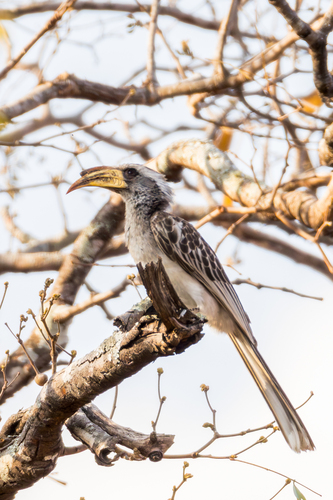 pale-billed hornbill
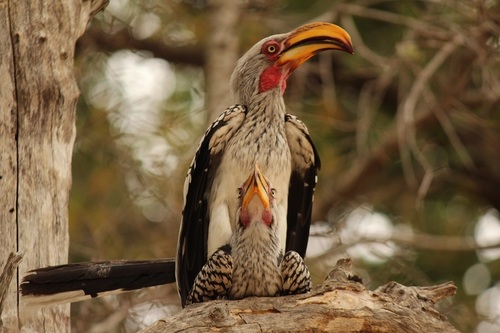 southern yellow-billed hornbill
Em resumo
A marca de campo mais confiável entre o pale-billed hornbill e o southern yellow-billed hornbill é a cor e a estrutura do bico: o pale-billed tem um bico pálido (marfim a cor de chifre), enquanto o southern yellow-billed tem um bico amarelo brilhante, longo e fortemente curvado para baixo. Ambas as espécies são hornbills de tamanho médio com forma geral semelhante, mas o southern yellow-billed é geralmente mais pesado e tem um bico mais robusto com um pequeno casque. As diferenças de plumagem são sutis, então a cor e a estrutura do bico são as melhores pistas de campo, especialmente à distância ou em pouca luz. O habitat também pode ajudar: o southern yellow-billed é típico de áreas secas de espinhos e florestas de folhas largas no sul da África, enquanto o pale-billed ocorre mais ao norte e a leste, frequentemente em florestas de miombo.
Dicas de identificação
- A cor do bico é a marca de campo mais útil: O pale-billed hornbill tem um bico pálido (marfim ou cor de chifre), enquanto o southern yellow-billed hornbill tem um bico amarelo brilhante. Isso é confiável para todas as idades e sexos.
- Estrutura do bico: O bico do southern yellow-billed é longo, fortemente curvado para baixo e robusto, com um pequeno mas notável casque (especialmente nos machos, onde cobre quase todo o comprimento do bico). O bico do pale-billed também é longo, mas carece da cor amarela brilhante e pode parecer mais fino ou menos robusto.
- Presença de casque: O southern yellow-billed hornbill apresenta um pequeno casque, melhor visto em machos. O casque é menos proeminente ou ausente no pale-billed.
- Padrão de plumagem: Ambas as espécies são predominantemente pretas e brancas, com barriga branca e partes superiores manchadas ou listradas. O southern yellow-billed mostra um pescoço cinza com manchas e um peito levemente estriado, mas esses detalhes são sutis e nem sempre visíveis em campo.
- Olho e pele facial: O southern yellow-billed geralmente tem olhos amarelos e pele rosada ao redor dos olhos e da faixa malar. A cor da pele facial do pale-billed não é especificada aqui, então não confie nessa marca a menos que seja bem vista e confirmada com um guia regional.
- Estilo de voo: O southern yellow-billed hornbill alterna planagens com batidas de asas pesadas e carece de coberturas de asas inferiores, o que pode dar um perfil de voo ligeiramente diferente, mas essa não é uma marca de campo forte sem comparação direta.
- Comportamento de forrageamento: O southern yellow-billed é frequentemente visto forrageando no chão em áreas abertas, às vezes em grupos. O pale-billed pode ser menos terrestre, mas isso não é um separador confiável sem mais detalhes comportamentais.
- Habitat e distribuição: Se você estiver nas áreas secas de espinhos ou florestas de folhas largas do sul da África, o southern yellow-billed é esperado. Na floresta de miombo mais ao norte (Angola, RDC, Zâmbia, Malaui, etc.), o pale-billed é mais provável.
- Tamanho: O southern yellow-billed é ligeiramente mais pesado e pode parecer mais robusto, especialmente no bico, mas a sobreposição de tamanho é significativa e não é uma marca de campo primária.
- Diferenças sexuais: No southern yellow-billed, os machos têm um bico mais longo e um casque mais extenso do que as fêmeas, mas ambos os sexos compartilham o bico amarelo. Diferenças sexuais são menos relevantes para o pale-billed em campo.
- Plumagem juvenil/imatura: Nenhuma marca distintiva de asa ou voo juvenil ou imaturo é descrita para qualquer uma das espécies; a cor do bico ainda é a melhor pista.
- Voz: Nenhuma diferença vocal é descrita nas notas; não confie em chamadas para separação a menos que você tenha experiência local.
- Armadilhas: Não confie em diferenças sutis de plumagem ou tamanho sozinhos; sempre verifique a cor do bico primeiro. Em pouca luz, a cor do bico pode parecer desbotada, então use a distribuição e o habitat como pistas de apoio.
- Contexto sazonal: Ambas as espécies são residentes; a estação não afeta a plumagem ou a cor do bico de uma forma que ajude na identificação.
- Quando em dúvida: Se o bico não estiver claramente amarelo, considere o pale-billed, especialmente fora da área central do southern yellow-billed.
Tamanho
O southern yellow-billed hornbill é ligeiramente maior e mais pesado em média (massa corporal cerca de 189,5 g [wikidata]), com um comprimento de 48–60 cm. A massa do pale-billed hornbill não é especificada, mas ambos são hornbills de tamanho médio e se sobrepõem em tamanho. Em campo, o tamanho sozinho não é um separador confiável, mas o southern yellow-billed pode parecer mais robusto, especialmente no bico.
Plumagem
Nenhuma diferença de padrão de asa ou voo específica para idade é descrita para qualquer uma das espécies nas notas disponíveis. Ambas têm plumagem predominantemente preta e branca: o southern yellow-billed hornbill apresenta uma barriga branca, pescoço cinza com manchas, costas pretas com manchas e listras brancas, e um peito levemente estriado. A plumagem do pale-billed hornbill não é detalhada aqui, mas é geralmente semelhante em padrão, sem contrastes de cor fortes ou marcas únicas notadas. Assim, a plumagem não é um separador confiável, exceto pela cor do bico, que é diagnóstica em todas as idades e sexos.
Comportamento
O southern yellow-billed hornbill é frequentemente visto forrageando no chão por sementes, insetos, aranhas e escorpiões, e é descrito como um voador poderoso que alterna planagens e batidas de asas pesadas. É um residente comum e conspícuo em sua área, frequentemente visto em pares ou pequenos grupos. O comportamento do pale-billed hornbill não é detalhado, mas como membro do mesmo gênero, provavelmente compartilha hábitos semelhantes, embora possa ser menos conspícuo ou menos terrestre dependendo do contexto local.
Habitat
O southern yellow-billed hornbill é típico de áreas secas de espinhos e florestas de folhas largas no sul da África, frequentemente em regiões áridas ou semiáridas. O pale-billed hornbill ocorre mais ao norte e a leste, em países como Angola, RDC, Quênia, Malaui, Moçambique, Tanzânia e Zâmbia, e está associado à floresta de miombo. A distribuição e o habitat podem ajudar: se você estiver nas áreas secas de espinhos do sul da África, o southern yellow-billed é muito mais provável; mais ao norte na floresta de miombo, o pale-billed é esperado.
pale-billed hornbill · southern yellow-billed hornbill · Minhas aves difíceis