

ochraceous bulbul vs puff-throated bulbul
Alophoixus ochraceus versus Alophoixus pallidus
Jogue um quiz com ochraceous bulbul e puff-throated bulbul
 ochraceous bulbul
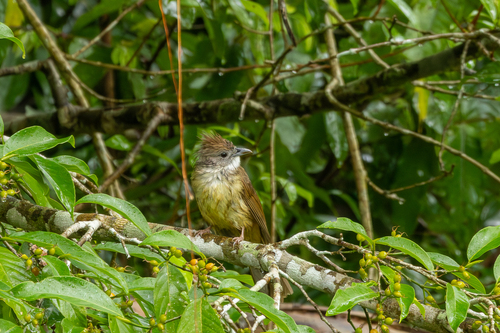 puff-throated bulbul
Em resumo
A marca de campo mais confiável entre o ochraceous bulbul e o puff-throated bulbul é a garganta: o puff-throated apresenta uma mancha de garganta branca e notavelmente fofa, enquanto o ochraceous bulbul não possui esse recurso. O puff-throated bulbul também é maior em geral, com partes superiores oliva e partes inferiores amarelas, enquanto o ochraceous bulbul é menos distintamente colorido. Ambas as espécies podem ocorrer em habitats florestais semelhantes do Sudeste Asiático, portanto, atenção cuidadosa à garganta, tamanho e cor das partes inferiores é essencial. Os sexos são semelhantes em ambas as espécies, e diferenças específicas de voo ou padrão de asa relacionadas à idade não são descritas nas fontes disponíveis.
Dicas de identificação
- Verifique a garganta: O puff-throated bulbul tem uma mancha de garganta branca e fofa proeminente, que é a característica mais distintiva. O ochraceous bulbul não possui essa garganta branca fofa.
- Observe a cor das partes inferiores: O puff-throated bulbul apresenta partes inferiores amarelas, contrastando com suas partes superiores oliva. O ochraceous bulbul é menos distintamente colorido abaixo, faltando o amarelo brilhante.
- Avalie o tom das partes superiores: O puff-throated bulbul tem partes superiores de tom oliva, enquanto o ochraceous bulbul é geralmente mais simples e menos contrastante.
- Avalie o tamanho do pássaro: O puff-throated bulbul é notavelmente maior (cerca de 23 cm) e pode parecer mais robusto, especialmente se visto ao lado do ochraceous bulbul.
- Bico, pés e íris: O puff-throated bulbul tem um bico e íris marrons com pés pretos; essas características não são descritas para o ochraceous bulbul, então use com cautela.
- Sexo e idade: Ambas as espécies são sexualmente monomórficas, então não espere diferenças entre machos e fêmeas. Nenhuma diferença de plumagem ou padrão de asa específica para a idade é descrita para qualquer uma das espécies.
- Empoleirado vs. em voo: Como nenhuma diferença de padrão de voo ou asa é notada, confie em vistas empoleiradas para identificação.
- Contexto de habitat: Ambas as espécies podem ser encontradas em tipos de floresta semelhantes, mas o ochraceous bulbul é notado até 1500 metros no sub-bosque; isso pode ajudar em algumas localidades, mas não é um separador forte.
- Evite confusão com bulbuls semelhantes: O puff-throated bulbul às vezes é chamado de 'white-throated bulbul' (não deve ser confundido com Alophoixus flaveolus), mas suas partes inferiores mais apagadas e maior tamanho ajudam a distingui-lo dessa espécie.
- Cuidado com a iluminação: Em luz fraca, os tons oliva e amarelo do puff-throated bulbul podem ser atenuados, fazendo-o parecer mais com o ochraceous bulbul. Sempre tente obter uma visão clara da garganta.
- Contexto de grupo: Se você ver um bando misto, compare indivíduos quanto ao tamanho e padrão da garganta, pois ambas as espécies podem ocorrer juntas.
- Nenhuma diferença de canto ou chamada fornecida: Não confie em vocalizações para separação com as informações atuais.
- Nenhum efeito sazonal ou de muda notado: As marcas de identificação descritas aqui devem ser confiáveis durante todo o ano.
- Tenha cautela com vistas distantes ou breves: Quando a cor da garganta e das partes inferiores não é visível, a identificação pode não ser possível.
- Tire notas e fotos: Se estiver incerto, documente o pássaro para revisão posterior, focando na garganta, cor das partes inferiores e tamanho geral.
Tamanho
O puff-throated bulbul é o maior dos dois, atingindo cerca de 23 cm de comprimento [wikipedia]. O ochraceous bulbul é menor, embora medições precisas não sejam fornecidas nas notas. Essa diferença de tamanho pode ser aparente em campo, especialmente quando ambas as espécies são vistas juntas, mas pode ser sutil se vistas isoladamente ou à distância.
Plumagem
Diferenças específicas de padrão de asa ou voo relacionadas à idade não são descritas para qualquer uma das espécies nas notas disponíveis, portanto, a separação depende dos detalhes da plumagem visíveis quando empoleiradas ou em repouso. O puff-throated bulbul se destaca com suas partes superiores oliva, partes inferiores amarelas e uma garganta branca fofa e conspícua. O ochraceous bulbul não possui a garganta branca fofa e é, em geral, menos brilhante, com menos contraste entre partes superiores e inferiores. Ambos os sexos são semelhantes em ambas as espécies, e não há menção de marcas de plumagem específicas para juvenis ou imaturos que ajudariam em voo ou à distância.
Comportamento
Ambas as espécies são pássaros canoros da família bulbul e provavelmente mostram comportamentos semelhantes, como forragear no sub-bosque das florestas. O tamanho maior do puff-throated bulbul pode fazê-lo parecer mais robusto ou volumoso quando empoleirado. O ochraceous bulbul é descrito como frequentando o sub-bosque, mas não há traço comportamental nas notas que seja diagnosticamente confiável entre os dois.
Habitat
Ambas as espécies ocorrem no Sudeste Asiático e podem se sobrepor em habitats de florestas de folhas largas e florestas tropicais. O ochraceous bulbul é especificamente notado como sendo encontrado até 1500 metros de elevação no sub-bosque das florestas, enquanto o puff-throated bulbul também é um pássaro de floresta, mas sem uma faixa de elevação especificada nas notas. O habitat sozinho não é diagnóstico, mas o ochraceous bulbul pode ser mais provável em elevações mais altas dentro de sua faixa compartilhada.
ochraceous bulbul · puff-throated bulbul · Minhas aves difíceis