

Motmot

Ochraceous Bulbul vs Puff-throated Bulbul

Alophoixus ochraceus contro Alophoixus pallidus

Fai un quiz con Ochraceous Bulbul e Puff-throated Bulbul

Ochraceous Bulbul (Alophoixus ochraceus) Ochraceous Bulbul
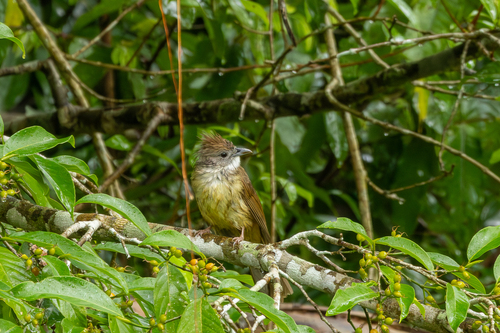
Puff-throated Bulbul (Alophoixus pallidus) Puff-throated Bulbul

Media

Caricamento…

In breve

The most reliable field mark between Ochraceous Bulbul and Puff-throated Bulbul is the throat: Puff-throated shows a noticeably puffy, white throat patch, while Ochraceous Bulbul lacks this feature. Puff-throated Bulbul is also larger overall, with olive upperparts and yellow underparts, while Ochraceous Bulbul is less distinctly colored. Both species can occur in similar Southeast Asian forest habitats, so careful attention to throat, size, and underpart color is essential. Sexes are alike in both species, and age-specific flight or wing pattern differences are not described in the available sources.

Consigli di identificazione

  1. Check the throat: Puff-throated Bulbul has a prominent, puffy white throat patch, which is the single most distinctive feature. Ochraceous Bulbul lacks this puffy white throat.
  2. Look at underpart color: Puff-throated Bulbul shows yellow underparts, contrasting with its olive upperparts. Ochraceous Bulbul is less distinctly colored below, lacking the bright yellow.
  3. Assess upperpart tone: Puff-throated Bulbul has olive-toned upperparts, while Ochraceous Bulbul is generally plainer and less contrasting.
  4. Size up the bird: Puff-throated Bulbul is noticeably larger (about 23 cm) and may appear bulkier, especially if seen alongside Ochraceous Bulbul.
  5. Bill, feet, and iris: Puff-throated Bulbul has a brown bill and iris with black feet; these features are not described for Ochraceous Bulbul, so use with caution.
  6. Sex and age: Both species are sexually monomorphic, so do not expect differences between males and females. No age-specific plumage or wing pattern differences are described for either species.
  7. Perched vs. in flight: Since no flight or wing pattern differences are noted, rely on perched views for identification.
  8. Habitat context: Both species can be found in similar forest types, but Ochraceous Bulbul is noted up to 1500 meters in the mid-storey; this may help in some locations but is not a strong separator.
  9. Avoid confusion with similar bulbuls: Puff-throated Bulbul is sometimes called 'white-throated bulbul' (not to be confused with Alophoixus flaveolus), but its duller underparts and larger size help distinguish it from that species.
  10. Beware of lighting: In poor light, the olive and yellow tones of Puff-throated Bulbul may be muted, making it look more like Ochraceous Bulbul. Always try for a clear view of the throat.
  11. Group context: If you see a mixed flock, compare individuals for size and throat pattern, as both species may occur together.
  12. No song or call differences provided: Do not rely on vocalizations for separation with the current information.
  13. No seasonal or molt effects noted: Identification marks described here should be reliable year-round.
  14. Be cautious with distant or brief views: When throat and underpart color are not visible, identification may not be possible.
  15. Take notes and photos: If uncertain, document the bird for later review, focusing on throat, underpart color, and overall size.

Taglia

Puff-throated Bulbul is the larger of the two, reaching about 23 cm in length [wikipedia]. Ochraceous Bulbul is smaller, though precise measurements are not given in the notes. This size difference may be apparent in the field, especially when both species are seen together, but can be subtle if seen singly or at a distance.

Piumaggio

Age-specific wing or flight pattern differences are not described for either species in the available notes, so separation relies on plumage details visible when perched or at rest. Puff-throated Bulbul stands out with its olive upperparts, yellow underparts, and a conspicuously puffy white throat. Ochraceous Bulbul lacks the puffy white throat and is overall less bright, with less contrast between upperparts and underparts. Both sexes look alike in both species, and there is no mention of juvenile or immature-specific plumage marks that would help in flight or at a distance.

Comportamento

Both species are songbirds in the bulbul family and are likely to show similar behaviors, such as foraging in the mid-story of forests. Puff-throated Bulbul's larger size may make it appear bulkier or more robust when perched. Ochraceous Bulbul is described as frequenting the mid-storey, but there is no behavioral trait in the notes that is reliably diagnostic between the two.

Habitat

Both species occur in Southeast Asia and can overlap in broad-leaved evergreen and rainforest habitats. Ochraceous Bulbul is specifically noted as being found up to 1500 meters elevation in the mid-storey of forests, while Puff-throated Bulbul is also a forest bird but without a specified elevation range in the notes. Habitat alone is not diagnostic, but Ochraceous Bulbul may be more likely at higher elevations within their shared range.

Invia una descrizione migliore

Usa le stesse sezioni del confronto. Il testo viene pubblicato subito.

The most reliable field mark between Ochraceous Bulbul and Puff-throated Bulbul is the throat: Puff-throated shows a noticeably puffy, white throat patch, while Ochraceous Bulbul lacks this feature. Puff-throated Bulbul is also larger overall, with olive upperparts and yellow underparts, while Ochraceous Bulbul is less distinctly colored. Both species can occur in similar Southeast Asian forest habitats, so careful attention to throat, size, and underpart color is essential. Sexes are alike in both species, and age-specific flight or wing pattern differences are not described in the available sources.

  1. Check the throat: Puff-throated Bulbul has a prominent, puffy white throat patch, which is the single most distinctive feature. Ochraceous Bulbul lacks this puffy white throat.
  2. Look at underpart color: Puff-throated Bulbul shows yellow underparts, contrasting with its olive upperparts. Ochraceous Bulbul is less distinctly colored below, lacking the bright yellow.
  3. Assess upperpart tone: Puff-throated Bulbul has olive-toned upperparts, while Ochraceous Bulbul is generally plainer and less contrasting.
  4. Size up the bird: Puff-throated Bulbul is noticeably larger (about 23 cm) and may appear bulkier, especially if seen alongside Ochraceous Bulbul.
  5. Bill, feet, and iris: Puff-throated Bulbul has a brown bill and iris with black feet; these features are not described for Ochraceous Bulbul, so use with caution.
  6. Sex and age: Both species are sexually monomorphic, so do not expect differences between males and females. No age-specific plumage or wing pattern differences are described for either species.
  7. Perched vs. in flight: Since no flight or wing pattern differences are noted, rely on perched views for identification.
  8. Habitat context: Both species can be found in similar forest types, but Ochraceous Bulbul is noted up to 1500 meters in the mid-storey; this may help in some locations but is not a strong separator.
  9. Avoid confusion with similar bulbuls: Puff-throated Bulbul is sometimes called 'white-throated bulbul' (not to be confused with Alophoixus flaveolus), but its duller underparts and larger size help distinguish it from that species.
  10. Beware of lighting: In poor light, the olive and yellow tones of Puff-throated Bulbul may be muted, making it look more like Ochraceous Bulbul. Always try for a clear view of the throat.
  11. Group context: If you see a mixed flock, compare individuals for size and throat pattern, as both species may occur together.
  12. No song or call differences provided: Do not rely on vocalizations for separation with the current information.
  13. No seasonal or molt effects noted: Identification marks described here should be reliable year-round.
  14. Be cautious with distant or brief views: When throat and underpart color are not visible, identification may not be possible.
  15. Take notes and photos: If uncertain, document the bird for later review, focusing on throat, underpart color, and overall size.

Puff-throated Bulbul is the larger of the two, reaching about 23 cm in length [wikipedia]. Ochraceous Bulbul is smaller, though precise measurements are not given in the notes. This size difference may be apparent in the field, especially when both species are seen together, but can be subtle if seen singly or at a distance.

Age-specific wing or flight pattern differences are not described for either species in the available notes, so separation relies on plumage details visible when perched or at rest. Puff-throated Bulbul stands out with its olive upperparts, yellow underparts, and a conspicuously puffy white throat. Ochraceous Bulbul lacks the puffy white throat and is overall less bright, with less contrast between upperparts and underparts. Both sexes look alike in both species, and there is no mention of juvenile or immature-specific plumage marks that would help in flight or at a distance.

Both species are songbirds in the bulbul family and are likely to show similar behaviors, such as foraging in the mid-story of forests. Puff-throated Bulbul's larger size may make it appear bulkier or more robust when perched. Ochraceous Bulbul is described as frequenting the mid-storey, but there is no behavioral trait in the notes that is reliably diagnostic between the two.

Both species occur in Southeast Asia and can overlap in broad-leaved evergreen and rainforest habitats. Ochraceous Bulbul is specifically noted as being found up to 1500 meters elevation in the mid-storey of forests, while Puff-throated Bulbul is also a forest bird but without a specified elevation range in the notes. Habitat alone is not diagnostic, but Ochraceous Bulbul may be more likely at higher elevations within their shared range.

Scartare le modifiche?

Hai modifiche non salvate. Se esci ora, andranno perse.

Ochraceous Bulbul · Puff-throated Bulbul · I miei uccelli difficili