

northern pygmy-owl vs coruja-buraqueira
Glaucidium gnoma versus Athene cunicularia
Jogue um quiz com northern pygmy-owl e coruja-buraqueira
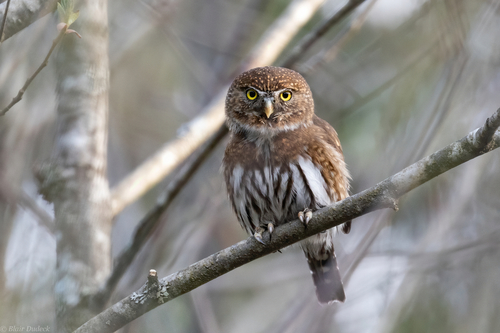 northern pygmy-owl
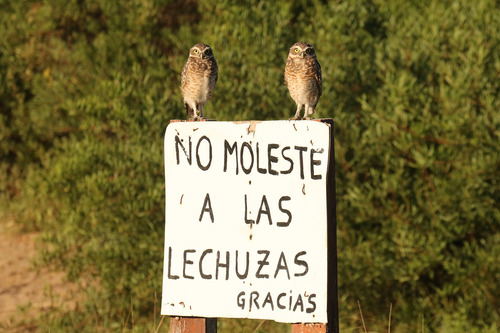 coruja-buraqueira
Em resumo
A marca de campo mais confiável para separar northern pygmy-owl da coruja-buraqueira é o comprimento das pernas e a postura: a coruja-buraqueira fica ereta em longas pernas cinzentas expostas, muitas vezes no chão ou em um poleiro baixo, enquanto o northern pygmy-owl empoleira-se mais alto com pernas curtas e emplumadas e uma aparência compacta e arredondada. Em voo ou empoleirado, a coruja-buraqueira exibe uma mancha branca no 'queixo' e sobrancelhas brancas proeminentes, enquanto o northern pygmy-owl tem uma coroa manchada e 'olhos' distintos na nuca em preto e branco. Corujas-buraqueiras juvenis não têm manchas na parte superior e possuem uma faixa alaranjada nas asas, enquanto todas as idades de northern pygmy-owl mostram manchas brancas na cabeça e nas asas. O habitat é uma pista forte: a coruja-buraqueira é estritamente terrestre em campo aberto, o northern pygmy-owl é arbóreo em áreas florestais.
Dicas de identificação
- Comprimento das pernas e postura: A coruja-buraqueira fica alta em longas pernas cinzentas expostas, muitas vezes ereta no chão ou em um poleiro baixo. O northern pygmy-owl tem pernas curtas e emplumadas e se senta baixo e horizontalmente nos galhos.
- Contexto do habitat: A coruja-buraqueira está sempre em campo aberto, geralmente perto de um buraco ou no chão. O northern pygmy-owl está em áreas arborizadas ou florestais, empoleirando-se alto nas árvores.
- 'Olhos' na nuca: Apenas o northern pygmy-owl tem duas manchas pretas contornadas em branco na nuca, visíveis de trás. A coruja-buraqueira não possui essa característica.
- Marcas faciais: A coruja-buraqueira tem sobrancelhas brancas proeminentes e uma mancha branca no 'queixo', especialmente visível quando agitada. O northern pygmy-owl tem um disco facial pouco definido e não possui esses fortes contrastes faciais.
- Manchas na cabeça: O northern pygmy-owl sempre tem uma cabeça arredondada e manchada de branco. A cabeça da coruja-buraqueira é marrom com manchas brancas em adultos, mas os juvenis carecem da maioria das manchas.
- Padrão das partes inferiores: O northern pygmy-owl apresenta partes inferiores brancas com listras verticais escuras. Adultos de coruja-buraqueira têm partes inferiores brancas com manchas ou listras marrons; juvenis têm peitos alaranjados e sem marcas.
- Asas e cauda: A coruja-buraqueira tem asas e cauda longas para seu tamanho, dando uma aparência esguia, especialmente em voo. O northern pygmy-owl é compacto com uma cauda relativamente longa, mas em geral muito menor e mais arredondado.
- Confusão juvenil: Corujas-buraqueiras juvenis não têm manchas brancas acima e possuem uma faixa alaranjada nas asas e no peito, enquanto juvenis de northern pygmy-owl mantêm manchas brancas e 'olhos' na nuca.
- Escolha do poleiro: O northern pygmy-owl empoleira-se alto nas árvores; a coruja-buraqueira está quase sempre no chão ou em um poste baixo.
- Estilo de voo: O voo do northern pygmy-owl é direto e zumbido, não silencioso. O voo da coruja-buraqueira é mais leve e baixo em relação ao chão.
- Cor do bico: O northern pygmy-owl tem um bico verde-amarelado; o bico da coruja-buraqueira é amarelo escuro ou cinza, mas isso raramente é diagnóstico em campo.
- Cor dos olhos: Ambos têm olhos amarelos, não sendo um separador útil.
- Diferenças sexuais: Ambas as espécies apresentam pouco dimorfismo sexual na plumagem; machos e fêmeas são semelhantes.
- Impressão de tamanho: A coruja-buraqueira é maior e mais alongada; o northern pygmy-owl é tiny e round.
- Vocalização (quando ouvida): O chamado do northern pygmy-owl é ventriloquista e dado de poleiros altos; o chamado da coruja-buraqueira não é descrito aqui, então use com cautela.
Tamanho
A coruja-buraqueira é visivelmente maior: 19–28 cm (7–11 in) de comprimento com uma envergadura de 50.8–61 cm (20–24 in) e massa de 140–240 g [wikipedia]. O northern pygmy-owl é muito menor e mais compacto: 15–17 cm (5.9–6.7 in) de comprimento [wikipedia]. No campo, a coruja-buraqueira parece esguia e ereta, enquanto o northern pygmy-owl é atarracado e arredondado com uma cauda relativamente longa para seu tamanho.
Plumagem
- Juvenis/pássaros imaturos: Corujas-buraqueiras juvenis não têm a maioria das manchas brancas acima e listras marrons abaixo, mostrando uma faixa alaranjada nas asas superiores e um peito alaranjado (não branco). Juvenis de northern pygmy-owl mantêm as manchas brancas na cabeça e nas asas, e sempre têm os 'olhos' na nuca em preto e branco.
- Adultos: Adultos de northern pygmy-owl são cinzentos, marrom-cinzentos ou ruivos, com uma cabeça arredondada e manchada de branco, disco facial fraco e partes inferiores brancas com listras verticais. Adultos de coruja-buraqueira são marrons com manchas brancas acima, brancos com listras ou manchas marrons abaixo, e têm um disco facial plano, sobrancelhas brancas e uma mancha branca no 'queixo'. A coruja-buraqueira não possui os 'olhos' na nuca do pygmy-owl.
- Asas em voo: Nenhum padrão único de asa superior é descrito para qualquer uma das espécies em voo, mas as longas asas da coruja-buraqueira e as partes inferiores brancas contrastam com as compactas asas escuras do pygmy-owl e as partes inferiores listradas.
Comportamento
O northern pygmy-owl é arbóreo, empoleirando-se alto em árvores de coníferas, muitas vezes no topo, e raramente é visto no chão. Ele caça de poleiros e é ativo durante o dia, mas é difícil de avistar devido ao seu pequeno tamanho e cor críptica. Seu voo não é silencioso e produz um som de zumbido ou chiado. A coruja-buraqueira é terrestre, passando a maior parte do tempo no chão ou em postes baixos, frequentemente vista em pé ereta fora de um buraco. É tolerante à presença humana, às vezes nidificando em ambientes urbanos ou agrícolas, e é ativa durante o dia. Raramente empoleira-se em árvores.
Habitat
O habitat é um separador forte: o northern pygmy-owl é encontrado em florestas do oeste da América do Norte, especialmente em bosques de coníferas, e nidifica em cavidades de árvores. A coruja-buraqueira é estritamente uma ave de campo aberto—pastagens, terras de pasto, desertos, campos agrícolas e até gramados urbanos—sempre onde há vegetação baixa e buracos para nidificação. Se você vê uma coruja no chão em campo aberto, é quase certamente uma coruja-buraqueira; se estiver em uma floresta, especialmente empoleirada alto, é um northern pygmy-owl.
Voz
Machos de northern pygmy-owl emitem um chamado territorial de poleiros altos, descrito como ventriloquista e difícil de localizar. Nenhum detalhe específico de vocalização é dado para a coruja-buraqueira nas notas fornecidas.
northern pygmy-owl · coruja-buraqueira · Minhas aves difíceis