

Motmot

ロッキースズメフクロウ 対 アナホリフクロウ

Glaucidium gnoma 対 Athene cunicularia

ロッキースズメフクロウとアナホリフクロウのクイズ
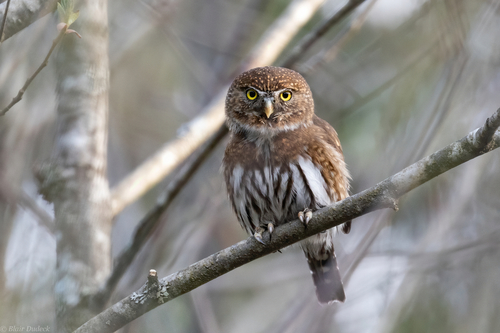
ロッキースズメフクロウ (Glaucidium gnoma) ロッキースズメフクロウ
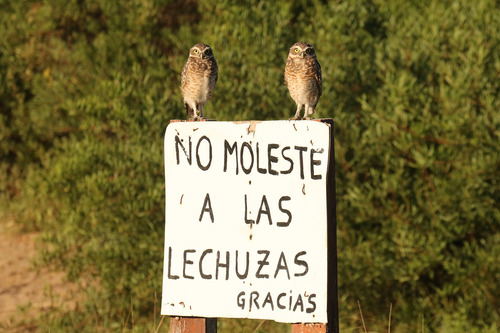
アナホリフクロウ (Athene cunicularia) アナホリフクロウ

メディア

読み込み中…

要点

ノーザンピグミーオウルとアナホリフクロウを区別する最も信頼できるフィールドマークは脚の長さと姿勢です:アナホリフクロウは長く露出した灰色の脚の上に直立しており、しばしば地面や低い止まり木にいます。一方、ノーザンピグミーオウルは短い羽毛のある脚で高い位置に止まり、コンパクトで丸い体型をしています。飛んでいるときや止まっているとき、アナホリフクロウは白い「顎」パッチと目立つ白い眉を示しますが、ノーザンピグミーオウルは斑点のある頭部と特徴的な白黒の後頭部の「目」を持っています。幼鳥のアナホリフクロウは上部に斑点がなく、バフ色の翼帯を持っていますが、すべての年齢のノーザンピグミーオウルは頭部と翼に白い斑点を示します。生息地は強い手がかりです:アナホリフクロウは開けた国の地上に厳密に生息し、ノーザンピグミーオウルは森林地域の樹上に生息しています。

識別のコツ

  1. 脚の長さと姿勢: アナホリフクロウは長く露出した灰色の脚の上に直立しており、しばしば地面や低い止まり木にいます。ノーザンピグミーオウルは短い羽毛のある脚で、枝の上に低く水平に座っています。
  2. 生息地の文脈: アナホリフクロウは常に開けた国におり、通常は巣穴の近くや地面にいます。ノーザンピグミーオウルは森林や木々のある地域におり、高い木に止まっています。
  3. 後頭部の「目」: ノーザンピグミーオウルだけが後頭部に白で縁取られた2つの黒い斑点を持ち、後ろから見ることができます。アナホリフクロウにはこの特徴がありません。
  4. 顔のマーキング: アナホリフクロウは目立つ白い眉と白い「顎」パッチを持ち、特に興奮しているときに目立ちます。ノーザンピグミーオウルは弱く定義された顔の円盤を持ち、これらの強い顔のコントラストがありません。
  5. 頭の斑点: ノーザンピグミーオウルは常に丸い白い斑点のある頭を持っています。アナホリフクロウの頭は成鳥では茶色で白い斑点がありますが、幼鳥はほとんど斑点がありません。
  6. 腹部のパターン: ノーザンピグミーオウルは暗い縦の筋がある白い腹部を示します。アナホリフクロウの成鳥は白い腹部に茶色の斑点や縞模様があり、幼鳥はバフ色で無地の胸を持っています。
  7. 翼と尾: アナホリフクロウはそのサイズに対して長い翼と尾を持ち、特に飛んでいるときに細長い印象を与えます。ノーザンピグミーオウルはコンパクトで比較的長い尾を持っていますが、全体的にずっと小さくて丸いです。
  8. 幼鳥の混乱: 幼鳥のアナホリフクロウは上部に白い斑点がなく、バフ色の翼帯と胸を持っていますが、幼鳥のノーザンピグミーオウルは白い斑点と後頭部の「目」を保持しています。
  9. 止まり木の選択: ノーザンピグミーオウルは高い木に止まりますが、アナホリフクロウはほぼ常に地面や低いポストの上にいます。
  10. 飛行スタイル: ノーザンピグミーオウルの飛行は直接的でブンブン音がし、静かではありません。アナホリフクロウの飛行はより浮遊感があり、地面に近いです。
  11. くちばしの色: ノーザンピグミーオウルは黄緑色のくちばしを持ち、アナホリフクロウのくちばしは暗い黄色または灰色ですが、これはフィールドで診断的であることはほとんどありません。
  12. 目の色: 両方とも黄色い目を持ち、有用な区別にはなりません。
  13. 性差: 両種は羽毛においてほとんど性的二形性を示さず、オスとメスは似ています。
  14. サイズの印象: アナホリフクロウは大きくて細長く、ノーザンピグミーオウルは小さくて丸いです。
  15. 鳴き声(聞こえたとき): ノーザンピグミーオウルの鳴き声は腹話術的で高い止まり木から発せられます。アナホリフクロウの鳴き声はここでは説明されていないので、注意して使用してください。

大きさ

アナホリフクロウは明らかに大きいです:長さ19〜28 cm(7〜11インチ)、翼幅50.8〜61 cm(20〜24インチ)、質量140〜240 g [wikipedia]。ノーザンピグミーオウルはずっと小さくてコンパクトです:長さ15〜17 cm(5.9〜6.7インチ)[wikipedia]。フィールドでは、アナホリフクロウは細長くて直立しているように見えますが、ノーザンピグミーオウルはずんぐりしていて丸く、サイズに対して比較的長い尾を持っています。

羽色

行動

ノーザンピグミーオウルは樹上性で、常に針葉樹の高い位置に止まり、しばしば最上部にいて、地面ではほとんど見られません。止まり木から狩りをし、昼間に活動しますが、小さなサイズと隠れた色のために見つけるのが難しいです。その飛行は静かではなく、ブンブン音やウィーン音を出します。アナホリフクロウは地上性で、ほとんどの時間を地面や低いポストの上で過ごし、しばしば巣穴の外で直立しているのが見られます。人間の存在に寛容で、時には都市や農業の環境で巣を作り、昼間に活動します。木に止まることはほとんどありません。

生息環境

生息地は強い区別要因です:ノーザンピグミーオウルは北アメリカ西部の森林、特に針葉樹林に生息し、樹洞に巣を作ります。アナホリフクロウは厳密に開けた国の鳥であり、草原、放牧地、砂漠、農業地、さらには都市の芝生など、常に低い植生と巣穴がある場所に生息します。開けた国の地面にフクロウを見た場合、それはほぼ確実にアナホリフクロウです;森林にいる場合、特に高い位置に止まっている場合、それはノーザンピグミーオウルです。

声

ノーザンピグミーオウルのオスは高い止まり木から領土の鳴き声を出し、腹話術的で位置を特定するのが難しいと説明されています。提供されたメモにはアナホリフクロウの特定の鳴き声の詳細は記載されていません。

より良い説明を送る

比較と同じ項目を使ってください。文章はすぐに公開されます。

The most reliable field mark to separate Northern Pygmy-Owl from Burrowing Owl is leg length and posture: Burrowing Owl stands upright on long, exposed grayish legs, often on the ground or a low perch, while Northern Pygmy-Owl perches higher with short, feathered legs and a compact, round-bodied look. In flight or perched, Burrowing Owl shows a white 'chin' patch and prominent white eyebrows, whereas Northern Pygmy-Owl has a spotted crown and distinctive black-and-white nape 'eyes'. Juvenile Burrowing Owls lack upperpart spotting and have a buff wing bar, while all ages of Northern Pygmy-Owl show white spots on the head and wings. Habitat is a strong clue: Burrowing Owl is strictly terrestrial in open country, Northern Pygmy-Owl is arboreal in forested areas.

  1. Leg length and posture: Burrowing Owl stands tall on long, exposed grayish legs, often upright on the ground or a low perch. Northern Pygmy-Owl has short, feathered legs and sits low and horizontally on branches.
  2. Habitat context: Burrowing Owl is always in open country, usually near a burrow or on the ground. Northern Pygmy-Owl is in wooded or forested areas, perching high in trees.
  3. Nape 'eyes': Only Northern Pygmy-Owl has two black spots outlined in white on the nape, visible from behind. Burrowing Owl lacks this feature.
  4. Facial markings: Burrowing Owl has prominent white eyebrows and a white 'chin' patch, especially visible when agitated. Northern Pygmy-Owl has a weakly defined facial disc and lacks these strong facial contrasts.
  5. Head spotting: Northern Pygmy-Owl always has a round, white-spotted head. Burrowing Owl's head is brown with white spots in adults, but juveniles lack most spotting.
  6. Underpart pattern: Northern Pygmy-Owl shows white underparts with dark vertical streaks. Burrowing Owl adults have white underparts with brown spots or barring; juveniles have buffy, unmarked breasts.
  7. Wing and tail: Burrowing Owl has long wings and tail for its size, giving a lanky look, especially in flight. Northern Pygmy-Owl is compact with a relatively long tail, but overall much smaller and rounder.
  8. Juvenile confusion: Juvenile Burrowing Owls lack white spotting above and have a buff wing bar and breast, while juvenile Northern Pygmy-Owls retain white spots and nape 'eyes'.
  9. Perch choice: Northern Pygmy-Owl perches high in trees; Burrowing Owl is almost always on the ground or a low post.
  10. Flight style: Northern Pygmy-Owl's flight is direct and buzzing, not silent. Burrowing Owl's flight is more buoyant and low to the ground.
  11. Bill color: Northern Pygmy-Owl has a yellowish-green bill; Burrowing Owl's bill is dark yellow or gray, but this is rarely diagnostic in the field.
  12. Eye color: Both have yellow eyes, not a useful separator.
  13. Sex differences: Both species show little sexual dimorphism in plumage; males and females look alike.
  14. Size impression: Burrowing Owl is larger and more elongated; Northern Pygmy-Owl is tiny and round.
  15. Vocalization (when heard): Northern Pygmy-Owl's call is ventriloquistic and given from high perches; Burrowing Owl's call is not described here, so use with caution.

Burrowing Owl is noticeably larger: 19–28 cm (7–11 in) long with a 50.8–61 cm (20–24 in) wingspan and 140–240 g mass [wikipedia]. Northern Pygmy-Owl is much smaller and more compact: 15–17 cm (5.9–6.7 in) long [wikipedia]. In the field, Burrowing Owl looks lanky and upright, while Northern Pygmy-Owl is stubby and round with a relatively long tail for its size.

  • Juvenile/immature birds: Juvenile Burrowing Owls lack most white spotting above and brown barring below, showing a buff bar across the upper wings and a buff (not white) breast. Juvenile Northern Pygmy-Owls retain the white spots on the head and wings, and always have the black-and-white nape 'eyes'.
  • Adults: Northern Pygmy-Owl adults are gray, brownish-gray, or rufous, with a round, white-spotted head, weak facial disc, and white underparts with vertical streaking. Burrowing Owl adults are brown with white spots above, white with brown barring or spots below, and have a flat facial disc, white eyebrows, and a white 'chin' patch. Burrowing Owl lacks the nape 'eyes' of the pygmy-owl.
  • Wings in flight: No unique upperwing pattern is described for either species in flight, but the Burrowing Owl's long wings and white underparts contrast with the pygmy-owl's compact, dark wings and streaked underparts.

Northern Pygmy-Owl is arboreal, perching high in conifer trees, often at the very top, and is rarely seen on the ground. It hunts from perches and is active by day, but is hard to spot due to its small size and cryptic color. Its flight is not silent and produces a buzzing or whirring sound. Burrowing Owl is terrestrial, spending most of its time on the ground or on low posts, often seen standing upright outside a burrow. It is tolerant of human presence, sometimes nesting in urban or agricultural settings, and is active during the day. It rarely perches in trees.

Habitat is a strong separator: Northern Pygmy-Owl is found in western North American forests, especially coniferous woods, and nests in tree cavities. Burrowing Owl is strictly a bird of open country—grasslands, rangelands, deserts, agricultural fields, and even urban lawns—always where there is low vegetation and burrows for nesting. If you see an owl on the ground in open country, it is almost certainly a Burrowing Owl; if it is in a forest, especially perched high, it is Northern Pygmy-Owl.

Northern Pygmy-Owl males give a territorial call from high perches, described as ventriloquistic and hard to localize. No specific vocalization details are given for Burrowing Owl in the provided notes.

変更を破棄しますか?

保存していない編集があります。今離れると失われます。

ロッキースズメフクロウ · アナホリフクロウ · 苦手な鳥