

north island robin vs south island robin
Petroica longipes versus Petroica australis
Jogue um quiz com north island robin e south island robin
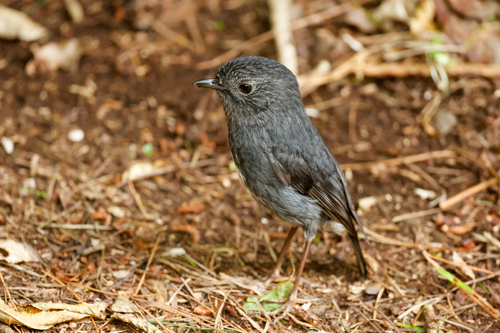 north island robin
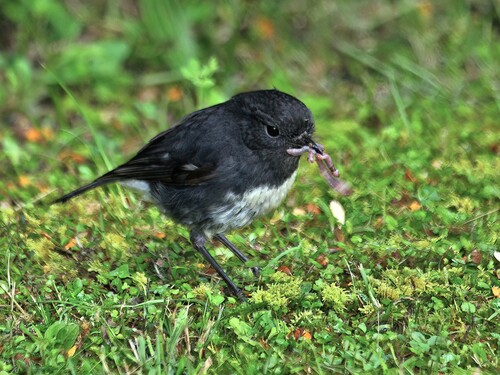 south island robin
Em resumo
A marca de campo mais confiável entre north island robin e south island robin é a extensão e a cor da mancha pálida na parte inferior do peito: south island robin (especialmente machos adultos) apresenta uma mancha maior e mais branca-amarelada, enquanto a de north island robin é menor e mais pálida. Machos adultos de north island robin são quase pretos na parte superior com um pequeno ponto branco na base do bico, enquanto os machos de south island robin são cinza escuro com um peito inferior pálido mais proeminente. Fêmeas e juvenis de ambas as espécies são muito mais semelhantes, sendo mais acinzentados e com manchas pálidas variáveis no peito, tornando a separação difícil em campo. As diferenças estruturais são sutis, e ambas as espécies são semelhantes em tamanho e forma, portanto, a atenção cuidadosa ao tamanho e à cor da mancha no peito, e às sutis diferenças na escuridão geral, são fundamentais. Plumagens juvenis e femininas são uma grande armadilha, pois se sobrepõem consideravelmente.
Dicas de identificação
- Tamanho e Cor da Mancha no Peito (Adultos): A marca de campo mais confiável é o tamanho e a cor da mancha pálida na parte inferior do peito. Machos de south island robin têm uma mancha maior e branca-amarelada, enquanto a de north island robin é menor e mais pálida. Isso é melhor visto em aves empoleiradas em boa luz.
- Escuridão Geral (Machos Adultos): Machos de north island robin são quase pretos na parte superior, contrastando com o cinza escuro dos machos de south island robin. Essa diferença é sutil, mas pode ser útil em comparação direta.
- Ponto Branco na Base do Bico: North island robin frequentemente mostra um pequeno ponto branco na base do bico, que pode ser exibido durante interações. South island robin pode mostrar isso, mas é menos proeminente.
- Estrias Pálidas nas Partes Superiores: North island robin pode mostrar estrias pálidas nas partes superiores, que são menos pronunciadas ou ausentes em south island robin. Isso é sutil e melhor visto de perto.
- Armadilha Juvenil e Feminina: Juvenis e fêmeas de ambas as espécies são muito semelhantes—acinzentadas com manchas pálidas variáveis no peito. Juvenis de south island robin recém-independentes podem não ter uma mancha pálida, mas isso não é sempre confiável. Não confie apenas na mancha do peito nessas idades.
- Dimorfismo Sexual: Machos são mais escuros e ligeiramente maiores em ambas as espécies, mas isso não ajuda a separar as duas.
- Tamanho: Ambas as espécies são semelhantes em tamanho e estrutura; não use o tamanho como separador.
- Padrão de Voo e Asa: Nenhuma diferença distintiva de padrão de asa ou voo é descrita para qualquer idade; não use o padrão de asa para separação.
- Habitat e Distribuição: Use a distribuição apenas se você tiver certeza de sua localização—north island robin está apenas na Ilha do Norte, south island robin apenas nas Ilhas do Sul e Stewart. Populações translocadas podem complicar isso.
- Comportamento: Ambas as espécies se comportam de maneira semelhante; não use o comportamento para separação.
- Voz: Canções e chamadas não são descritas como diferentes de forma confiável em campo.
- Dicas Contextuais: Se observar um par, note que os machos são mais escuros e têm uma mancha no peito mais distinta em ambas as espécies, mas o tamanho e a cor da mancha permanecem a melhor marca.
- Bandos Mistos: Se ambas as espécies estiverem presentes (por exemplo, em santuários gerenciados), confie no tamanho/cor da mancha do peito e na escuridão geral dos machos adultos.
- Condições de Iluminação: Diferenças sutis na escuridão e na cor da mancha do peito podem se perder em luz fraca; priorize vistas próximas e bem iluminadas.
- Quando em Dúvida: Se confrontado com uma fêmea ou juvenil, reconheça que a separação em campo pode não ser possível sem informações de distribuição ou análise genética.
Tamanho
Ambas as espécies são do tamanho de um pardal e muito semelhantes em proporções gerais. South island robin é descrito como tendo 10–18 cm de comprimento e cerca de 35 g de peso, o que é representativo para ambas as espécies. Machos são ligeiramente maiores que fêmeas em ambas as espécies, mas isso não é uma marca de campo confiável para separação. Nenhuma diferença de tamanho significativa é observada entre north island robin e south island robin em campo.
Plumagem
- Juvenis e Fêmeas: Juvenis e fêmeas de ambas as espécies são acinzentados com manchas pálidas variáveis no peito e na garganta, e podem ser extremamente difíceis de separar visualmente. Juvenis recém-independentes podem não ter uma mancha pálida bem definida, especialmente em south island robin, mas isso nem sempre é confiável.
- Machos Adultos: Machos de north island robin são quase pretos na parte superior com um pequeno ponto branco na base do bico e uma pequena mancha pálida (não amarelada) na parte inferior do peito. Machos de south island robin são cinza escuro (não preto) com uma mancha inferior maior e branca-amarelada. A área pálida em north island robin é sempre menor do que em south island robin.
- Partes Superiores: North island robin mostra estrias pálidas nas partes superiores, que são menos pronunciadas ou ausentes em south island robin.
- Base do Bico: Ambas as espécies podem mostrar um ponto branco na base do bico, mas é mais visível de forma consistente em north island robin, onde pode ser exibido em interações.
Comportamento
Ambas as espécies são insetívoras que se alimentam no chão, frequentemente vistas pulando ou correndo ao longo do chão da floresta e empoleirando-se eretas em ramos baixos. Machos podem ser mais territoriais e conspícuos, especialmente durante a temporada de reprodução. Não há uma diferença comportamental forte observada para separação em campo. Ambos os sexos podem armazenar comida e mostrar estratégias de forrageamento semelhantes, embora machos possam dominar fêmeas em fontes de alimento.
Habitat
O habitat não é um separador confiável em campo, a menos que você tenha certeza de sua localização: north island robin é endêmico da Ilha do Norte, enquanto south island robin é encontrado apenas na Ilha do Sul e na Ilha Stewart. Ambas preferem habitats florestais nativos e frequentemente são encontradas em nichos ecológicos semelhantes. Se você estiver dentro da distribuição conhecida de apenas uma espécie, isso pode ser útil, mas em populações translocadas ou gerenciadas, a sobreposição de distribuição pode ocorrer.
Voz
As vocalizações não são descritas como diagnósticas entre essas duas espécies nas fontes. Ambas produzem canções e chamadas altas e claras, com machos cantando mais durante a temporada de reprodução. Machos de south island robin são conhecidos por canções longas e contínuas, mas isso não é declarado como exclusivo da espécie.
north island robin · south island robin · Minhas aves difíceis