

negros bleeding-heart vs luzon bleeding-heart
Gallicolumba keayi versus Gallicolumba luzonica
Jogue um quiz com negros bleeding-heart e luzon bleeding-heart
 negros bleeding-heart
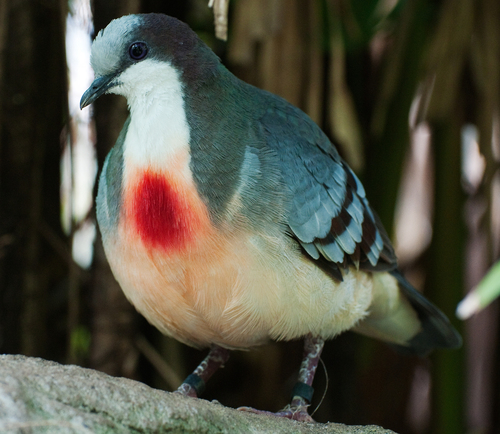 luzon bleeding-heart
Em resumo
A melhor marca de campo para separar o negros bleeding-heart do luzon bleeding-heart é a presença de uma longa marca vermelha em forma de 'coração' vertical com um brilho verde brilhante e uma distinta barra de asa em forma de 'V' branca e uma barra lateral no peito no Negros, em comparação com o patch arredondado e vermelho-sangue no peito do Luzon com um tom avermelhado se estendendo pela barriga e bandas de asas pretas. Ambos são pombas terrestres com forma e comportamento semelhantes, mas seus padrões de peito e asas são distintos. O negros bleeding-heart é muito mais raro e restrito a Negros e Panay, enquanto o luzon bleeding-heart é encontrado em Luzon e ilhas próximas. Se você ver uma pomba bleeding-heart com um 'V' branco na asa e tons esverdeados, é Negros; se o patch vermelho for arredondado e a ave mostrar bandas de asas pretas, é Luzon.
Dicas de identificação
- Forma da Marca no Peito: O negros bleeding-heart apresenta uma longa marca vermelha em forma de 'coração' vertical, enquanto o luzon bleeding-heart tem um patch no peito arredondado e vermelho-sangue com um tom avermelhado se estendendo pela barriga. Esta é a marca de campo mais confiável para todas as idades e sexos.
- Padrão das Asas: Procure uma distinta barra de asa em forma de 'V' branca e uma barra lateral no peito no negros bleeding-heart. O luzon bleeding-heart não possui isso, mostrando em vez disso bandas pretas nas asas.
- Cor das Partes Superiores: O negros bleeding-heart tem uma iridescência verde brilhante nas partes superiores, enquanto o luzon bleeding-heart é cinza ardósia, mas pode parecer roxo, azul ou verde-botella em certas luzes. No entanto, o verde do Negros é mais dominante e consistente.
- Barriga e Parte Inferior da Asa: O luzon bleeding-heart tem uma barriga e parte inferior da asa em tom claro ou castanho, com um tom avermelhado se estendendo do patch do peito. As partes inferiores do negros bleeding-heart são menos distintamente coloridas dessa forma.
- Garganta e Peito: O luzon bleeding-heart tem uma garganta, peito e barriga brancos, exceto pelo patch vermelho e pelo tom. O branco do negros bleeding-heart é mais restrito à barra de asa em 'V' e à barra lateral no peito.
- Dimorfismo Sexual: No luzon bleeding-heart, os machos têm um patch no peito vermelho maior e mais vívido do que as fêmeas, mas essa diferença é sutil e não é uma separação confiável do Negros.
- Variação de Subespécies (apenas Luzon): Algumas subespécies de Luzon (por exemplo, rubiventris, griseolateralis) têm patches vermelhos mais escuros ou mais extensos e cor de barriga, mas nunca a 'coração' vertical ou o 'V' branco do Negros.
- Habitat e Distribuição: Se você estiver em Negros ou Panay em floresta primária de baixa altitude, considere o negros bleeding-heart; em outros lugares nas Filipinas, especialmente Luzon e ilhas próximas, é o luzon bleeding-heart.
- Comportamento: Ambas as espécies são terrestres e secretivas, mas Luzon é mais propenso a ser encontrado em florestas secundárias ou habitats perturbados.
- Vocalização: Se você ouvir um coo repetido e triste ou um chamado de exibição rouco, é o luzon bleeding-heart. As vocalizações do negros bleeding-heart não são descritas.
- Raridade: O negros bleeding-heart é criticamente ameaçado e extremamente improvável de ser visto; o luzon bleeding-heart, embora em declínio, ainda é mais disseminado e provável.
- Marca da Temporada de Reprodução: Em cativeiro, os machos do negros bleeding-heart podem mostrar um 'coração' mais brilhante e avermelhado durante a reprodução, mas isso não é uma marca de campo confiável.
- Visões de Voo: Nenhum padrão de voo ou parte superior da asa específico para idade é descrito para ambas as espécies, então concentre-se nas marcas do peito e da barra de asa em aves empoleiradas.
- Armadilhas: Não confie no tamanho geral, pois ambos são semelhantes; evite confusão com o mindanao bleeding-heart, que não é abordado aqui.
- Contexto: Se você ver uma pomba bleeding-heart em um zoológico ou aviário, verifique se há híbridos ou subespécies misturadas, especialmente para Luzon, pois populações em cativeiro podem ter sido cruzadas.
Tamanho
Ambas as espécies são pombas terrestres de tamanho médio com corpo arredondado, cauda curta e pernas longas. O luzon bleeding-heart tem uma massa corporal média documentada de cerca de 196 g [wikidata], enquanto nenhuma massa direta é dada para o negros bleeding-heart, mas sua estrutura geral é muito semelhante. Machos de Luzon tendem a ser ligeiramente maiores que as fêmeas, mas isso não é uma separação de campo confiável do Negros. No geral, o tamanho não é um forte diferenciador em campo.
Plumagem
Para todas as idades, o negros bleeding-heart se destaca por sua longa marca vermelha em forma de 'coração' no peito, que é mais brilhante e mais alongada do que no Luzon. Isso é acompanhado por uma iridescência verde brilhante e uma distinta barra de asa em forma de 'V' branca e barra lateral no peito. O luzon bleeding-heart, em contraste, mostra um patch no peito arredondado e vermelho brilhante que muitas vezes parece 'sangrar' pela barriga como um tom avermelhado, com uma garganta, peito e barriga brancos. Luzon também tem bandas pretas nas asas e uma superfície superior cinza ardósia que pode parecer roxa, azul ou esverdeada devido à iridescência, mas não possui o 'V' branco e a dominância verde do Negros. Subespécies de Luzon podem mostrar variação na extensão e tonalidade do patch vermelho e cor da barriga, mas nunca o 'coração' vertical ou o 'V' branco do Negros. Nenhum padrão de voo ou parte superior da asa específico para idade é descrito para ambas as espécies, então concentre-se nas marcas do peito e da barra de asa em todas as idades.
Comportamento
Ambas as espécies são tímidas, secretivas e passam a maior parte do tempo no chão, alimentando-se sozinhas ou em pares. Elas empoleiram-se e fazem ninhos fora do chão em arbustos ou cipós. O luzon bleeding-heart é conhecido por ser especialmente silencioso e raramente deixar o chão, exceto para nidificar. Machos do negros bleeding-heart podem mostrar um 'coração' mais brilhante e avermelhado durante a temporada de reprodução, mas isso é sutil e nem sempre visível em campo. Ambas as espécies se alimentam principalmente de material vegetal, sementes e alguns invertebrados. Luzon geralmente coloca dois ovos por ninhada, enquanto a nidificação e o crescimento do negros são rápidos, provavelmente devido ao risco de predação.
Habitat
O negros bleeding-heart é estritamente endêmico de Negros e Panay, preferindo florestas primárias de baixa altitude até 1.200 m e é altamente sensível a distúrbios—raramente encontrado em crescimento secundário. O luzon bleeding-heart é encontrado em Luzon e ilhas próximas, habitando tanto florestas primárias quanto secundárias até 1.400 m. Luzon é mais tolerante a distúrbios de habitat e é mais provável de ser encontrado em habitats degradados ou secundários, enquanto o Negros agora é extremamente raro e localizado devido à perda severa de habitat. Se você não estiver em Negros ou Panay, você quase certamente está vendo o luzon bleeding-heart.
Voz
Apenas o luzon bleeding-heart tem um chamado descrito: um coo repetido e triste que sobe e desce, durando de 1 a 2 segundos, e um chamado de exibição rouco de 5 e 3 notas. Nenhuma vocalização é descrita para o negros bleeding-heart. Se você ouvir um coo distinto de uma pomba bleeding-heart, é provável que seja Luzon.
negros bleeding-heart · luzon bleeding-heart · Minhas aves difíceis