

Motmot

ネグロスヒムネバト 対 ヒムネバト

Gallicolumba keayi 対 Gallicolumba luzonica

ネグロスヒムネバトとヒムネバトのクイズ

ネグロスヒムネバト (Gallicolumba keayi) ネグロスヒムネバト
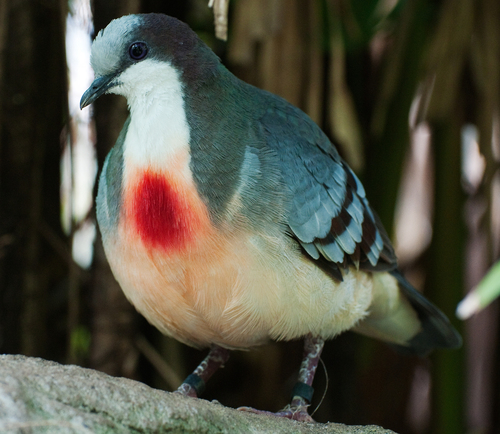
ヒムネバト (Gallicolumba luzonica) ヒムネバト

メディア

読み込み中…

要点

The best field mark to separate Negros Bleeding-heart from Luzon Bleeding-heart is the presence of a long, vertical red 'heart' mark with a bright green sheen and a distinct white 'V'-shaped wingbar and breast-side bar on Negros, versus the Luzon's rounded, blood-red patch on the chest with a reddish wash extending down the belly and black wing bands. Both are ground-dwelling doves with similar shape and behavior, but their chest and wing patterns are distinctive. Negros Bleeding-heart is much rarer and restricted to Negros and Panay, while Luzon Bleeding-heart is found on Luzon and nearby islands. If you see a bleeding-heart dove with a white 'V' on the wing and greenish tones, it's Negros; if the red patch is rounded and the bird shows black wing bands, it's Luzon.

識別のコツ

  1. Chest Mark Shape: Negros Bleeding-heart shows a long, vertical red 'heart' mark, while Luzon Bleeding-heart has a rounded, blood-red chest patch with a reddish wash down the belly. This is the most reliable field mark for all ages and sexes.
  2. Wing Pattern: Look for a distinct white 'V'-shaped wingbar and breast-side bar on Negros Bleeding-heart. Luzon Bleeding-heart lacks this, instead showing black bands on the wings.
  3. Upperparts Color: Negros Bleeding-heart has a bright green iridescence on the upperparts, while Luzon Bleeding-heart is slate grey but can appear purple, blue, or bottle-green in certain lights. However, Negros' green is more dominant and consistent.
  4. Belly and Underwing: Luzon Bleeding-heart has a buff or chestnut belly and underwing, with a reddish wash extending from the chest patch. Negros Bleeding-heart's underparts are less distinctly colored in this way.
  5. Throat and Breast: Luzon Bleeding-heart has a white throat, chest, and belly, except for the red patch and wash. Negros Bleeding-heart's white is more restricted to the 'V' wingbar and breast-side bar.
  6. Sexual Dimorphism: In Luzon Bleeding-heart, males have a larger and more vivid red chest patch than females, but this difference is subtle and not a reliable separation from Negros.
  7. Subspecies Variation (Luzon only): Some Luzon subspecies (e.g., rubiventris, griseolateralis) have darker or more extensive red patches and belly color, but never the vertical 'heart' or white 'V' of Negros.
  8. Habitat and Range: If you are on Negros or Panay in lowland primary forest, consider Negros Bleeding-heart; elsewhere in the Philippines, especially Luzon and nearby islands, it is Luzon Bleeding-heart.
  9. Behavior: Both species are ground-dwelling and secretive, but Luzon is more likely to be found in secondary forest or disturbed habitats.
  10. Vocalization: If you hear a repeated, mournful coo or a gruff display call, it is Luzon Bleeding-heart. Negros Bleeding-heart's vocalizations are not described.
  11. Rarity: Negros Bleeding-heart is critically endangered and extremely unlikely to be seen; Luzon Bleeding-heart, while declining, is still more widespread and likely.
  12. Breeding Season Mark: In captivity, Negros Bleeding-heart males may show a brighter, redder 'heart' during breeding, but this is not a reliable field mark.
  13. Flight Views: No distinctive age-specific upperwing or flight patterns are described for either species, so focus on perched birds' chest and wingbar marks.
  14. Pitfalls: Do not rely on overall size, as both are similar; avoid confusion with Mindanao Bleeding-heart, which is not covered here.
  15. Context: If you see a bleeding-heart dove in a zoo or aviary, check for hybrid or mixed subspecies, especially for Luzon, as captive populations may be interbred.

大きさ

Both species are medium-sized ground doves with a round body, short tail, and long legs. Luzon Bleeding-heart has a documented average body mass of about 196 g [wikidata], while no direct mass is given for Negros Bleeding-heart, but their overall structure is very similar. Males of Luzon tend to be slightly larger than females, but this is not a reliable field separation from Negros. Overall, size is not a strong differentiator in the field.

羽色

For all ages, Negros Bleeding-heart stands out by its long, vertical red 'heart' mark on the chest, which is brighter and more elongated than in Luzon. This is accompanied by a bright green iridescence and a distinct white 'V'-shaped wingbar and breast-side bar. Luzon Bleeding-heart, by contrast, shows a rounded, bright red chest patch that often appears to 'bleed' down the belly as a reddish wash, with a white throat, chest, and belly. Luzon also has black bands on the wings and a slate-grey upper surface that can appear purple, blue, or greenish due to iridescence, but lacks the white 'V' and green dominance of Negros. Subspecies of Luzon may show variation in the extent and shade of the red patch and belly color, but never the vertical 'heart' or white 'V' of Negros. No age-specific flight or upperwing patterns are described for either species, so focus on the chest and wingbar marks at all ages.

行動

Both species are shy, secretive, and spend most of their time on the ground, feeding singly or in pairs. They roost and nest off the ground in bushes or vines. Luzon Bleeding-heart is noted for being especially quiet and rarely leaving the ground except to nest. Negros Bleeding-heart males may show a brighter, redder 'heart' during breeding season, but this is subtle and not always visible in the field. Both species feed mainly on plant material, seeds, and some invertebrates. Luzon typically lays two eggs per clutch, while Negros' nesting and fledging are rapid, likely due to predation risk.

生息環境

Negros Bleeding-heart is strictly endemic to Negros and Panay, favoring primary lowland forest up to 1,200 m and is highly sensitive to disturbance—rarely found in secondary growth. Luzon Bleeding-heart is found on Luzon and nearby islands, inhabiting both primary and secondary forest up to 1,400 m. Luzon is more tolerant of habitat disturbance and is more likely to be encountered in degraded or secondary habitats, whereas Negros is now extremely rare and localized due to severe habitat loss. If you are not on Negros or Panay, you are almost certainly seeing Luzon Bleeding-heart.

声

Only Luzon Bleeding-heart has a described call: a repeated, mournful coo that rises and falls, lasting 1–2 seconds, and a gruff 5- and 3-note display call. No vocalization is described for Negros Bleeding-heart. If you hear a distinctive cooing from a bleeding-heart dove, it is likely Luzon.

より良い説明を送る

比較と同じ項目を使ってください。文章はすぐに公開されます。

The best field mark to separate Negros Bleeding-heart from Luzon Bleeding-heart is the presence of a long, vertical red 'heart' mark with a bright green sheen and a distinct white 'V'-shaped wingbar and breast-side bar on Negros, versus the Luzon's rounded, blood-red patch on the chest with a reddish wash extending down the belly and black wing bands. Both are ground-dwelling doves with similar shape and behavior, but their chest and wing patterns are distinctive. Negros Bleeding-heart is much rarer and restricted to Negros and Panay, while Luzon Bleeding-heart is found on Luzon and nearby islands. If you see a bleeding-heart dove with a white 'V' on the wing and greenish tones, it's Negros; if the red patch is rounded and the bird shows black wing bands, it's Luzon.

  1. Chest Mark Shape: Negros Bleeding-heart shows a long, vertical red 'heart' mark, while Luzon Bleeding-heart has a rounded, blood-red chest patch with a reddish wash down the belly. This is the most reliable field mark for all ages and sexes.
  2. Wing Pattern: Look for a distinct white 'V'-shaped wingbar and breast-side bar on Negros Bleeding-heart. Luzon Bleeding-heart lacks this, instead showing black bands on the wings.
  3. Upperparts Color: Negros Bleeding-heart has a bright green iridescence on the upperparts, while Luzon Bleeding-heart is slate grey but can appear purple, blue, or bottle-green in certain lights. However, Negros' green is more dominant and consistent.
  4. Belly and Underwing: Luzon Bleeding-heart has a buff or chestnut belly and underwing, with a reddish wash extending from the chest patch. Negros Bleeding-heart's underparts are less distinctly colored in this way.
  5. Throat and Breast: Luzon Bleeding-heart has a white throat, chest, and belly, except for the red patch and wash. Negros Bleeding-heart's white is more restricted to the 'V' wingbar and breast-side bar.
  6. Sexual Dimorphism: In Luzon Bleeding-heart, males have a larger and more vivid red chest patch than females, but this difference is subtle and not a reliable separation from Negros.
  7. Subspecies Variation (Luzon only): Some Luzon subspecies (e.g., rubiventris, griseolateralis) have darker or more extensive red patches and belly color, but never the vertical 'heart' or white 'V' of Negros.
  8. Habitat and Range: If you are on Negros or Panay in lowland primary forest, consider Negros Bleeding-heart; elsewhere in the Philippines, especially Luzon and nearby islands, it is Luzon Bleeding-heart.
  9. Behavior: Both species are ground-dwelling and secretive, but Luzon is more likely to be found in secondary forest or disturbed habitats.
  10. Vocalization: If you hear a repeated, mournful coo or a gruff display call, it is Luzon Bleeding-heart. Negros Bleeding-heart's vocalizations are not described.
  11. Rarity: Negros Bleeding-heart is critically endangered and extremely unlikely to be seen; Luzon Bleeding-heart, while declining, is still more widespread and likely.
  12. Breeding Season Mark: In captivity, Negros Bleeding-heart males may show a brighter, redder 'heart' during breeding, but this is not a reliable field mark.
  13. Flight Views: No distinctive age-specific upperwing or flight patterns are described for either species, so focus on perched birds' chest and wingbar marks.
  14. Pitfalls: Do not rely on overall size, as both are similar; avoid confusion with Mindanao Bleeding-heart, which is not covered here.
  15. Context: If you see a bleeding-heart dove in a zoo or aviary, check for hybrid or mixed subspecies, especially for Luzon, as captive populations may be interbred.

Both species are medium-sized ground doves with a round body, short tail, and long legs. Luzon Bleeding-heart has a documented average body mass of about 196 g [wikidata], while no direct mass is given for Negros Bleeding-heart, but their overall structure is very similar. Males of Luzon tend to be slightly larger than females, but this is not a reliable field separation from Negros. Overall, size is not a strong differentiator in the field.

For all ages, Negros Bleeding-heart stands out by its long, vertical red 'heart' mark on the chest, which is brighter and more elongated than in Luzon. This is accompanied by a bright green iridescence and a distinct white 'V'-shaped wingbar and breast-side bar. Luzon Bleeding-heart, by contrast, shows a rounded, bright red chest patch that often appears to 'bleed' down the belly as a reddish wash, with a white throat, chest, and belly. Luzon also has black bands on the wings and a slate-grey upper surface that can appear purple, blue, or greenish due to iridescence, but lacks the white 'V' and green dominance of Negros. Subspecies of Luzon may show variation in the extent and shade of the red patch and belly color, but never the vertical 'heart' or white 'V' of Negros. No age-specific flight or upperwing patterns are described for either species, so focus on the chest and wingbar marks at all ages.

Both species are shy, secretive, and spend most of their time on the ground, feeding singly or in pairs. They roost and nest off the ground in bushes or vines. Luzon Bleeding-heart is noted for being especially quiet and rarely leaving the ground except to nest. Negros Bleeding-heart males may show a brighter, redder 'heart' during breeding season, but this is subtle and not always visible in the field. Both species feed mainly on plant material, seeds, and some invertebrates. Luzon typically lays two eggs per clutch, while Negros' nesting and fledging are rapid, likely due to predation risk.

Negros Bleeding-heart is strictly endemic to Negros and Panay, favoring primary lowland forest up to 1,200 m and is highly sensitive to disturbance—rarely found in secondary growth. Luzon Bleeding-heart is found on Luzon and nearby islands, inhabiting both primary and secondary forest up to 1,400 m. Luzon is more tolerant of habitat disturbance and is more likely to be encountered in degraded or secondary habitats, whereas Negros is now extremely rare and localized due to severe habitat loss. If you are not on Negros or Panay, you are almost certainly seeing Luzon Bleeding-heart.

Only Luzon Bleeding-heart has a described call: a repeated, mournful coo that rises and falls, lasting 1–2 seconds, and a gruff 5- and 3-note display call. No vocalization is described for Negros Bleeding-heart. If you hear a distinctive cooing from a bleeding-heart dove, it is likely Luzon.

変更を破棄しますか?

保存していない編集があります。今離れると失われます。

ネグロスヒムネバト · ヒムネバト · 苦手な鳥