

mauritius kestrel vs falcão-de-coleira
Falco punctatus versus Falco femoralis
Jogue um quiz com mauritius kestrel e falcão-de-coleira
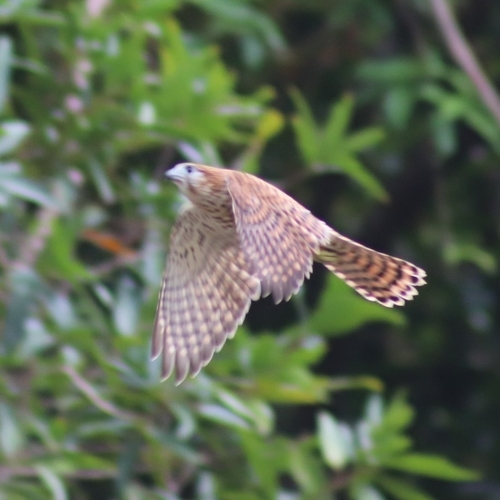 mauritius kestrel
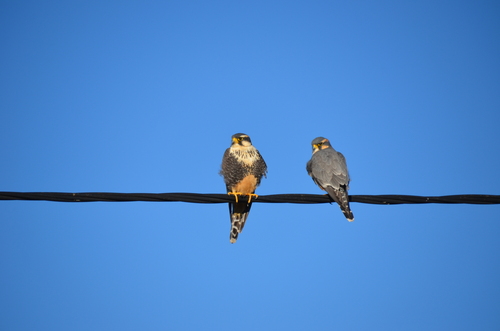 falcão-de-coleira
Em resumo
A marca de campo mais confiável entre o mauritius kestrel e o falcão-de-coleira é a estrutura geral e a forma das asas: o mauritius kestrel é um falcão compacto, de asas curtas e arredondadas, enquanto o falcão-de-coleira tem asas longas, cauda longa e é muito mais esbelto. Em voo, o falcão-de-coleira exibe uma cauda longa e listrada e asas pontudas, enquanto o mauritius kestrel tem asas largas e arredondadas e uma cauda mais curta. As plumagens de adultos e juvenis também são distintas: os falcões-de-coleira têm padrões ousados em preto, branco e canela, incluindo uma máscara facial forte e uma faixa preta no ventre, enquanto o mauritius kestrel é mais simples e não possui contrastes tão nítidos. O habitat é uma pista forte: o mauritius kestrel é restrito a ravinas florestadas de Maurício, enquanto o falcão-de-coleira é um pássaro de campo aberto nas Américas. O tamanho também é um fator, com o falcão-de-coleira pesando quase o dobro e tendo asas muito mais longas.
Dicas de identificação
- Forma das asas e cauda em voo: O falcão-de-coleira tem asas longas e pontudas e uma cauda longa e listrada; o mauritius kestrel tem asas curtas e arredondadas e uma cauda curta. Esta é a melhor marca em todas as idades.
- Estrutura geral: O falcão-de-coleira é esbelto e alongado, tanto empoleirado quanto em voo; o mauritius kestrel é compacto, com uma aparência de peito largo e asas curtas.
- Padrão facial: Os falcões-de-coleira adultos e juvenis mostram um rosto ousado em preto e branco com um forte bigode e supercílios brancos; o mauritius kestrel não possui isso, mostrando um rosto muito mais simples.
- Padrão do ventre e peito: O falcão-de-coleira tem uma faixa preta no ventre e partes inferiores canela; o mauritius kestrel não tem uma faixa preta no ventre e é geralmente mais simples na parte inferior.
- Padrão da cauda: A cauda do falcão-de-coleira é preta com barras brancas ou cinzas estreitas e uma ponta branca; a cauda do mauritius kestrel é mais curta e menos distintamente listrada.
- Asa superior em voo: As asas do falcão-de-coleira são longas e pontudas, com um tom azul-cinza escuro nos adultos; as asas do mauritius kestrel são arredondadas e não apresentam forte contraste de cor.
- Plumagem juvenil: O juvenil do falcão-de-coleira é semelhante ao adulto, mas mais apagado, com áreas brancas amareladas e canela mais clara; os juvenis do mauritius kestrel não mostram o rosto ousado ou a faixa no ventre, permanecendo geralmente simples.
- Diferenças sexuais: Ambas as espécies mostram fêmeas maiores que machos, mas isso não é uma marca de campo confiável.
- Postura empoleirada: O falcão-de-coleira frequentemente aparece ereto e alongado; o mauritius kestrel é mais curvado e compacto.
- Habitat: O mauritius kestrel está apenas em ravinas florestadas e penhascos em Maurício; o falcão-de-coleira está em campo aberto ou áreas urbanas nas Américas.
- Comportamento: O falcão-de-coleira planam, caçam em voo e podem ser vistos em pares; o mauritius kestrel caça de poleiros e faz voos curtos.
- Tamanho: O falcão-de-coleira é quase duas vezes mais pesado e tem asas muito mais longas; use isso se vistos lado a lado ou com espécies familiares.
- Cor do bico e pés: O falcão-de-coleira tem cera, anel ocular e pés amarelos ou amarelo-alaranjados; as cores das partes moles do mauritius kestrel são menos distintas no campo.
- Risco de confusão: Se você ver um falcão com uma máscara facial ousada, faixa preta no ventre e longas asas pontudas, é o falcão-de-coleira; se você ver um falcão compacto e simples com asas arredondadas, é o mauritius kestrel.
- Armadilhas: O imaturo do falcão-de-coleira pode parecer apagado, mas ainda mostra as longas asas, cauda longa e padrão facial. O mauritius kestrel nunca mostra a estrutura ou o padrão ousado do falcão-de-coleira.
Tamanho
O falcão-de-coleira é substancialmente maior e mais pesado que o mauritius kestrel. O falcão-de-coleira tem uma média de 333,5 g de massa corporal, com um comprimento de 30–40 cm e uma envergadura de cerca de 90 cm, tornando-se um falcão longo e esbelto. O mauritius kestrel é muito menor e mais robusto, com uma média de 169,5 g, comprimento de 26–30,5 cm e envergadura de cerca de 45 cm. No campo, as longas asas pontudas e a longa cauda do falcão-de-coleira são óbvias, enquanto o mauritius kestrel aparece compacto e de asas curtas.
Plumagem
Os juvenis dos falcões-de-coleira são semelhantes aos adultos, mas mais apagados: suas partes superiores e faixa no ventre são marrom escuro, o peito é estriado e as áreas brancas são amareladas. Os adultos têm um rosto ousado em preto e branco, garganta branca, faixa preta no ventre e partes inferiores canela, com uma cauda preta listrada em branco. O mauritius kestrel de todas as idades não possui esses contrastes ousados: é geralmente mais simples, sem padrão facial forte, sem faixa preta no ventre e sem ventre canela. As asas do mauritius kestrel são arredondadas, não pontudas, e sua cauda é mais curta e menos distintamente listrada. Essas diferenças são visíveis tanto em pássaros empoleirados quanto em voo, mas especialmente em voo, onde as longas asas pontudas e a longa cauda listrada do falcão-de-coleira se destacam contra a forma compacta e de asas arredondadas do mauritius kestrel.
Comportamento
O falcão-de-coleira é frequentemente visto planando ou caçando em áreas abertas, às vezes em pares, e pode seguir grandes mamíferos ou incêndios para assustar presas. É ágil e rápido, frequentemente caçando em voo. O mauritius kestrel é mais secreto, tipicamente caçando de um poleiro ou com voos curtos e diretos em ravinas florestadas e penhascos. Seu voo é menos flutuante e mais agitado devido às suas asas curtas e arredondadas. Essas diferenças comportamentais são mais aparentes em campo aberto, onde o falcão-de-coleira é ativo e conspícuo, em contraste com a preferência do mauritius kestrel por florestas densas e bordas.
Habitat
O mauritius kestrel é estritamente limitado às florestas, penhascos e ravinas do sudoeste de Maurício e nunca é encontrado fora desse habitat. O falcão-de-coleira é um pássaro de habitats abertos: campos secos, savanas, pântanos e até áreas urbanas na América do Sul. Nunca é encontrado em florestas densas. Assim, o habitat por si só é frequentemente suficiente para separá-los, a menos que vistos em cativeiro ou em vagância.
mauritius kestrel · falcão-de-coleira · Minhas aves difíceis