

long-tailed thrush vs scaly thrush
Zoothera dixoni versus Zoothera dauma
Jogue um quiz com long-tailed thrush e scaly thrush
 long-tailed thrush
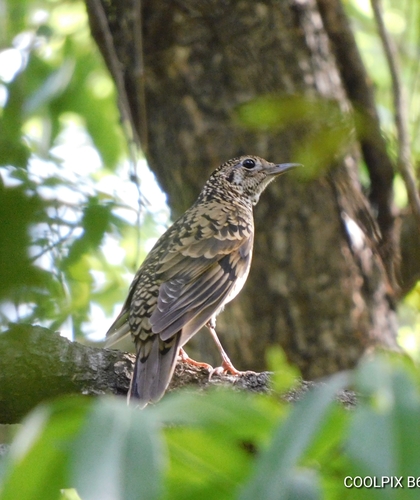 scaly thrush
Em resumo
A marca de campo mais confiável para separar o scaly thrush do long-tailed thrush é a faixa preta ousada na asa inferior branca, visível em voo no scaly thrush de todas as idades—uma característica não descrita para o long-tailed thrush. Ambos são thrushes de tamanho médio-grande do gênero Zoothera que habitam florestas montanas nos Himalaias e no sudoeste da China, mas o scaly thrush apresenta escamas pretas distintas em um fundo claro, enquanto o long-tailed thrush é menos bem descrito, mas não menciona tal escamação forte. A estrutura e o comportamento são semelhantes, então concentre-se no padrão da asa inferior e no contraste geral da plumagem. A sobreposição de habitat é significativa, então a identificação visual é fundamental.
Dicas de identificação
- Padrão da asa inferior em voo: O scaly thrush sempre mostra uma faixa preta ousada na asa inferior branca, visível quando o pássaro decola ou voa acima. O long-tailed thrush não possui essa característica (não descrita para a espécie), tornando-se o único melhor separador em voo para todas as idades.
- Escamação do corpo: O scaly thrush tem escamação preta proeminente em um fundo branco ou amarelado claro em todo o corpo, dando uma aparência escamosa. O long-tailed thrush não apresenta escamação tão forte, parecendo mais simples ou menos padronizado.
- Coloração geral: Se você ver um thrush com um corpo muito claro e fortemente marcado, suspeite do scaly thrush. Se o pássaro for mais uniformemente colorido e não tiver escamação ousada, o long-tailed thrush é mais provável.
- Sexo e idade: Ambas as espécies têm sexos semelhantes e não há diferenças fortes relacionadas à idade nas marcas de campo descritas, então concentre-se no padrão da asa inferior e do corpo.
- Canto: Se você ouvir um assobio mecânico alto e que se propaga com longas pausas, isso é diagnóstico para o macho do scaly thrush. O canto do long-tailed thrush não é descrito, então use isso apenas como um positivo para o scaly thrush.
- Habitat: Ambas ocorrem em florestas montanas semelhantes e em arbustos de alta altitude nos Himalaias e no sudoeste da China. Não confie no habitat para separação.
- Tamanho e estrutura: Ambos são thrushes de tamanho médio-grande com estrutura semelhante; o tamanho não é uma marca de campo confiável.
- Visões empoleiradas vs. em voo: Em pássaros empoleirados, concentre-se na escamação e no contraste geral. Em voo, sempre procure o padrão da asa inferior.
- Risco de confusão: Se o pássaro não estiver mostrando sua asa inferior e estiver em sombra profunda, confie no grau de escamação. Se você vislumbrar a asa inferior, a presença ou ausência da faixa preta é decisiva.
- Estação: O scaly thrush pode descer para altitudes mais baixas no inverno, mas ambas as espécies podem sobrepor-se em alcance e elevação, então não use a estação apenas para identificação.
- Subespécies e divisões: O scaly thrush tem vários táxons intimamente relacionados, mas nos Himalaias e no sudoeste da China, a forma nominativa Z. d. dauma é a forma relevante; o long-tailed thrush é mais restrito em alcance.
- Contexto de bandos: Ambas são geralmente vistas sozinhas ou em pares, não em bandos mistos, então o comportamento de bando não ajuda.
- Bico e cauda: Nenhuma diferença distintiva na forma do bico ou no comprimento da cauda é descrita nas fontes, então essas não são confiáveis para separação.
- Condições de iluminação: Em luz fraca, a escamação pode ser difícil de ver; tente observar o pássaro em voo para o padrão da asa inferior.
- Quando em dúvida: Se você não conseguir ver a asa inferior e a escamação não for óbvia, registre como Zoothera sp. e tente obter melhores visualizações.
Tamanho
Ambas as espécies são thrushes de tamanho médio-grande. O long-tailed thrush tem uma massa corporal registrada de cerca de 90 g [wikidata], o que é típico para os thrushes do gênero Zoothera. O scaly thrush é descrito como tendo 27–31 cm de comprimento [wikipedia], mas não é dada uma massa direta; ambos são semelhantes em volume e comprimento, então o tamanho sozinho não é um separador confiável em campo.
Plumagem
Para todas as idades, o scaly thrush mostra uma faixa preta marcante na asa inferior branca em voo—uma marca diagnóstica chave dentro do gênero Zoothera. Sua plumagem corporal é fortemente marcada com escamação preta em um fundo branco ou amarelado claro, dando uma aparência escamosa. O long-tailed thrush não menciona nenhuma faixa preta na asa inferior ou escamação forte; sua plumagem é menos bem detalhada, mas a ausência dessas marcas é notável. Ambos os sexos são semelhantes no scaly thrush; não há notas específicas de sexo para o long-tailed thrush. Nenhuma marca específica de idade na asa superior ou juvenil é descrita para qualquer uma das espécies além do padrão da asa inferior no scaly thrush.
Comportamento
Ambas as espécies são thrushes típicos do gênero Zoothera em comportamento, forrageando no chão da floresta e sendo tímidos e elusivos. Nenhuma diferença comportamental distinta é notada nas fontes.
Habitat
Ambas as espécies habitam florestas montanas úmidas subtropicais ou tropicais e arbustos de alta altitude nos Himalaias e no sudoeste da China. O scaly thrush também pode descer para os sopés no inverno como um migrante altitudinal. A sobreposição de habitat é substancial, então o habitat sozinho não é um separador confiável.
Voz
Os machos do scaly thrush cantam um assobio mecânico alto com pausas de 5–10 segundos entre cada frase de 1 segundo ("tuuu....tuuu....tuuu"). Nenhuma descrição vocal é fornecida para o long-tailed thrush, então a voz só é útil se o scaly thrush estiver cantando.