

Long-tailed Thrush vs Scaly Thrush
Zoothera dixoni contro Zoothera dauma
Fai un quiz con Long-tailed Thrush e Scaly Thrush
 Long-tailed Thrush
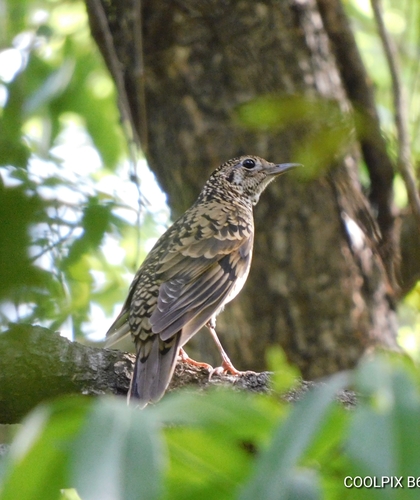 Scaly Thrush
In breve
Il segno distintivo più affidabile per separare il Scaly Thrush dal Long-tailed Thrush è la bold black band sulla bianca underwing, visibile in volo su Scaly Thrush di tutte le età—una caratteristica non descritta per Long-tailed Thrush. Entrambi sono Zoothera di medie-grandi dimensioni di foreste montane nell'Himalaya e nel sud-ovest della Cina, ma Scaly Thrush mostra una distintiva black scaling su uno sfondo chiaro, mentre Long-tailed Thrush è meno ben descritto ma non menziona una tale forte scaling. La struttura e il jizz sono simili, quindi concentrati sul pattern della underwing e sul contrasto generale del piumaggio. L'overlap dell'habitat è significativo, quindi l'ID visivo è fondamentale.
Consigli di identificazione
- Underwing pattern in flight: Scaly Thrush mostra sempre una bold black band sulla bianca underwing, visibile quando l'uccello decolla o vola sopra. Long-tailed Thrush non ha questa caratteristica (non descritta per la specie), rendendo questo il miglior separatore in volo per tutte le età.
- Body scaling: Scaly Thrush ha una prominente black scaling su uno sfondo bianco chiaro o giallastro su tutto il corpo, dando un aspetto squamoso. Long-tailed Thrush non mostra una tale forte scaling, apparendo più semplice o meno decorato.
- Overall coloration: Se vedi un thrush con un corpo molto chiaro e fortemente marcato, sospetta Scaly Thrush. Se l'uccello è più uniformemente colorato e manca di una forte scaling, Long-tailed Thrush è più probabile.
- Sex and age: Entrambe le specie hanno sessi simili e nessuna forte differenza legata all'età nei segni distintivi descritti, quindi concentrati sulla underwing e sul pattern del corpo.
- Song: Se senti un forte fischio meccanico che si propaga con lunghe pause, questo è diagnostico per il maschio di Scaly Thrush. Il canto di Long-tailed Thrush non è descritto, quindi usa questo solo come positivo per Scaly Thrush.
- Habitat: Entrambi si trovano in foreste montane simili e in arbusti ad alta quota nell'Himalaya e nel sud-ovest della Cina. Non fare affidamento sull'habitat per la separazione.
- Size and structure: Entrambi sono thrushes di medie-grandi dimensioni con struttura simile; la dimensione non è un segno distintivo affidabile.
- Perched vs. flight views: Negli uccelli posati, concentrati sulla scaling e sul contrasto generale. In volo, cerca sempre il pattern della underwing.
- Confusion risk: Se l'uccello non mostra la sua underwing ed è in profonda ombra, fai affidamento sul grado di scaling. Se intravedi la underwing, la presenza o l'assenza della black band è decisiva.
- Season: Scaly Thrush può scendere a quote più basse in inverno, ma entrambe le specie possono sovrapporsi in gamma e altitudine, quindi non usare la stagione da sola per l'ID.
- Subspecies and splits: Scaly Thrush ha diversi taxa strettamente correlati, ma nell'Himalaya e nel sud-ovest della Cina, la nominata Z. d. dauma è la forma rilevante; Long-tailed Thrush è più ristretta nella gamma.
- Flock context: Entrambi sono solitamente visti singolarmente o in coppie, non in stormi misti, quindi il comportamento di stormo non aiuta.
- Bill and tail: Non sono descritte differenze distintive nella forma del becco o nella lunghezza della coda nelle fonti, quindi queste non sono affidabili per la separazione.
- Lighting conditions: In scarsa illuminazione, la scaling può essere difficile da vedere; prova a osservare l'uccello in volo per il pattern della underwing.
- When in doubt: Se non riesci a vedere la underwing e la scaling non è ovvia, registra come Zoothera sp. e prova a ottenere viste migliori.
Taglia
Entrambe le specie sono thrushes di medie-grandi dimensioni. Long-tailed Thrush ha una massa corporea registrata di circa 90 g [wikidata], che è tipica per i thrushes Zoothera. Scaly Thrush è descritto come lungo 27–31 cm [wikipedia], ma non è fornita una massa diretta; entrambi sono simili in bulk e lunghezza, quindi la dimensione da sola non è un separatore affidabile sul campo.
Piumaggio
Per tutte le età, Scaly Thrush mostra una striking black band sulla bianca underwing in volo—un segno diagnostico chiave all'interno di Zoothera. Il suo piumaggio corporeo è fortemente marcato con black scaling su uno sfondo bianco chiaro o giallastro, dando un aspetto squamoso. Long-tailed Thrush non menziona alcuna black underwing band o forte scaling; il suo piumaggio è meno ben dettagliato, ma l'assenza di questi segni è notevole. Entrambi i sessi sono simili in Scaly Thrush; non ci sono note specifiche per il sesso di Long-tailed Thrush. Non sono descritti segni specifici per l'età o per i giovani per nessuna delle due specie oltre al pattern della underwing in Scaly Thrush.
Comportamento
Entrambe le specie sono tipici Zoothera thrushes nel comportamento, foraggiando sul pavimento della foresta e essendo timidi ed elusivi. Non sono notate differenze comportamentali distinte nelle fonti.
Habitat
Entrambe le specie abitano foreste montane umide subtropicali o tropicali e arbusti ad alta quota nell'Himalaya e nel sud-ovest della Cina. Scaly Thrush può anche scendere verso le colline in inverno come migrante altitudinale. L'overlap dell'habitat è sostanziale, quindi l'habitat da solo non è un separatore affidabile.
Voce
I maschi di Scaly Thrush cantano un forte fischio meccanico con pause di 5–10 secondi tra ogni frase di 1 secondo ("tuuu....tuuu....tuuu"). Nessuna descrizione vocale è fornita per Long-tailed Thrush, quindi la voce è utile solo se Scaly Thrush sta cantando.
Long-tailed Thrush · Scaly Thrush · I miei uccelli difficili