

chilreta vs gaivina-dos-pauis
Sternula albifrons versus Chlidonias hybrida
Jogue um quiz com chilreta e gaivina-dos-pauis
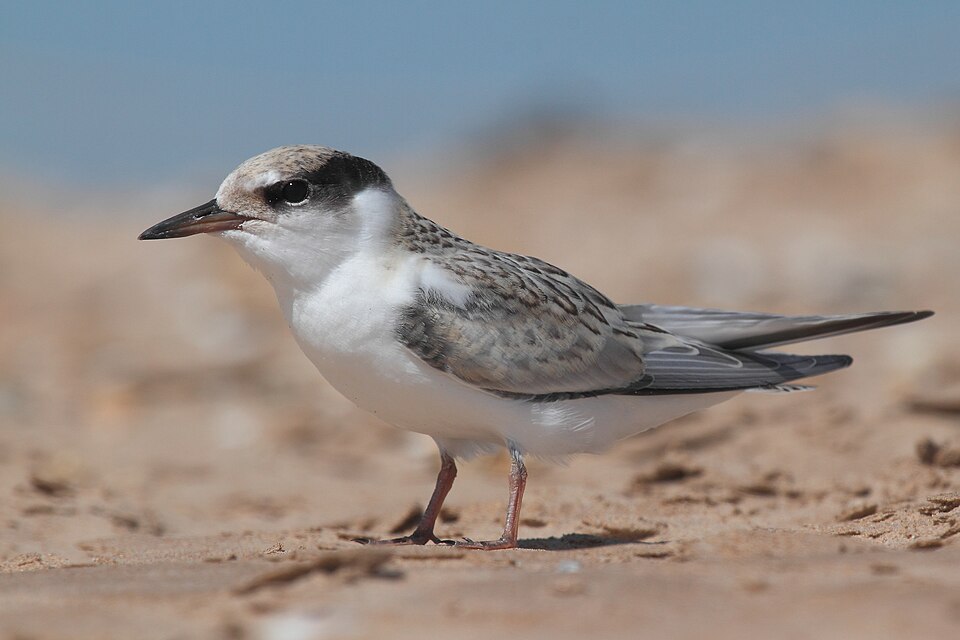 chilreta
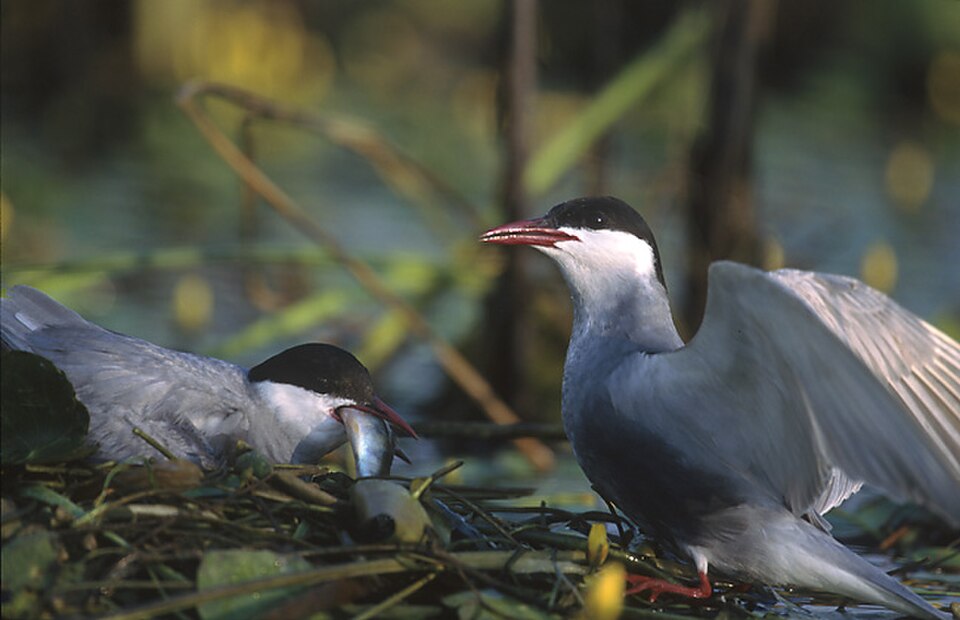 gaivina-dos-pauis
Em resumo
A marca de campo mais confiável entre a chilreta e a gaivina-dos-pauis é a estrutura geral e o tom da plumagem: a chilreta é muito menor, com um bico amarelo delicado e afiado (com ponta preta na época de reprodução), pernas amarelas e uma testa branca nítida na plumagem de reprodução, enquanto a gaivina-dos-pauis é maior, com corpo mais pesado, bico e pernas mais robustos e uma aparência escura e borrada na plumagem de reprodução. As aves juvenis e não reprodutoras são mais facilmente separadas pelo tamanho, cor do bico e a parte superior mais escura e manchada da gaivina-dos-pauis, além de um padrão de cabeça menos definido. Em voo, a chilreta parece delicada e leve, com uma cauda mais longa e profundamente bifurcada, enquanto a gaivina-dos-pauis tem uma cauda mais curta, semelhante à de uma andorinha, e asas mais largas. Observe o forte contraste na cor do bico e das pernas, e a distinta parte inferior escura da gaivina-dos-pauis e o padrão de cabeça em forma de C na plumagem de reprodução.
Dicas de identificação
- Tamanho e estrutura: A chilreta é muito menor e mais delicada, com um bico fino e afiado e uma cauda mais longa e profundamente bifurcada. A gaivina-dos-pauis é mais robusta, com um bico mais grosso e uma cauda mais curta, semelhante à de uma andorinha. Esta é frequentemente a pista de campo mais rápida.
- Cor do bico: Na época de reprodução, a chilreta tem um bico amarelo com ponta preta; no inverno, o bico fica preto. A gaivina-dos-pauis sempre tem um bico vermelho (mais opaco no inverno), nunca amarelo. A cor do bico é visível de perto ou em boa luz.
- Cor das pernas: As pernas da chilreta são amarelas na plumagem de reprodução, mais opacas no inverno. As pernas da gaivina-dos-pauis são vermelhas, tornando-se mais opacas, mas nunca amarelas. A cor das pernas é uma boa verificação em aves empoleiradas.
- Padrão da cabeça (reprodução): A chilreta tem uma testa branca nítida que contrasta com uma coroa preta. A gaivina-dos-pauis tem uma touca preta, mas o branco no rosto é menos definido, com uma faixa escura em forma de C através das coberturas auriculares e um colar menos distinto.
- Padrão da cabeça (não reprodução/juvenil): Ambas as espécies mostram mais branco na testa no inverno, mas a da chilreta é mais limpa e extensa. A cabeça da gaivina-dos-pauis é manchada, com a faixa escura das coberturas auriculares e a coroa bagunçada, especialmente em juvenis.
- Partes superiores (juvenil): Os juvenis da gaivina-dos-pauis têm um dorso escamoso e ruivo, com bordas e barras de buff largas, dando uma aparência manchada. Os juvenis da chilreta são mais simples na parte superior, sem esse forte efeito escamoso.
- Cor do corpo: A chilreta é pálida acima e abaixo, sempre parecendo limpa e branca. A gaivina-dos-pauis na reprodução é cinza escuro acima e abaixo, dando uma impressão muito mais sombria. No inverno, torna-se mais pálida, mas ainda mais cinza do que a chilreta.
- Forma da cauda: A cauda da chilreta é mais longa e mais profundamente bifurcada, frequentemente projetando-se bem além das pontas das asas quando empoleirada. A cauda da gaivina-dos-pauis é mais curta e menos bifurcada, mais parecida com a de uma andorinha.
- Estilo de voo: A chilreta é ágil, frequentemente pairando e mergulhando. A gaivina-dos-pauis tem um voo mais direto e deslizante, frequentemente patrulhando baixo sobre os pântanos.
- Habitat: A chilreta é costeira ou em lagos/rios abertos; a gaivina-dos-pauis é uma especialista em pântanos, raramente em costas abertas. Se você ver uma gaivina sobre um leito de junco ou pântano, é mais provável que seja a gaivina-dos-pauis.
- Voz: A chilreta emite chamadas agudas e altas; a gaivina-dos-pauis emite um 'krekk' mais baixo e áspero. Útil se ouvido bem.
- Postura empoleirada: A chilreta parece ereta e delicada; a gaivina-dos-pauis é mais pesada e mais curvada.
- Contexto sazonal: Na época de reprodução, procure a chilreta em praias de areia ou margens de rios, a gaivina-dos-pauis em pântanos. Na migração, ambas podem ocorrer no interior, mas o habitat e a estrutura continuam sendo fundamentais.
- Armadilhas: As gaivinas-dos-pauis imaturas podem parecer pálidas abaixo e bagunçadas acima, mas sempre verifique o dorso escamoso e ruivo e a faixa escura das coberturas auriculares. Os juvenis da chilreta nunca mostram esse padrão.
- Quando em dúvida: Tamanho, cor do bico e das pernas, e escuridão geral são as pistas mais seguras. Se você tiver uma visão clara do bico e das pernas, e a ave não for notavelmente pequena e branca, é provável que seja uma gaivina-dos-pauis.
Tamanho
A chilreta é significativamente menor, pesando cerca de 57g, em comparação com os 84g da gaivina-dos-pauis. No campo, a chilreta parece notavelmente mais delicada, com um corpo mais curto e uma construção mais fina. A gaivina-dos-pauis é mais robusta, com uma cabeça e peito mais pesados, e um bico mais robusto. A diferença é geralmente óbvia quando vistas lado a lado ou quando se está familiarizado com ambas as espécies. A envergadura da chilreta (41–47 cm) também é menor do que a da gaivina-dos-pauis, e seu voo é mais leve e ágil.
Plumagem
-
Juvenil/Primeiro-inverno: Os juvenis da gaivina-dos-pauis mostram um dorso 'escamoso' ruivo, com penas marrons escuras bordadas e barradas com buff, e uma aparência manchada e menos limpa no geral. Seu padrão de cabeça é bagunçado, com uma coroa preta manchada e uma faixa escura em forma de C através das coberturas auriculares. Os juvenis da chilreta são muito mais simples, sem o forte efeito ruivo ou escamoso, e mantêm um padrão de cabeça mais limpo e contrastante. Em ambas as espécies, a cor do bico e das pernas é menos brilhante do que nos adultos, mas a da gaivina-dos-pauis nunca é amarela.
-
Adulto em reprodução: A chilreta tem uma testa branca nitidamente destacada de uma coroa preta, um bico amarelo com ponta preta e pernas amarelas. O corpo é pálido acima e abaixo. Os adultos da gaivina-dos-pauis têm uma touca preta, bochechas brancas, um corpo cinza escuro acima e abaixo, e um bico e pernas vermelhos. Seu padrão de cabeça é menos definido, com uma faixa escura em forma de C através das coberturas auriculares e um colar menos distinto.
-
Adulto não reprodutor/inverno: Ambas as espécies desenvolvem mais branco na testa, mas o bico da chilreta fica preto e as pernas mais opacas, enquanto o bico e as pernas da gaivina-dos-pauis tornam-se menos vermelhos, mas nunca amarelos. O corpo da gaivina-dos-pauis torna-se cinza mais pálido, mas ainda mais escuro do que a chilreta, e a cabeça mantém uma aparência bagunçada e manchada em vez de uma testa branca nítida.
Comportamento
A chilreta é ágil e leve em voo, frequentemente pairando antes de mergulhar para pescar. Ela geralmente se alimenta sobre águas abertas ou ao longo de costas e rios. A gaivina-dos-pauis tem um voo mais direto, semelhante ao de uma andorinha, com asas mais largas e uma cauda mais curta e menos bifurcada. Ela frequentemente patrulha baixo sobre pântanos e zonas úmidas, pegando presas da superfície ou em mergulhos rasos. Empoleirada, a chilreta parece pequena e ereta, enquanto a gaivina-dos-pauis parece mais pesada e mais curvada.
Habitat
A chilreta se reproduz em costas arenosas ou pedregosas, margens de rios e praias, e é mais frequentemente vista em águas abertas ou praias. A gaivina-dos-pauis prefere pântanos interiores, leitos de junco e zonas úmidas, raramente encontrada em costas abertas. Na migração, a gaivina-dos-pauis pode aparecer em lagos e reservatórios, mas ainda é mais provável que esteja em habitats vegetados e pantanosos. O habitat pode ser uma pista forte, especialmente na época de reprodução.
Voz
A chilreta emite chamadas agudas e de tom alto, frequentemente descritas como 'kit' ou 'kik'. A chamada da gaivina-dos-pauis é um 'krekk' característico, mais baixo e áspero. A voz é útil se você conhece os sons, mas menos confiável do que as marcas visuais para a maioria dos observadores.