

garçote-comum vs socó-dorminhoco
Botaurus minutus versus Nycticorax nycticorax
Jogue um quiz com garçote-comum e socó-dorminhoco
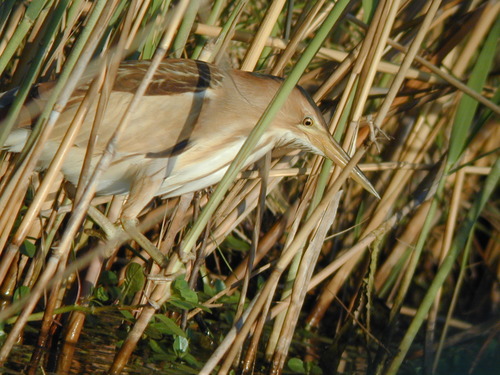 garçote-comum
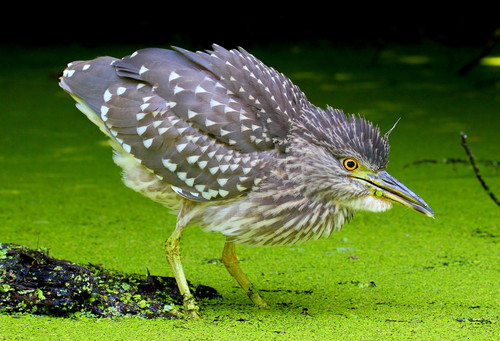 socó-dorminhoco
Em resumo
A marca de campo mais confiável para separar o garçote-comum do socó-dorminhoco é o tamanho e a estrutura: o garçote-comum é dramaticamente menor, com uma construção esbelta e delicada e um bico longo e afiado, enquanto o socó-dorminhoco é muito mais pesado, robusto e tem um bico mais curto e grosso. Em voo ou empoleirado, os garçotes-comuns (especialmente os machos) mostram um painel de asa pálido e rosa-areado que contrasta com as asas escuras, enquanto os socós-dorminhocos têm asas cinza pálido uniformes e não apresentam nenhum painel contrastante. Os garçotes-comuns juvenis são fortemente estriados acima e abaixo, enquanto os socós-dorminhocos juvenis são marrons com manchas pálidas em forma de lágrima e partes inferiores estriadas, mas nunca mostram os tons ruivos ou areados do garçote-comum. Ambas as espécies podem ser encontradas em habitats úmidos semelhantes, mas seu tamanho, estrutura e padrão de asas são as pistas mais imediatas em campo.
Dicas de identificação
- O tamanho é a verificação mais rápida: O garçote-comum é minúsculo para um garça—menos de um quarto da massa do socó-dorminhoco. Se o pássaro parece do tamanho de uma saracura ou martim-pescador, é um garçote-comum; se é do tamanho de um corvo e robusto, é um socó. Isso funciona para todas as idades e sexos.
- Estrutura: O garçote-comum é esbelto e delicado, com um bico longo e afiado e um pescoço grosso que pode parecer surpreendentemente longo quando estendido. O socó-dorminhoco é robusto, com um bico curto e grosso, pernas mais curtas e uma postura curvada quando empoleirado.
- Padrão de asas em voo (todas as idades): O garçote-comum (especialmente os machos) mostra um painel oval pálido e rosa-areado nas coberturas internas das asas, contrastando com as asas escuras. Este painel é menos óbvio, mas ainda presente em fêmeas e juvenis. O socó-dorminhoco tem asas cinza pálido uniformes, sem painel ou mancha contrastante.
- Cor da parte inferior da asa: O garçote-comum tem uma parte inferior da asa completamente esbranquiçada, visível em voo. A parte inferior da asa do socó-dorminhoco é pálida, mas não tão strikingmente branca ou contrastante.
- Machos adultos de garçote-comum: Coroa, nuca, costas e cauda pretas brilhantes com um leve brilho verde, partes inferiores pálidas e painel de asa rosa-areado. Os adultos do socó-dorminhoco têm uma coroa e costas pretas, mas as asas são cinza pálido e as partes inferiores são brancas ou cinzas, nunca areadas.
- Fêmeas adultas de garçote-comum: Mais opacas, com partes superiores marrom-pretas e partes inferiores estriadas. O painel de asa é menos óbvio, mas presente. As fêmeas do socó-dorminhoco se parecem com os machos, sem partes inferiores areadas ou estriadas.
- Separação juvenil/imatura: O juvenil do garçote-comum é mais ruivo, fortemente estriado acima e abaixo, e pode mostrar um painel de asa fraco. O juvenil do socó-dorminhoco é marrom-cinza acima com manchas pálidas em forma de lágrima e partes inferiores estriadas, mas nunca ruivo ou areado. A impressão geral é muito mais manchada e menos estriada do que a do garçote-comum.
- Cor e forma do bico: O garçote-comum tem um bico longo e afiado, semelhante a uma adaga, frequentemente amarelado. O socó-dorminhoco tem um bico mais curto e robusto, geralmente mais escuro.
- Cor das pernas: As pernas do garçote-comum não são descritas em detalhes aqui, mas os adultos do socó-dorminhoco têm pernas curtas e amarelas (tornando-se rosa-salmão durante o acasalamento), enquanto os juvenis têm pernas amarelo-esverdeadas opacas.
- Plumas na cabeça: Os adultos do socó-dorminhoco na época de reprodução têm longas plumas brancas e finas na parte de trás da cabeça—nunca presentes no garçote-comum.
- Postura: O garçote-comum frequentemente adota uma pose vertical e esticada em juncos, misturando-se à vegetação. O socó-dorminhoco é mais provável de ser visto curvado em um poleiro ou galho aberto.
- Contexto do habitat: Se o pássaro está profundo em juncos densos e raramente emerge, é mais provável que seja um garçote-comum. Se está empoleirado abertamente em árvores ou em galhos, especialmente com outros, é mais provável que seja um socó-dorminhoco.
- Contexto sazonal (Europa): O garçote-comum é um migrante, presente principalmente de abril a setembro. O socó-dorminhoco é mais disseminado e pode ser residente ou um vagante dependendo da região.
- Cor dos olhos: Os adultos do socó-dorminhoco têm olhos vermelhos; os juvenis têm laranja. A cor dos olhos do garçote-comum não é especificada aqui, mas não é tão marcante quanto o vermelho do socó-dorminhoco.
- Vocalização: Não é diagnóstica com as informações fornecidas aqui.
Tamanho
O garçote-comum é muito menor e mais leve (massa corporal adulta ~147g) em comparação com o socó-dorminhoco (~636g). O garçote-comum é a menor garça europeia, com um comprimento de 33–38 cm e uma envergadura de 52–58 cm, dando-lhe uma aparência delicada, quase semelhante à de uma saracura. O socó-dorminhoco é uma garça de tamanho médio, visivelmente mais robusta e robusta, com uma construção muito mais pesada, pescoço mais curto e bico mais curto e grosso. A diferença de tamanho é impressionante em comparação direta ou quando vistas no mesmo habitat.
Plumagem
- Juvenil/Imaturo: Os juvenis de garçote-comum são mais ruivos no geral do que as fêmeas adultas, com estrias pesadas em ambas as partes superiores e inferiores, incluindo as coberturas das asas. Seu painel de asa é menos óbvio, mas ainda presente. Os juvenis do socó-dorminhoco são cinza-marrons opacos acima com numerosas manchas pálidas em forma de lágrima e têm partes inferiores mais claras e estriadas. Eles não têm os tons ruivos e o painel de asa contrastante do garçote-comum. Seus olhos são laranja e as pernas são amarelo-esverdeadas opacas.
- Machos adultos de garçote-comum: Mostra coroa, nuca, costas, cauda e escapulares pretas brilhantes com um leve brilho verde. As partes inferiores são pálidas e as coberturas internas das asas formam um painel oval rosa-areado distinto contra asas pretas. A parte inferior da asa é completamente esbranquiçada. O bico é longo e afiado.
- Fêmeas adultas de garçote-comum: Mais opacas do que os machos, com partes superiores marrom-pretas e margens de penas mais claras. As partes inferiores são estriadas com buff escuro e marrom, e o painel de asa é menos óbvio, mas ainda presente.
- Adulto socó-dorminhoco: Ambos os sexos têm uma coroa e costas pretas, asas cinza pálido e partes inferiores brancas ou cinzas. O bico é mais curto e grosso. Eles não têm nenhum painel de asa contrastante. Os adultos têm olhos vermelhos, pernas curtas e amarelas e (na época de reprodução) longas plumas brancas na cabeça e às vezes pernas rosa-salmão. As partes inferiores são brancas limpas ou cinzas pálidas, nunca areadas ou estriadas.
Comportamento
O garçote-comum é secreto, frequentemente se escondendo em juncos densos e raramente visto em aberto. Ele se move com um andar lento e deliberado e pode congelar com seu bico apontado para cima, misturando-se aos juncos. Em voo, parece fraco e agitado, com batidas de asas rápidas e pernas arrastando para trás. O socó-dorminhoco é mais robusto e frequentemente se empoleira em árvores ou em galhos abertos perto da água, às vezes em grupos. Seu voo é direto e forte, com asas largas e arredondadas e pescoço curvado. Os socós-dorminhocos são mais propensos a serem vistos ao crepúsculo ou à noite, mas também se empoleiram abertamente durante o dia.
Habitat
Ambas as espécies utilizam habitats úmidos, como juncais, pântanos e lagos com vegetação densa. O garçote-comum está mais estritamente ligado à vegetação emergente densa e é menos provável de ser visto em ambientes úmidos abertos ou urbanos. O socó-dorminhoco é mais adaptável, utilizando uma gama mais ampla de habitats úmidos, incluindo parques urbanos, e é mais provável de se empoleirar em árvores ou em galhos abertos.