

Motmot

ヒメヨシゴイ 対 ゴイサギ

Botaurus minutus 対 Nycticorax nycticorax

ヒメヨシゴイとゴイサギのクイズ
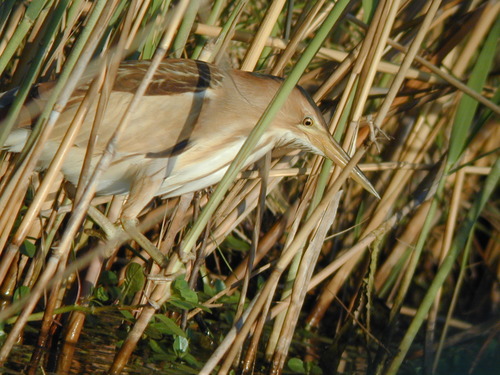
ヒメヨシゴイ (Botaurus minutus) ヒメヨシゴイ
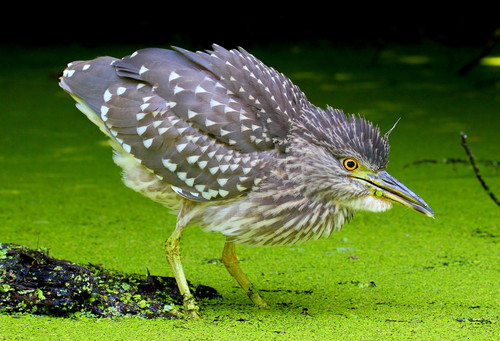
ゴイサギ (Nycticorax nycticorax) ゴイサギ

メディア

読み込み中…

要点

ヒメヨシゴイとゴイサギを区別する最も信頼できるフィールドマークはサイズと構造です:ヒメヨシゴイは劇的に小さく、スリムで繊細な体型と長く鋭いくちばしを持っていますが、ゴイサギははるかに重く、がっしりしており、短く太いくちばしを持っています。飛んでいるときや止まっているとき、ヒメヨシゴイ(特にオス)は暗い翼と対照的な淡いピンクがかったバフの翼パネルを示しますが、ゴイサギは均一な淡い灰色の翼を持ち、対照的なパネルはありません。幼鳥のヒメヨシゴイは上面と下面に重い縞模様がありますが、幼鳥のゴイサギは淡い涙滴状の斑点がある茶色がかった色合いで、決してヒメヨシゴイの赤褐色やバフの色調を示しません。両種は似たような湿地生息地に見られますが、サイズ、構造、翼のパターンがフィールドでの最も即座の手がかりです。

識別のコツ

  1. Size is the fastest check: ヒメヨシゴイはゴイサギの質量の4分の1未満の小さなヘロンです。鳥がレールやカワセミのサイズに見える場合はヒメヨシゴイであり、カラスのサイズでがっしりしている場合はゴイサギです。これはすべての年齢と性別に当てはまります。
  2. Structure: ヒメヨシゴイはスリムで繊細で、長く鋭いくちばしと、伸ばすと驚くほど長く見える太い首を持っています。ゴイサギはがっしりしており、短く太いくちばし、短い脚、止まっているときは背中を丸めた姿勢をしています。
  3. Wing pattern in flight (all ages): ヒメヨシゴイ(特にオス)は内側の翼覆いに淡いピンクがかったバフの楕円形のパネルを示し、暗い翼と対照的です。このパネルは雌や幼鳥にも存在しますが、あまり目立ちません。ゴイサギは均一な淡い灰色の翼を持ち、対照的なパネルや斑点はありません。
  4. Underwing color: ヒメヨシゴイは飛行中に見える完全に白いアンダーウィングを持っています。ゴイサギのアンダーウィングは淡いですが、あまり目立つ白さや対照性はありません。
  5. Adult male ヒメヨシゴイ: 光沢のある黒い冠、後頭部、背中、尾、肩羽にわずかな緑色の光沢があり、淡いバフの下部とピンクがかったバフの翼パネルがあります。ゴイサギの成鳥は黒い冠と背中を持っていますが、翼は淡い灰色で、下部は白または灰色で、決してバフではありません。
  6. Adult female ヒメヨシゴイ: 雄よりも鈍い色合いで、茶色がかった黒の上面と縞模様のある下部を持っています。翼パネルはあまり目立ちませんが存在します。ゴイサギの雌は雄に似ており、バフや縞模様のある下部はありません。
  7. Juvenile/immature separation: 幼鳥のヒメヨシゴイはより赤褐色で、上面と下面に重い縞模様があり、わずかな翼パネルを示すことがあります。幼鳥のゴイサギは上面が茶色がかった灰色で、淡い涙滴状の斑点があり、縞模様のある下部を持っていますが、決して赤褐色やバフではありません。全体的な印象はヒメヨシゴイよりも斑点が多く、縞模様が少ないです。
  8. Bill color and shape: ヒメヨシゴイは長く鋭いダガーのようなくちばしを持ち、しばしば黄色がかっています。ゴイサギは短くて太いくちばしを持ち、通常は暗い色です。
  9. Leg color: ヒメヨシゴイの脚はここでは詳細に説明されていませんが、ゴイサギの成鳥は短い黄色の脚(求愛時にサーモンピンクに変わる)を持ち、幼鳥は鈍い黄色がかった緑色の脚を持っています。
  10. Head plumes: 繁殖期の成鳥のゴイサギは頭の後ろから長く細い白い羽毛を持ち、ヒメヨシゴイには存在しません。
  11. Posture: ヒメヨシゴイはしばしば縦に伸びた姿勢を取り、植物に溶け込んでいます。ゴイサギはオープンな止まり木や枝に丸まっているのが見られることが多いです。
  12. Habitat context: 鳥が密な葦の中に深くいて、めったに出てこない場合はヒメヨシゴイの可能性が高いです。木や枝にオープンに止まっている場合、特に他の鳥と一緒にいる場合はゴイサギの可能性が高いです。
  13. Seasonal context (Europe): ヒメヨシゴイは移動性で、主に4月から9月にかけて存在します。ゴイサギはより広範囲に分布し、地域によっては定住または迷鳥となることがあります。
  14. Eye color: 成鳥のゴイサギは赤い目を持ち、幼鳥はオレンジ色です。ヒメヨシゴイの目の色はここでは指定されていませんが、ゴイサギの赤ほど目立つものではありません。
  15. Vocalization: ここで提供された情報では診断には使えません。

大きさ

ヒメヨシゴイはゴイサギに比べてはるかに小さく軽量です(成鳥の体重約147g、ゴイサギ約636g)。ヒメヨシゴイは最小のヨーロッパのヘロンで、長さは33〜38 cm、翼幅は52〜58 cmで、繊細でほぼレールのような外観を持っています。ゴイサギは中型のヘロンで、明らかにがっしりしており、より頑丈で、はるかに重い体型、短い首、短く太いくちばしを持っています。サイズの違いは直接比較したり、同じ生息地で見たりすると際立っています。

羽色

行動

ヒメヨシゴイは秘密主義で、密な葦の中に隠れていることが多く、オープンに見られることはめったにありません。ゆっくりとした慎重な歩き方で移動し、くちばしを上に向けて凍りつくことができ、葦に溶け込んでいます。飛行中は弱々しくひらひらして見え、急速な翼の動きと後ろに引きずられる脚を持っています。ゴイサギはより頑丈で、しばしば水の近くの木やオープンな枝に止まることが多く、時には群れで見られます。飛行は直接的で強く、広く丸い翼と丸まった首を持っています。ゴイサギは夕暮れや夜に見られることが多いですが、昼間もオープンに止まることがあります。

生息環境

両種は葦原、湿地、密な植生のある湖などの湿地生息地を利用します。ヒメヨシゴイは密な水生植物に厳密に結びついており、オープンまたは都市の湿地環境で見られる可能性は低いです。ゴイサギはより適応性があり、都市公園を含む幅広い湿地を利用し、木やオープンな枝に止まる可能性が高いです。

より良い説明を送る

比較と同じ項目を使ってください。文章はすぐに公開されます。

The most reliable field mark to separate Little Bittern from Black-crowned Night Heron is size and structure: Little Bittern is dramatically smaller, with a slim, delicate build and a long, sharp bill, while Black-crowned Night Heron is much heavier, stockier, and has a shorter, thicker bill. In flight or perched, Little Bitterns (especially males) show a pale, pinkish-buff wing panel contrasting with dark wings, while Black-crowned Night Herons have uniform pale grey wings and lack any contrasting panel. Juvenile Little Bitterns are heavily streaked above and below, while juvenile Black-crowned Night Herons are brownish with pale teardrop spots and streaked underparts, but never show the rufous or buffy tones of Little Bittern. Both species can be found in similar wetland habitats, but their size, structure, and wing pattern are the most immediate clues in the field.

  1. Size is the fastest check: Little Bittern is tiny for a heron—less than a quarter the mass of Black-crowned Night Heron. If the bird looks rail- or kingfisher-sized, it's a Little Bittern; if it's crow-sized and chunky, it's a Night Heron. This works for all ages and sexes.
  2. Structure: Little Bittern is slim and delicate, with a long, sharp bill and a thick neck that can look surprisingly long when extended. Black-crowned Night Heron is stocky, with a short, thick bill, shorter legs, and a hunched posture when perched.
  3. Wing pattern in flight (all ages): Little Bittern (especially males) shows a pale, pinkish-buff oval panel on the inner wing coverts, contrasting with dark wings. This panel is less obvious but still present in females and juveniles. Black-crowned Night Heron has uniform pale grey wings, with no contrasting panel or patch.
  4. Underwing color: Little Bittern has a completely whitish underwing, visible in flight. Black-crowned Night Heron's underwing is pale but not as strikingly white or contrasting.
  5. Adult male Little Bittern: Glossy black crown, nape, back, and tail with faint green sheen, pale buff underparts, and pinkish-buff wing panel. Black-crowned Night Heron adults have a black crown and back, but wings are pale grey and underparts are white or grey, never buff.
  6. Adult female Little Bittern: Duller, with brownish-black upperparts and streaked underparts. The wing panel is less obvious but present. Black-crowned Night Heron females look like males, with no buff or streaked underparts.
  7. Juvenile/immature separation: Juvenile Little Bittern is more rufous, heavily streaked above and below, and may show a faint wing panel. Juvenile Black-crowned Night Heron is brownish-grey above with pale teardrop spots and streaked underparts, but never rufous or buffy. The overall impression is much more spotted and less streaked than Little Bittern.
  8. Bill color and shape: Little Bittern has a long, sharp, dagger-like bill, often yellowish. Black-crowned Night Heron has a shorter, stouter bill, usually darker.
  9. Leg color: Little Bittern's legs are not described in detail here, but Black-crowned Night Heron adults have short yellow legs (turning salmon-pink in courtship), while juveniles have dull yellowish-green legs.
  10. Head plumes: Adult Black-crowned Night Herons in breeding season have long, slender white plumes from the back of the head—never present in Little Bittern.
  11. Posture: Little Bittern often adopts a vertical, stretched pose in reeds, blending in with vegetation. Black-crowned Night Heron is more likely to be seen hunched on an open perch or branch.
  12. Habitat context: If the bird is deep in dense reeds and rarely emerges, Little Bittern is more likely. If it's roosting openly in trees or on branches, especially with others, Black-crowned Night Heron is more likely.
  13. Seasonal context (Europe): Little Bittern is a migrant, present mainly April–September. Black-crowned Night Heron is more widespread and can be resident or a vagrant depending on region.
  14. Eye color: Adult Black-crowned Night Herons have red eyes; juveniles have orange. Little Bittern's eye color is not specified here, but is not as striking as the Night Heron's red.
  15. Vocalization: Not diagnostic with the information provided here.

Little Bittern is much smaller and lighter (adult body mass ~147g) compared to Black-crowned Night Heron (~636g). Little Bittern is the smallest European heron, with a length of 33–38 cm and a wingspan of 52–58 cm, giving it a delicate, almost rail-like appearance. Black-crowned Night Heron is a medium-sized heron, noticeably bulkier and more robust, with a much heavier build, shorter neck, and shorter, thicker bill. The size difference is striking in direct comparison or when seen in the same habitat.

  • Juvenile/Immature: Juvenile Little Bitterns are more rufous overall than female adults, with heavy streaking on both upperparts and underparts, including the wing coverts. Their wing panel is less obvious but still present. Juvenile Black-crowned Night Herons are dull grey-brown above with numerous pale 'teardrop' spots and have paler, streaked underparts. They lack the rufous tones and the contrasting wing panel of Little Bittern. Their eyes are orange, and legs are dull yellowish-green.
  • Adult Male Little Bittern: Shows glossy black crown, nape, back, tail, and scapulars with a faint green sheen. The underparts are pale buff, and the inner wing coverts form a distinctive pinkish-buff oval panel against otherwise black wings. Underwing is entirely whitish. Bill is long and sharp.
  • Adult Female Little Bittern: Duller than male, with brownish-black upperparts and paler feather margins. Underparts are streaked with dark buff and brown, and the wing panel is less obvious but still present.
  • Adult Black-crowned Night Heron: Both sexes have a black crown and back, pale grey wings, and white or grey underparts. The bill is shorter and thicker. They lack any contrasting wing panel. Adults have red eyes, short yellow legs, and (in breeding season) long white head plumes and sometimes salmon-pink legs. Underparts are clean white or pale grey, never buff or streaked.

Little Bittern is secretive, often skulking in dense reedbeds and rarely seen in the open. It moves with a slow, deliberate gait and can freeze with its bill pointed upward, blending into reeds. In flight, it appears weak and fluttery, with rapid wingbeats and legs trailing behind. Black-crowned Night Heron is more robust and often perches in trees or on open branches near water, sometimes in groups. Its flight is direct and strong, with broad, rounded wings and a hunched neck. Night Herons are more likely to be seen at dusk or night, but also roost openly during the day.

Both species use wetland habitats such as reedbeds, marshes, and lakes with dense vegetation. Little Bittern is more strictly tied to dense emergent vegetation and is less likely to be seen in open or urban wetland settings. Black-crowned Night Heron is more adaptable, using a wider range of wetlands, including urban parks, and is more likely to perch in trees or on open branches.

変更を破棄しますか?

保存していない編集があります。今離れると失われます。

ヒメヨシゴイ · ゴイサギ · 苦手な鳥