

lesser horned owl vs rufous-legged owl
Bubo magellanicus versus Strix rufipes
Jogue um quiz com lesser horned owl e rufous-legged owl
 lesser horned owl
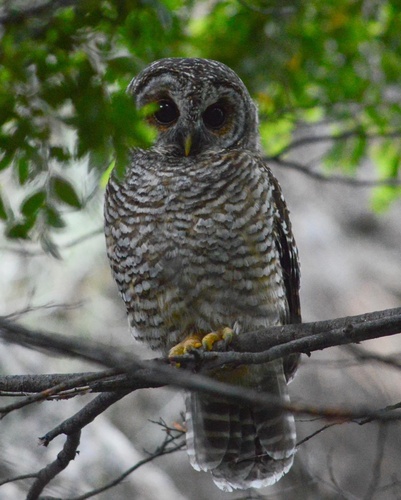 rufous-legged owl
Em resumo
A marca de campo mais confiável para separar essas duas corujas é a presença ou ausência de tufos de ouvido: a lesser horned owl sempre apresenta tufos de ouvido proeminentes, enquanto a rufous-legged owl nunca os tem. A lesser horned owl também é muito maior e mais robusta, com uma parte inferior mais clara e mais riscada e uma borda preta ousada no disco facial. Em contraste, a rufous-legged owl é compacta, com cabeça arredondada e rica em tons ruivos, com um disco facial enferrujado e finas riscas pretas na parte inferior. Os juvenis da rufous-legged owl são de um tom quente de buff com riscas discretas e um rosto alaranjado, sem qualquer sugestão de tufos de ouvido. Essas diferenças são visíveis tanto quando empoleiradas quanto em voo, mas os tufos de ouvido e a estrutura geral são as verificações de campo mais rápidas.
Dicas de identificação
- Tufos de ouvido: A lesser horned owl sempre apresenta tufos de ouvido proeminentes, visíveis tanto quando empoleirada quanto em voo. A rufous-legged owl nunca apresenta tufos de ouvido em nenhuma idade. Esta é a marca de campo mais confiável.
- Formato da cabeça: A lesser horned owl tem uma cabeça grande e angular devido aos tufos; a cabeça da rufous-legged owl é arredondada e compacta.
- Disco facial: A lesser horned owl tem um disco facial pálido com uma borda preta ousada e listras brancas acima dos olhos amarelos. A rufous-legged owl tem um disco facial enferrujado com 'sobrancelhas' brancas sobre os olhos castanho-escuros e lore brancos.
- Cor dos olhos: A lesser horned owl tem olhos amarelos; a rufous-legged owl tem olhos castanho-escuros. Isso é visível a curta distância.
- Partes inferiores: A lesser horned owl é pálida na parte inferior com riscas cinza-brown estreitas e manchas escuras no peito. A rufous-legged owl é branca com um tom de buff na parte inferior com muitas riscas pretas finas; o vent é laranja-buff.
- Partes superiores: A lesser horned owl é cinza-brown e variável; a rufous-legged owl é marrom avermelhado escuro com riscas e manchas laranja-buff.
- Cauda: A cauda da rufous-legged owl é marrom avermelhado com riscas buff, combinando com os tons quentes do restante da plumagem. A cauda da lesser horned owl não é especificamente descrita, mas não é notada como ruiva.
- Plumagem juvenil: Os juvenis da rufous-legged owl são de um tom quente de buff com riscas discretas e um rosto alaranjado, sempre sem tufos de ouvido. Os juvenis da lesser horned owl mostrariam tufos de ouvido em desenvolvimento e uma aparência mais clara e riscada.
- Tamanho e robustez: A lesser horned owl é muito maior e mais robusta, com uma aparência de asas largas e cabeça grande. A rufous-legged owl é menor, mais leve e mais compacta.
- Patas e bico: A lesser horned owl tem patas e bico mais fortes, mas isso é apenas aparente a curta distância ou na mão.
- Silhueta de voo: A lesser horned owl parece ter asas largas e pesadas em voo, com tufos de ouvido frequentemente visíveis. A rufous-legged owl é mais compacta e com asas arredondadas, sem qualquer tufo.
- Voz: Se ouvida, a lesser horned owl emite um chamado profundo, de duas notas, seguido por uma nota vibrante. O chamado da rufous-legged owl não é descrito aqui.
- Habitat: Ambas podem ocorrer em regiões semelhantes, então não confie apenas no habitat para separação.
- Armadilhas: Em luz fraca ou à distância, os tufos de ouvido podem ser difíceis de ver se achatados, mas a rufous-legged owl nunca os apresenta. Os juvenis da rufous-legged owl são especialmente simples e em tons quentes, mas ainda assim carecem de tufos.
- Sexo e estação: Nenhuma diferença sazonal ou sexual forte é descrita para nenhuma das espécies; as principais marcas são consistentes durante todo o ano.
Tamanho
A lesser horned owl é substancialmente maior, atingindo cerca de 45 cm (18 in) de comprimento, enquanto a rufous-legged owl mede apenas 33–38 cm (13–15 in). A diferença de massa também é considerável: a rufous-legged owl pesa em média cerca de 620 g, enquanto a lesser horned owl é mais pesada (massa exata não especificada, mas claramente de corpo maior). A lesser horned owl parece ter asas largas e cabeça grande, com uma construção robusta, enquanto a rufous-legged owl é mais compacta e leve em aparência.
Plumagem
- Plumagem juvenil/imatura: Os juvenis da rufous-legged owl são de um tom quente de buff com riscas discretas de marrom escuro e um rosto alaranjado, sem qualquer tufo de ouvido ou padrão forte. Os juvenis da lesser horned owl não são descritos em detalhes, mas mostrariam os começos de tufos de ouvido e um padrão de partes inferiores geralmente mais claro e riscado.
- Adultos: A lesser horned owl é principalmente cinza-brown, variável em cor, com partes inferiores pálidas e riscas cinza-brown estreitas, além de manchas escuras no peito. O disco facial é pálido com uma borda preta ousada e listras brancas acima dos olhos amarelos. Os adultos da rufous-legged owl são marrom avermelhado escuro acima com riscas e manchas laranja-buff estreitas, um disco facial enferrujado, 'sobrancelhas' brancas sobre os olhos castanho-escuros, e partes inferiores brancas com um tom de buff com muitas riscas pretas. O vent é laranja-buff, e a cauda é marrom avermelhado com riscas buff. A rufous-legged owl nunca apresenta tufos de ouvido, e seu disco facial é enferrujado em vez de pálido.
Comportamento
Ambas as espécies são caçadoras noturnas, mas a lesser horned owl é mais propensa a ser vista caçando em campo aberto, enquanto o comportamento da rufous-legged owl é menos descrito. Ambas empoleiram-se em árvores ou em rochas, mas a lesser horned owl também pode nidificar em penhascos ou entre rochas.
Habitat
A lesser horned owl ocupa uma ampla gama de habitats, incluindo florestas abertas, áreas de arbustos, terras agrícolas, pastagens e caça em campo aberto. A rufous-legged owl é encontrada na Argentina e no Chile, mas as preferências de habitat específicas não são detalhadas aqui. Ambas podem ocorrer em regiões sobrepostas, então o habitat sozinho não é diagnóstico.
Voz
A lesser horned owl emite um chamado profundo: uma nota dupla seguida por uma nota alta e vibrante (imitada pelo nome local 'tucúquere'). A voz da rufous-legged owl não é descrita nessas notas, então a vocalização é apenas útil para a lesser horned owl se ouvida.
lesser horned owl · rufous-legged owl · Minhas aves difíceis