

lesser antillean swift vs lesser antillean bullfinch
Chaetura martinica versus Loxigilla noctis
Jogue um quiz com lesser antillean swift e lesser antillean bullfinch
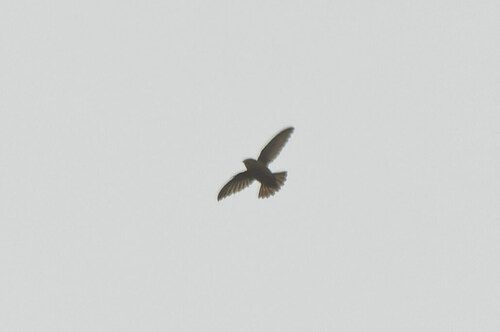 lesser antillean swift
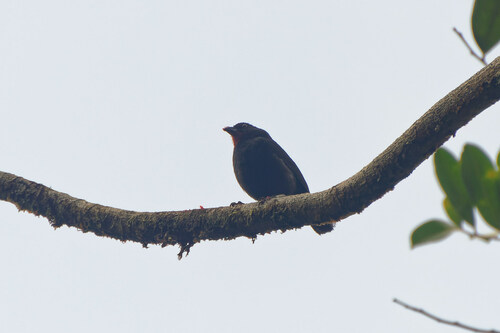 lesser antillean bullfinch
Em resumo
A maneira mais confiável de separar o lesser antillean swift do lesser antillean bullfinch é pela estrutura geral e estilo de voo: o swift é um voador rápido, com asas em forma de foice e cauda quadrada, enquanto o bullfinch é um pássaro cantor que pousa, com um bico grosso e movimentos mais deliberados. Os swifts juvenis podem mostrar pontas brancas em algumas penas das asas, uma marca nunca vista no bullfinch. Os bullfinches adultos são sexualmente dimórficos, com machos apresentando plumagem preta e acentos vermelhos ou ruivos, enquanto os swifts são uniformemente marrons escuros acima, com uma faixa cinza na região do rabo e não apresentam vermelho ou ruivo. Se vistos pousados, o bico pesado e a postura ereta do bullfinch são inconfundíveis; os swifts quase nunca são vistos pousados em aberto. A sobreposição de tamanho é mínima, mas o bullfinch é mais robusto e longo. Ambas as espécies ocorrem nas mesmas ilhas, então o contexto sozinho não é suficiente.
Dicas de identificação
- Pontas das asas do swift juvenil: Procure por pontas brancas em algumas penas das asas nos juvenis de lesser antillean swifts; isso nunca está presente no bullfinch de qualquer idade.
- Estilo de voo: Os swifts são quase sempre vistos em voo rápido e ágil, com asas rígidas em forma de foice e cauda quadrada; os bullfinches voam em explosões curtas e onduladas e pousam com frequência.
- Forma do bico: Os swifts têm um bico pequeno e discreto; os bullfinches têm um bico grosso e cônico que é óbvio mesmo à distância quando pousados.
- Forma da cauda: Os swifts têm uma cauda curta e quadrada que não se estende muito além do corpo; as caudas dos bullfinches são mais longas e arredondadas.
- Dimorfismo sexual: Os bullfinches são sexualmente dimórficos—os machos são principalmente pretos com acentos vermelhos ou ruivos, as fêmeas são marrons quentes com tons enferrujados e cinzas; os swifts não mostram diferenças sexuais.
- Cor da plumagem: Os swifts são uniformemente marrons escuros acima, com uma faixa cinza estreita na região do rabo e partes inferiores marrons; os bullfinches mostram plumagem marrons quentes ou pretas com acentos ruivos ou vermelhos, dependendo do sexo e subespécie.
- Faixa na região do rabo: A faixa cinza estreita na região do rabo do swift é única e visível em boa luz; os bullfinches nunca mostram uma região do rabo contrastante.
- Postura ao pousar: Os swifts raramente são vistos pousados em aberto; se você vê um pássaro sentado ereto em um galho, especialmente com um bico grosso, é quase certamente um bullfinch.
- Forma da asa: Os swifts têm asas longas e salientes que se curvam na ponta; as asas do bullfinch são mais curtas e mais arredondadas.
- Tamanho do grupo: Os swifts frequentemente forrageiam em grandes bandos, às vezes com andorinhas; os bullfinches geralmente são solitários ou em pares.
- Partes inferiores: As partes inferiores do swift são marrons com uma garganta mais clara; as partes inferiores do bullfinch são acinzentadas (fêmea) ou pretas (macho), com coberturas de cauda ruivas em muitas subespécies.
- Supercílios e mancha na garganta: Os machos bullfinches podem mostrar um supercílios vermelho ou ruivo e uma mancha na garganta, ausentes nos swifts.
- Cor das pernas: Ambos têm pernas escuras, não sendo uma marca de campo forte para separação.
- Contexto do habitat: Os swifts são vistos em espaço aéreo aberto, os bullfinches em arbustos e árvores; o contexto pode ajudar, mas não é infalível.
- Impressão de tamanho: Os bullfinches são mais robustos e de corpo mais longo do que os swifts, que parecem esguios e aerodinâmicos em voo.
Tamanho
O lesser antillean bullfinch é visivelmente maior e mais pesado do que o swift: o bullfinch mede em média 14–15,5 cm de comprimento e 18,4 g de massa, enquanto o swift mede 10,5–11 cm e pesa em média 12,7 g. O bullfinch parece mais robusto e forte, especialmente quando pousado. Os swifts parecem esguios e aerodinâmicos em voo, com asas proporcionalmente mais longas em comparação ao tamanho do corpo. Embora haja alguma sobreposição de peso, a diferença na forma e comprimento do corpo é geralmente clara em campo.
Plumagem
Os juvenis de lesser antillean swifts podem ser identificados por pontas brancas em algumas penas das asas, uma característica nunca presente no bullfinch de qualquer idade. Os swifts adultos são uniformemente marrons escuros acima, com uma faixa cinza estreita na região do rabo, partes inferiores marrons e uma garganta mais clara; os sexos são semelhantes. Em contraste, os bullfinches adultos são sexualmente dimórficos: os machos são principalmente pretos com uma garganta e supercílios vermelhos ou alaranjados (variando por subespécie), enquanto as fêmeas são marrons quentes com tons enferrujados nas lore, asas e cauda. As asas do bullfinch são marrons com bordas enferrujadas nas coberturas maiores, e suas partes inferiores são acinzentadas com coberturas de cauda enferrujadas. Nenhum swift apresenta coloração ruiva, enferrujada ou vermelha. A cauda do swift é curta e quadrada, enquanto a cauda do bullfinch é proporcionalmente mais longa e mais arredondada. Os swifts não têm o bico pesado e cônico do bullfinch.
Comportamento
Os lesser antillean swifts são quase sempre vistos em voo, frequentemente em bandos de 20–40 pássaros, às vezes misturados com andorinhas. Eles se alimentam exclusivamente de insetos em voo e raramente pousam em aberto. Seu voo é rápido, com asas rígidas em forma de foice e um jizz distinto e errático. Os bullfinches, por outro lado, são tipicamente vistos pousados ou se movendo pela vegetação, alimentando-se de sementes, frutas ou insetos. Seu voo é curto e ondulado, e eles raramente se juntam a grandes bandos aéreos. O comportamento do bullfinch é mais típico de um pássaro cantor que pousa, frequentemente forrageando sozinho ou em pares.
Habitat
Ambas as espécies são encontradas nas mesmas ilhas nas Antilhas Menores, então a distribuição não é diagnóstica. Os swifts são mais frequentemente vistos em espaço aéreo aberto acima de florestas, campos ou cidades, enquanto os bullfinches preferem áreas arbustivas, jardins e bordas de florestas onde podem pousar e forragear. Os swifts raramente são vistos no chão ou em vegetação densa, ao contrário dos bullfinches.
lesser antillean swift · lesser antillean bullfinch · Minhas aves difíceis