

kloss's leaf warbler vs pale-footed bush warbler
Phylloscopus ogilviegranti versus Hemitesia pallidipes
Jogue um quiz com kloss's leaf warbler e pale-footed bush warbler
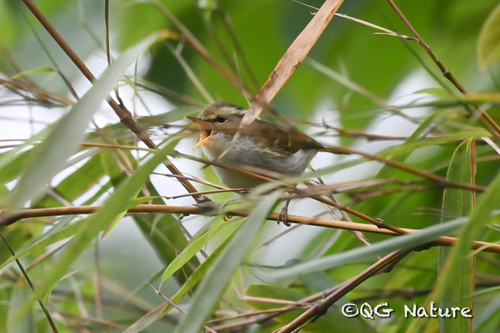 kloss's leaf warbler
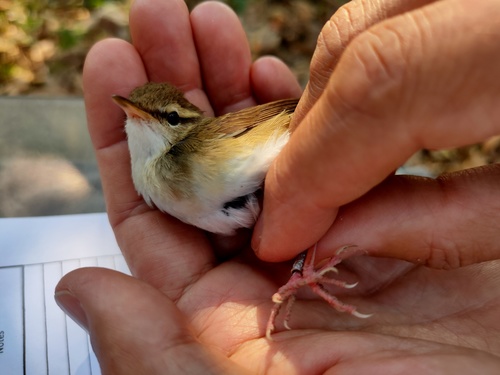 pale-footed bush warbler
Em resumo
A maneira mais confiável de separar o kloss's leaf warbler do pale-footed bush warbler é pela estrutura geral e comportamento: o kloss's é um típico leaf warbler, ativo e frequentemente na copa, enquanto o pale-footed bush warbler é uma espécie furtiva, que se esconde no chão em densa vegetação. Se você vê um pequeno warbler verde passando por folhas acima do nível dos olhos, é provável que seja o kloss's; um pássaro marronzado se movendo baixo em bambu ou grama é quase certamente o pale-footed bush warbler. Não há padrões de asas distintos relacionados à idade descritos para nenhuma das espécies, então concentre-se na estrutura, comportamento e habitat. As diferenças de plumagem são sutis, mas suportáveis se você conseguir uma boa visão.
Dicas de identificação
- O habitat é uma pista importante: O kloss's leaf warbler está quase sempre em árvores ou arbustos altos, enquanto o pale-footed bush warbler se mantém em vegetação densa e baixa—especialmente bambu ou grama alta.
- Comportamento: O kloss's é ativo, inquieto e frequentemente se junta a bandos mistos; o pale-footed bush warbler é furtivo, solitário e raramente sai da cobertura.
- Supercílios (linha da sobrancelha): O kloss's leaf warbler geralmente apresenta um supercílios pálido e bem definido, especialmente em plumagem nova. O pale-footed bush warbler tem um supercílios fraco ou ausente, dando-lhe um rosto mais simples.
- Barras de asas: O kloss's leaf warbler frequentemente apresenta duas barras de asas pálidas (embora às vezes fracas), uma marca clássica de Phylloscopus. O pale-footed bush warbler não possui barras de asas—suas asas são marrons simples.
- Cor das partes superiores: O kloss's é verde acima, às vezes com um tom amarelado; o pale-footed bush warbler é uniformemente marrom acima.
- Partes inferiores: O kloss's é pálido embaixo, às vezes com um tom amarelado; o pale-footed bush warbler é off-white ou buffy embaixo, mas com menos contraste do que o kloss's.
- Formato e comprimento da cauda: O kloss's tem uma cauda mais longa e mais fina, frequentemente agitada ou balançada. A cauda do pale-footed bush warbler é mais curta e arredondada, e não é agitada com tanta frequência.
- Estrutura do bico: O kloss's tem um bico fino e pontudo, típico dos leaf warblers. O bico do pale-footed bush warbler é um pouco mais robusto e mais grosso, embora isso seja sutil.
- Estilo de voo: O kloss's é ágil e rápido no voo, frequentemente se movendo entre os galhos; o pale-footed bush warbler voa fraco e raramente sai da cobertura.
- Associação com bandos mistos: O kloss's frequentemente se junta a bandos de espécies mistas; o pale-footed bush warbler geralmente está sozinho ou com seu parceiro.
- Voz (se ouvida): Não descrita nas notas, mas geralmente, os warblers de Phylloscopus têm chamados altos e finos, enquanto os bush warblers emitem notas mais ásperas e de reprimenda.
- Contexto sazonal: Ambas as espécies ocorrem em regiões sobrepostas, mas verifique o status local—o pale-footed bush warbler é mais provável em bambu/grama de encosta, o kloss's em áreas florestadas em uma variedade de elevações.
- Sexo e idade: Não há dimorfismo sexual forte ou diferenças de plumagem relacionadas à idade descritas para nenhuma das espécies, então as marcas acima se aplicam durante todo o ano.
- **Se você vê um pássaro forrageando acima da altura da cabeça, especialmente com barras de asas e um supercílios, é quase certamente o kloss's. Se está se movendo em bambu ou grama, marronzado e sem barras de asas, é o pale-footed bush warbler.
- Quando em dúvida, habitat e comportamento são suas melhores ferramentas—diferenças de plumagem são sutis, mas consistentes se vistas bem.
Tamanho
Ambas as espécies são pequenos warblers, mas o kloss's leaf warbler é um típico Phylloscopus em tamanho e estrutura: esbelto, com uma cauda relativamente mais longa e uma aparência mais delicada. O pale-footed bush warbler é mais robusto e arredondado, com uma cauda mais curta e uma aparência mais compacta, quase como um wren. Em mãos, o pale-footed bush warbler é ligeiramente mais pesado e volumoso, mas isso é sutil no campo.
Plumagem
Nenhum padrão de asas juvenil ou imaturo distinto é descrito para nenhuma das espécies. O kloss's leaf warbler apresenta plumagem típica de leaf warbler: partes superiores verde-claras, partes inferiores pálidas e frequentemente um supercílios amarelado ou esbranquiçado (linha da sobrancelha), com duas barras de asas pálidas que podem ser fracas, mas geralmente são visíveis a curta distância. O pale-footed bush warbler, em contraste, é marrom simples acima e mais claro embaixo, com pouco ou nenhum supercílios e sem barras de asas. A plumagem do bush warbler é, em geral, mais uniforme e carece das marcas contrastantes do kloss's. Essas diferenças se aplicam a todas as idades e estações, já que ambas as espécies não são fortemente dimórficas sexualmente e não apresentam mudanças sazonais dramáticas.
Comportamento
O kloss's leaf warbler é ativo, inquieto e frequentemente forrageia na copa média a alta, frequentemente agitando suas asas e cauda. Ele se junta a bandos de espécies mistas e raramente é visto no chão ou próximo a ele. O pale-footed bush warbler é secreto e prefere ficar baixo, rastejando através de grama densa, bambu ou vegetação rasteira, frequentemente permanecendo escondido. É muito menos provável que seja visto em vista aberta ou acima da altura da cintura. O voo é fraco e baixo para o bush warbler, enquanto o kloss's é mais ágil e direto.
Habitat
O kloss's leaf warbler é encontrado em uma variedade de tipos de floresta, desde áreas de baixa altitude até montanhas, mas sempre prefere habitats florestais, incluindo florestas de folhas largas e mistas. Ele é geralmente visto em árvores ou arbustos altos. O pale-footed bush warbler, por outro lado, é um especialista em vegetação densa e baixa—especialmente bambu, grama alta ou vegetação arbustiva—frequentemente em encostas e zonas montanhosas mais baixas. Se você estiver em um habitat denso, dominado por grama ou bambu, espere encontrar o pale-footed bush warbler; em florestas mais abertas ou arbóreas, o kloss's é muito mais provável.
kloss's leaf warbler · pale-footed bush warbler · Minhas aves difíceis