

Motmot

ミナミオジロムシクイ 対 キアシヤブサメ

Phylloscopus ogilviegranti 対 Hemitesia pallidipes

ミナミオジロムシクイとキアシヤブサメのクイズ
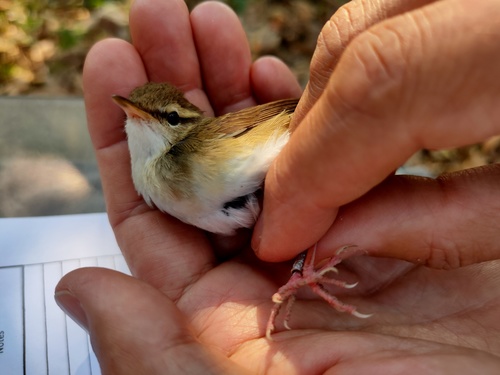
ミナミオジロムシクイ (Phylloscopus ogilviegranti) ミナミオジロムシクイ
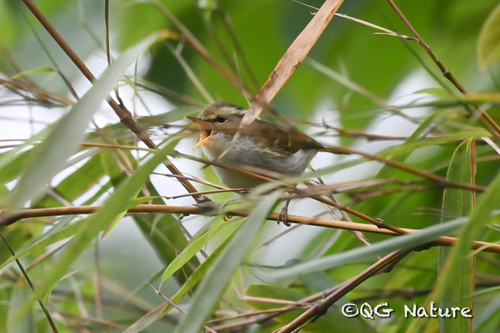
キアシヤブサメ (Hemitesia pallidipes) キアシヤブサメ

メディア

読み込み中…

要点

ミナミオジロムシクイとキアシヤブサメを区別する最も信頼できる方法は、全体的な構造と行動です:Kloss'sは典型的なムシクイで、活発でしばしば樹冠にいますが、キアシヤブサメは密な下草に隠れる地面に沿った種です。目の高さ以上の葉の間を飛び回る小さな緑がかったムシクイを見た場合、ほぼ確実にKloss'sです;竹や草の中を低く這う茶色の鳥はほぼ確実にキアシヤブサメです。どちらの種にも特定の年齢に特有の翼の模様は記載されていないため、構造、行動、そして生息地に焦点を当ててください。羽毛の違いは微妙ですが、よく見ることができれば支持できます。

識別のコツ

  1. Habitat is a major clue: ミナミオジロムシクイはほぼ常に木や高い低木にいますが、キアシヤブサメは密で低い植生、特に竹や高い草にいます。
  2. Behavioral jizz: Kloss'sは活発で落ち着きがなく、しばしば混合群れに加わります;キアシヤブサメは隠れていて孤独で、カバーを離れることはほとんどありません。
  3. Supercilium (eyebrow line): ミナミオジロムシクイは通常、特に新しい羽毛の時に淡い、はっきりしたスーペリシリウムを示します。キアシヤブサメは淡いか欠如しており、顔がより地味に見えます。
  4. Wingbars: ミナミオジロムシクイはしばしば2つの淡い翼帯を示します(時には薄いこともありますが)、これは典型的なムシクイの特徴です。キアシヤブサメは翼帯が全くなく、翼は単純な茶色です。
  5. Upperparts color: Kloss'sは上面が緑がかっており、時には黄色がかった色合いがあります;キアシヤブサメは上面が均一に茶色です。
  6. Underparts: Kloss'sは下が淡い色で、時には黄色がかった洗いがかかっています;キアシヤブサメは下がオフホワイトまたはバフィーで、Kloss'sよりもコントラストが少ないです。
  7. Tail shape and length: Kloss'sは長くて細い尾を持ち、しばしば振ったり揺らしたりします。キアシヤブサメの尾は短くて丸みを帯びており、あまり振られることはありません。
  8. Bill structure: Kloss'sはムシクイに典型的な細く尖ったくちばしを持っています。キアシヤブサメのくちばしは少し短くて頑丈ですが、これは微妙です。
  9. Flight style: Kloss'sは飛行中に敏捷で速く、しばしば枝の間を移動します;キアシヤブサメは弱く飛び、カバーを離れることはほとんどありません。
  10. Association with mixed flocks: Kloss'sはしばしば混合種の群れに加わります;キアシヤブサメは通常、単独またはその伴侶と一緒にいます。
  11. Voice (if heard): メモには記載されていませんが、一般的にムシクイは高く細い鳴き声を持ち、ヤブサメはより厳しい、叱責するような音を出します。
  12. Seasonal context: 両種は重複する地域に生息していますが、地元の状況を確認してください—キアシヤブサメは丘陵の竹や草の中でより可能性が高く、Kloss'sはさまざまな標高の森林地域にいます。
  13. Sex and age: どちらの種にも強い性的二形や年齢に関連する羽毛の違いは記載されていないため、上記の特徴は年間を通じて適用されます。
  14. **If you see a bird foraging above head height, especially with wingbars and a supercilium, it's almost certainly Kloss's. If it's creeping in bamboo or grass, plain brown, and lacks wingbars, it's キアシヤブサメ.
  15. When in doubt, habitat and behavior are your best tools—plumage differences are subtle but consistent if seen well.

大きさ

両種は小さなムシクイですが、ミナミオジロムシクイはサイズと体型において典型的なPhylloscopusです:細身で、比較的長い尾とより繊細な外観を持っています。キアシヤブサメはよりがっしりしていて丸みを帯びており、短い尾とよりコンパクトで、ほぼウグイスのような外見をしています。手に取ると、キアシヤブサメはわずかに重くてがっしりしていますが、これは現場では微妙です。

羽色

どちらの種にも特定の幼鳥や未成熟の翼の模様は記載されていません。ミナミオジロムシクイは典型的なムシクイの羽毛を示します:緑がかった上面、淡い下面、そしてしばしば黄色がかったまたは白っぽいスーペリシリウム(眉のライン)、2つの淡い翼帯があり、これらは薄いこともありますが、通常は近距離で見ることができます。対照的に、キアシヤブサメは上面が単純な茶色で、下面がより淡く、スーペリシリウムがほとんどまたは全くなく、翼帯が全くありません。ヤブサメの羽毛は全体的により均一で、Kloss'sの対照的なマークが欠けています。これらの違いはすべての年齢と季節に適用され、両種は強く性的二形ではなく、劇的な季節変化を示しません。

行動

ミナミオジロムシクイは活発で落ち着きがなく、しばしば中層から上層の樹冠で採餌し、頻繁に翼と尾を振ります。混合種の群れに加わり、地面の上や近くで見られることはほとんどありません。キアシヤブサメは秘密主義で低い位置に留まることを好み、密な草、竹、または下草の中を這い回り、しばしば隠れています。開けた場所や腰の高さ以上で見られる可能性は非常に低いです。ヤブサメの飛行は弱くて低く、Kloss'sはより敏捷で直接的です。

生息環境

ミナミオジロムシクイは低地から山地までのさまざまな森林タイプに生息していますが、常に広葉樹や混合林を含む森林生息地を好みます。通常、木や高い低木に見られます。一方、キアシヤブサメは密で低い植生、特に竹、高い草、または茂みの下草の専門家であり、しばしば丘陵や低山地帯にいます。もしあなたが密な草や竹が支配する生息地にいるなら、キアシヤブサメを期待してください;より開けたまたは樹木の多い森林では、Kloss'sの方がはるかに可能性が高いです。

より良い説明を送る

比較と同じ項目を使ってください。文章はすぐに公開されます。

The most reliable way to separate Kloss's Leaf Warbler from Pale-footed Bush Warbler is by overall structure and behavior: Kloss's is a typical leaf warbler, active and often in the canopy, while Pale-footed Bush Warbler is a skulking, ground-hugging species of dense undergrowth. If you see a small, greenish warbler flitting through leaves above eye level, it's likely Kloss's; a brownish bird creeping low in bamboo or grass is almost certainly Pale-footed Bush Warbler. There are no distinctive age-specific wing patterns described for either species, so focus on structure, behavior, and habitat. Plumage differences are subtle but supportable if you get a good look.

  1. Habitat is a major clue: Kloss's Leaf Warbler is almost always in trees or tall shrubs, while Pale-footed Bush Warbler sticks to dense, low vegetation—especially bamboo or tall grass.
  2. Behavioral jizz: Kloss's is active, restless, and often joins mixed flocks; Pale-footed Bush Warbler is skulking, solitary, and rarely leaves cover.
  3. Supercilium (eyebrow line): Kloss's Leaf Warbler usually shows a pale, well-defined supercilium, especially in fresh plumage. Pale-footed Bush Warbler has a faint or absent supercilium, giving it a plainer face.
  4. Wingbars: Kloss's Leaf Warbler often shows two pale wingbars (though sometimes faint), a classic Phylloscopus mark. Pale-footed Bush Warbler lacks wingbars entirely—wings are plain brown.
  5. Upperparts color: Kloss's is greenish above, sometimes with a yellowish tinge; Pale-footed Bush Warbler is uniformly brown above.
  6. Underparts: Kloss's is pale below, sometimes with a yellowish wash; Pale-footed Bush Warbler is off-white or buffy below, but with less contrast than Kloss's.
  7. Tail shape and length: Kloss's has a longer, slimmer tail, often flicked or wagged. Pale-footed Bush Warbler's tail is shorter and more rounded, and not flicked as often.
  8. Bill structure: Kloss's has a fine, pointed bill typical of leaf warblers. Pale-footed Bush Warbler's bill is slightly stubbier and more robust, though this is subtle.
  9. Flight style: Kloss's is agile and quick in flight, often moving between branches; Pale-footed Bush Warbler flies weakly and rarely leaves cover.
  10. Association with mixed flocks: Kloss's often joins mixed-species flocks; Pale-footed Bush Warbler is usually alone or with its mate.
  11. Voice (if heard): Not described in the notes, but generally, Phylloscopus warblers have high, thin calls, while bush warblers give harsher, scolding notes.
  12. Seasonal context: Both species occur in overlapping regions, but check local status—Pale-footed Bush Warbler is more likely in foothill bamboo/grass, Kloss's in forested areas at a range of elevations.
  13. Sex and age: No strong sexual dimorphism or age-related plumage differences are described for either species, so marks above apply year-round.
  14. **If you see a bird foraging above head height, especially with wingbars and a supercilium, it's almost certainly Kloss's. If it's creeping in bamboo or grass, plain brown, and lacks wingbars, it's Pale-footed Bush Warbler.
  15. When in doubt, habitat and behavior are your best tools—plumage differences are subtle but consistent if seen well.

Both species are small warblers, but Kloss's Leaf Warbler is a typical Phylloscopus in size and build: slim, with a relatively longer tail and more delicate appearance. Pale-footed Bush Warbler is chunkier and rounder, with a shorter tail and a more compact, almost wren-like look. In hand, Pale-footed Bush Warbler is slightly heavier and bulkier, but this is subtle in the field.

No distinctive juvenile or immature wing patterns are described for either species. Kloss's Leaf Warbler shows typical leaf warbler plumage: greenish upperparts, pale underparts, and often a yellowish or whitish supercilium (eyebrow line), with two pale wingbars that can be faint but are usually visible at close range. Pale-footed Bush Warbler, in contrast, is plain brown above and paler below, with little or no supercilium and lacking wingbars entirely. The bush warbler's plumage is overall more uniform and lacks the contrasting marks of Kloss's. These differences apply to all ages and seasons, as both species are not strongly sexually dimorphic and do not show dramatic seasonal changes.

Kloss's Leaf Warbler is active, restless, and often forages in the mid- to upper canopy, frequently flicking its wings and tail. It joins mixed-species flocks and is rarely seen on or near the ground. Pale-footed Bush Warbler is secretive and prefers to stay low, creeping through dense grass, bamboo, or undergrowth, often remaining hidden. It is much less likely to be seen in open view or above waist height. Flight is weak and low for the bush warbler, while Kloss's is more agile and direct.

Kloss's Leaf Warbler is found in a range of forest types from lowland to montane, but always favors wooded habitats, including broadleaf and mixed forests. It is usually seen in trees or tall shrubs. Pale-footed Bush Warbler, on the other hand, is a specialist of dense, low vegetation—especially bamboo, tall grass, or scrubby undergrowth—often in foothills and lower montane zones. If you are in thick, grassy or bamboo-dominated habitat, expect Pale-footed Bush Warbler; in more open or arboreal forest, Kloss's is much more likely.

変更を破棄しますか?

保存していない編集があります。今離れると失われます。

ミナミオジロムシクイ · キアシヤブサメ · 苦手な鳥