

jerdon's leafbird vs golden-fronted leafbird
Chloropsis jerdoni versus Chloropsis aurifrons
Jogue um quiz com jerdon's leafbird e golden-fronted leafbird
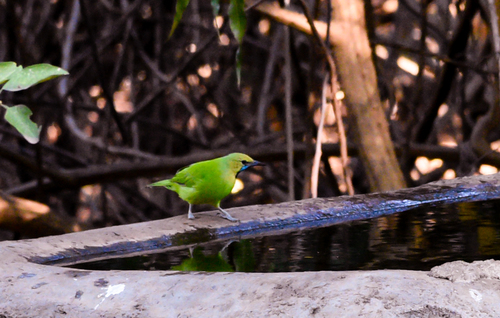 jerdon's leafbird
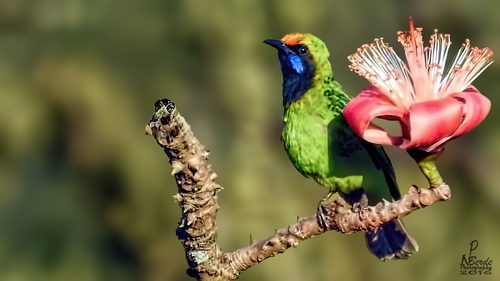 golden-fronted leafbird
Em resumo
A marca de campo mais confiável entre o jerdon's leafbird e o golden-fronted leafbird é a presença de uma testa amarelo-alaranjada ("frente dourada") no adulto golden-fronted leafbird, que está ausente no jerdon's. Ambas as espécies têm corpo verde, rostos pretos e linhas azuladas na região da bigode nos machos, mas o macho do jerdon's tem uma cabeça com mais tons amarelados e não apresenta tons alaranjados ou dourados. Fêmeas e imaturos são mais complicados: a fêmea do jerdon's tem uma garganta azul, enquanto a do golden-fronted é mais verde no geral e não possui essa cor azul. Os juvenis de ambas as espécies têm cabeças verdes simples, mas apenas o juvenil do jerdon's não tem azul na garganta. No campo, procure pela testa dourada e pela extensão do preto e azul no rosto e na garganta, especialmente em boa luz. Ambas as espécies se sobrepõem na Índia e no Sri Lanka, então a atenção cuidadosa a esses sutis recursos faciais e de garganta é essencial.
Dicas de identificação
- Testa dourada (apenas macho adulto golden-fronted): Procure por uma mancha amarelo-alaranjada ("dourada") na testa. O jerdon's nunca apresenta essa marca em qualquer idade ou sexo.
- Borda amarela no rosto preto (golden-fronted): No adulto golden-fronted, o rosto e a garganta pretos são contornados por amarelo, especialmente óbvio nas raças do norte. O jerdon's não possui essa borda amarela.
- Garganta azul (fêmea do jerdon's): A fêmea do jerdon's leafbird tem uma distinta mancha azul na garganta, que está ausente nas fêmeas do golden-fronted. Esta é uma marca chave para separar as fêmeas.
- Cor da cabeça (machos adultos): O macho do jerdon's tem uma cabeça com tons amarelados, mas não alaranjados ou dourados; o macho do golden-fronted tem uma testa mais alaranjada ou dourada.
- Padrão do rosto e da garganta (fêmeas): A fêmea do golden-fronted é mais verde no geral, com uma testa alaranjada mais apagada e menos preto pronunciado no rosto e na garganta. A fêmea do jerdon's é mais verde, mas sempre apresenta a garganta azul.
- Juvenis/imaturos: Ambos têm cabeças verdes simples e não possuem rosto/garganta pretos, mas o juvenil do jerdon's não tem azul na garganta, enquanto o do golden-fronted pode ser ligeiramente mais verde. Na prática, juvenis são muito difíceis de separar.
- Linha azul na região da bigode (ambos os machos): Ambos os machos apresentam uma linha azul na região da bigode ou sub-bigode, então isso não é um separador.
- Padrão das asas e da cauda: Ambos não possuem penas de voo azuis e lados de cauda azuis (diferente do blue-winged leafbird), então o padrão das asas não é útil para separação.
- Tamanho e estrutura: Não há diferença confiável em tamanho, forma do bico ou proporções; não use esses recursos.
- Comportamento: O golden-fronted é mais provável de ser visto em pequenos grupos ou bandos mistos e é altamente acrobático na copa das árvores. O jerdon's é tímido em relação à água, mas essas são diferenças sutis e não sempre visíveis.
- Habitat: Ambas são encontradas em habitats florestais e de bosques na Índia e no Sri Lanka; o habitat não é um separador onde as áreas de distribuição se sobrepõem.
- Voz: Ambos são mimetizadores e têm vocalizações semelhantes; não confie na voz para separação.
- Variação de raça (golden-fronted): A raça do sul da Índia (frontalis) do golden-fronted tem uma borda amarela mais estreita e uma testa alaranjada mais apagada, enquanto a raça do Sri Lanka (insularis) é ligeiramente menor. Essas características podem fazer o golden-fronted parecer mais com o jerdon's, então concentre-se na presença ou ausência da testa dourada e da garganta azul.
- Contexto: Se visto fora da Índia/Sri Lanka, o golden-fronted é mais provável, já que o jerdon's é restrito a essas regiões, mas dentro de sua área compartilhada, use características da plumagem.
- Armadilhas: Aves imaturas e fêmeas são as mais desafiadoras; priorize a garganta azul (fêmea do jerdon's) e a testa dourada (macho do golden-fronted) quando visíveis, e tenha cuidado com plumagens apagadas ou desgastadas que podem obscurecer essas marcas.
Tamanho
Ambas as espécies são muito semelhantes em tamanho e estrutura, sem diferença clara em comprimento total, forma do bico ou proporções com base nas fontes disponíveis. Se presente, a raça do sul do golden-fronted (insularis) é ligeiramente menor que as formas do norte, mas essa não é uma marca de campo confiável em áreas mistas. O tamanho não é um separador útil no campo.
Plumagem
-
Juvenis/imaturos: Ambos os jovens de ambas as espécies têm cabeças verdes simples e não possuem o rosto e a garganta pretos dos adultos. No entanto, o juvenil do jerdon's não tem azul na garganta, enquanto o juvenil do golden-fronted também não tem preto, mas pode mostrar uma cabeça mais verde no geral. Nenhuma diferença distintiva de padrão de asas ou voo é descrita para imaturos; ambos não possuem penas de voo azuis (que apenas os separam do blue-winged leafbird).
-
Machos adultos: O macho do jerdon's é de corpo verde com uma cabeça amarelada, rosto e garganta pretos, e uma linha azul na região da bigode. O macho do golden-fronted também é de corpo verde com rosto e garganta pretos, mas é contornado por amarelo e tem uma testa amarelo-alaranjada ("dourada"), além de uma faixa azul sub-bigodal. A borda amarela e a testa alaranjada estão ausentes no jerdon's.
-
Fêmeas adultas: A fêmea do jerdon's tem uma cabeça mais verde e uma garganta azul, enquanto a fêmea do golden-fronted é mais verde no geral, com uma testa alaranjada mais apagada e um rosto/garganta preto mais apagado. A garganta azul está ausente nas fêmeas do golden-fronted.
-
Em todas as idades: Ambos não possuem as penas de voo azuis e os lados da cauda do blue-winged leafbird, então o padrão das asas não é um separador entre esses dois.
Comportamento
Ambas as espécies são habitantes da copa das árvores, frequentemente forrageando em árvores por insetos, frutas e néctar. O golden-fronted leafbird é descrito como altamente acrobático, frequentemente pendurado de cabeça para baixo para colher insetos e aranhas, e é mais provável de ser visto em pequenos grupos ou bandos mistos de espécies. O jerdon's leafbird é notado por ser muito tímido em relação à água, fugindo rapidamente ao descer para beber, mas essa é uma diferença comportamental sutil e nem sempre observável. Ambos imitam os chamados de outras aves e forrageiam de maneiras semelhantes.
Habitat
Ambas as espécies são encontradas em habitats florestais e de bosques, especialmente na Índia e no Sri Lanka, onde suas áreas de distribuição se sobrepõem. O golden-fronted leafbird tem uma área de distribuição mais ampla, estendendo-se para o Sudeste Asiático e Sumatra, mas dentro do subcontinente indiano, as preferências de habitat são muito semelhantes. O habitat sozinho não é um separador confiável onde ambas ocorrem.
Voz
Ambas as espécies são excelentes mimetizadores, incorporando os chamados de outras aves em seu repertório. A canção do golden-fronted leafbird é descrita como melódica, aguda e assobiada, com tons semelhantes aos do bulbul e sussurros ásperos, frequentemente entregues do topo das árvores. O jerdon's leafbird também produz uma rica mistura de imitações, mas diferenças específicas na voz não são detalhadas nas fontes. As vocalizações não são diagnosticamente confiáveis entre esses dois no campo.
jerdon's leafbird · golden-fronted leafbird · Minhas aves difíceis