

Jerdonbladvogel vs Goudvoorhoofdbladvogel
Chloropsis jerdoni versus Chloropsis aurifrons
Speel een quiz met Jerdonbladvogel en Goudvoorhoofdbladvogel
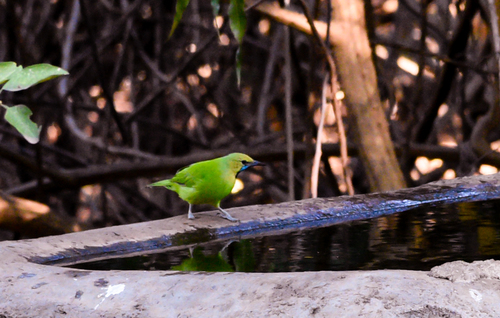 Jerdonbladvogel
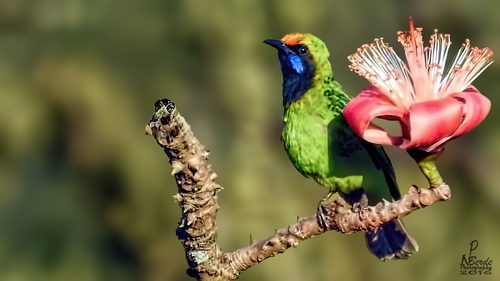 Goudvoorhoofdbladvogel
Kort gezegd
Het meest betrouwbare veldkenmerk tussen Jerdonbladvogel en Goudvoorhoofdbladvogel is de aanwezigheid van een geelachtig-oranje voorhoofd ("gouden front") bij de volwassen Goudvoorhoofdbladvogel, wat afwezig is bij Jerdon. Beide soorten hebben een groene lichaamskleur met zwarte gezichten en blauwe snorharen bij mannetjes, maar het mannetje van Jerdon heeft een meer geelachtige kop en mist oranje of gouden tinten. Vrouwtjes en onvolwassen vogels zijn lastiger: het vrouwtje van Jerdon heeft een blauwe keel, terwijl die van Goudvoorhoofd over het algemeen groener is en deze blauwe kleur mist. Juvenielen van beide zijn eenvoudig groen gekopt, maar alleen de juvenile van Jerdon mist enige blauwe kleur op de keel. In het veld, let op het gouden voorhoofd en de mate van zwart en blauw op het gezicht en de keel, vooral bij goed licht. Beide soorten komen voor in India en Sri Lanka, dus aandacht voor deze subtiele gezichts- en keelfeatures is essentieel.
Herkenningstips
- Gouden voorhoofd (volwassen mannelijke Goudvoorhoofd alleen): Zoek naar een geelachtig-oranje ("gouden") vlek op het voorhoofd. Jerdon toont deze markering nooit, ongeacht leeftijd of geslacht.
- Geel randje om zwart gezicht (Goudvoorhoofd): Bij de volwassen Goudvoorhoofd is het zwarte gezicht en de keel omrand met geel, vooral duidelijk bij de noordelijke rassen. Jerdon mist deze gele rand.
- Blauwe keel (vrouwelijke Jerdon): Het vrouwelijke Jerdonbladvogel heeft een duidelijke blauwe keelvlek, die afwezig is bij vrouwelijke Goudvoorhoofd. Dit is een belangrijk kenmerk voor het scheiden van vrouwtjes.
- Kleur van de kop (volwassen mannetjes): Het mannetje van Jerdon heeft een geelachtige kop, maar geen oranje of gouden; het mannetje van Goudvoorhoofd heeft een meer oranje of gouden voorhoofd.
- Patroon van gezicht en keel (vrouwtjes): Het vrouwelijke Goudvoorhoofd is over het algemeen groener, met een doffere oranje voorhoofd en minder uitgesproken zwart op het gezicht en de keel. Het vrouwelijke Jerdon is groener maar toont altijd de blauwe keel.
- Juveniele/onvolwassen vogels: Beide zijn eenvoudig groen gekopt en missen zwart gezicht/keel, maar de juvenile van Jerdon mist enige blauwe kleur op de keel, terwijl die van Goudvoorhoofd mogelijk iets groener is. In de praktijk zijn juvenielen zeer moeilijk te scheiden.
- Blauwe snorharenlijn (beide mannetjes): Beide mannetjes tonen een blauwe snorharen- of sub-snorharenlijn, dus dit is geen scheidingskenmerk.
- Vleugel- en staartpatroon: Beide missen blauwe vluchtveren en blauwe staartzijden (in tegenstelling tot Blauwvleugelbladvogel), dus vleugelpatroon is niet nuttig voor scheiding.
- Grootte en structuur: Geen betrouwbaar verschil in grootte, snavelvorm, of verhoudingen; gebruik deze kenmerken niet.
- Gedrag: Goudvoorhoofd is waarschijnlijker te zien in kleine groepen of gemengde zwermen en is zeer acrobatisch in de boomtoppen. Jerdon is schuw voor water, maar dit zijn subtiele verschillen en niet altijd zichtbaar.
- Habitat: Beide worden aangetroffen in vergelijkbare bos- en bosachtige habitats in India en Sri Lanka; habitat is geen scheidingskenmerk waar de verspreidingsgebieden overlappen.
- Stem: Beide zijn imitatief en hebben vergelijkbare vocalisaties; vertrouw niet op stem voor scheiding.
- Rasvariatie (Goudvoorhoofd): De zuidelijke Indiase ras (frontalis) van Goudvoorhoofd heeft een smallere gele rand en doffer oranje voorhoofd, terwijl de Sri Lankaanse ras (insularis) iets kleiner is. Deze kenmerken kunnen Goudvoorhoofd meer op Jerdon laten lijken, dus focus op de aanwezigheid of afwezigheid van het gouden voorhoofd en de blauwe keel.
- Context: Als gezien buiten India/Sri Lanka, is Goudvoorhoofd waarschijnlijker, aangezien Jerdon beperkt is tot deze regio's, maar binnen hun gedeelde verspreidingsgebied, gebruik de verenkleedkenmerken.
- Valstrikken: Onvolwassen en vrouwelijke vogels zijn de meest uitdagende; prioriteer de blauwe keel (vrouwelijke Jerdon) en het gouden voorhoofd (mannelijke Goudvoorhoofd) wanneer zichtbaar, en wees voorzichtig met doffe of versleten verenkleed die deze markeringen kan verdoezelen.
Grootte
Beide soorten zijn zeer vergelijkbaar in grootte en structuur, zonder duidelijk verschil in totale lengte, snavelvorm of verhoudingen op basis van beschikbare bronnen. Indien aanwezig, is de zuidelijke ras van Goudvoorhoofd (insularis) iets kleiner dan de noordelijke vormen, maar dit is geen betrouwbaar veldkenmerk in gemengde gebieden. Grootte is geen nuttige scheider in het veld.
Verenkleed
-
Juvenielen/onvolwassenen: De jonge vogels van beide soorten hebben eenvoudige groene koppen en missen het zwarte gezicht en de keel van volwassenen. Echter, de juvenile van Jerdon mist enige blauwe kleur op de keel, terwijl de juvenile van Goudvoorhoofd ook zwart mist maar mogelijk een groenere kop toont. Geen onderscheidende vleugel- of vluchtpatroonverschillen zijn beschreven voor onvolwassenen; beide missen blauwe vluchtveren (die hen alleen scheiden van Blauwvleugelbladvogel).
-
Volwassen mannetjes: Het mannetje van Jerdon is groen van kleur met een geelachtige kop, zwart gezicht en keel, en een blauwe snorharenlijn. Het mannetje van Goudvoorhoofd is ook groen van kleur met een zwart gezicht en keel, maar is omrand met geel en heeft een geelachtig-oranje ("gouden") voorhoofd, plus een blauwe sub-snorharenstreep. De gele rand en oranje voorhoofd ontbreken bij Jerdon.
-
Volwassen vrouwtjes: Het vrouwtje van Jerdon heeft een groenere kop en een blauwe keel, terwijl het vrouwtje van Goudvoorhoofd over het algemeen groener is, met een doffere oranje voorhoofd en een doffer zwart gezicht/keel. De blauwe keel ontbreekt bij vrouwelijke Goudvoorhoofd.
-
Bij alle leeftijden: Beide missen de blauwe vluchtveren en staartzijden van Blauwvleugelbladvogel, dus het vleugelpatroon is geen scheider tussen deze twee.
Gedrag
Beide soorten zijn boomtopbewoners, vaak op zoek naar insecten, fruit en nectar in bomen. Goudvoorhoofd wordt beschreven als zeer acrobatisch, vaak ondersteboven hangend om insecten en spinnen te verzamelen, en is waarschijnlijker te zien in kleine groepen of gemengde soorten zwermen. Jerdonbladvogel staat bekend om zijn schuwheid voor water, snel wegvluchtend wanneer hij komt drinken, maar dit is een subtiel gedragsverschil en niet altijd waarneembaar. Beide imiteren de roep van andere vogels en foerageren op vergelijkbare manieren.
Habitat
Beide soorten worden aangetroffen in bos- en bosachtige habitats, vooral in India en Sri Lanka, waar hun verspreidingsgebieden overlappen. Goudvoorhoofd heeft een breder verspreidingsgebied, dat zich uitstrekt tot Zuidoost-Azië en Sumatra, maar binnen het Indiase subcontinent zijn de habitatvoorkeuren zeer vergelijkbaar. Habitat alleen is geen betrouwbaar scheidingskenmerk waar beide voorkomen.
Geluid
Beide soorten zijn uitstekende imitatieve vogels, die de roepen van andere vogels in hun repertoire opnemen. Het lied van Goudvoorhoofd wordt beschreven als melodieus, hoog, en fluitend, met bulbul-achtige tonen en harde fluisteringen, vaak geleverd vanuit de boomtoppen. Jerdonbladvogel produceert ook een rijke mix van imitaties, maar specifieke verschillen in stem zijn niet gedetailleerd in de bronnen. Vocalisaties zijn niet betrouwbaar diagnostisch tussen deze twee in het veld.
Jerdonbladvogel · Goudvoorhoofdbladvogel · Mijn lastige vogels