

Jerdon's Leafbird vs Golden-fronted Leafbird
Chloropsis jerdoni contro Chloropsis aurifrons
Fai un quiz con Jerdon's Leafbird e Golden-fronted Leafbird
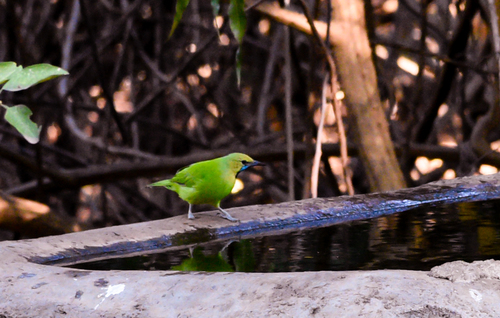 Jerdon's Leafbird
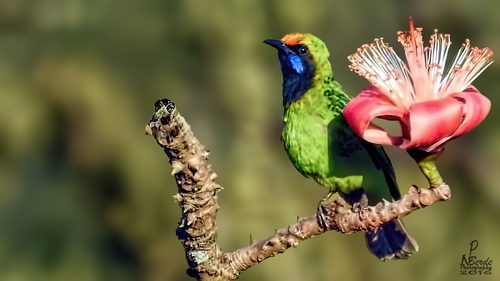 Golden-fronted Leafbird
In breve
Il segno di campo più affidabile tra Jerdon's Leafbird e Golden-fronted Leafbird è la presenza di una fronte giallo-arancione ("fronte dorato") negli adulti di Golden-fronted Leafbird, che è assente in Jerdon's. Entrambe le specie hanno un corpo verde con facce nere e linee blu sulle guance nei maschi, ma il maschio di Jerdon's ha una testa più tendente al giallo e non presenta toni arancioni o dorati. Le femmine e gli immaturi sono più complicati: la femmina di Jerdon's ha una gola blu, mentre quella di Golden-fronted è complessivamente più verde e non presenta questo blu. I giovani di entrambe le specie hanno teste verdi semplici, ma solo il giovane di Jerdon's non ha blu sulla gola. Sul campo, cerca la fronte dorata e l'estensione del nero e del blu sulla faccia e sulla gola, specialmente in buona luce. Entrambe le specie si sovrappongono in India e Sri Lanka, quindi prestare attenzione a queste sottili caratteristiche facciali e della gola è essenziale.
Consigli di identificazione
- Fronte dorata (solo maschio adulto Golden-fronted): Cerca una macchia giallo-arancione ("dorata") sulla fronte. Jerdon's non mostra mai questo segno a qualsiasi età o sesso.
- Bordo giallo sulla faccia nera (Golden-fronted): Negli adulti di Golden-fronted, la faccia e la gola nere sono bordate di giallo, particolarmente evidente nelle razze settentrionali. Jerdon's non ha questo bordo giallo.
- Gola blu (femmina di Jerdon's): La femmina di Jerdon's Leafbird ha una distintiva macchia blu sulla gola, che è assente nelle femmine di Golden-fronted. Questo è un segno chiave per separare le femmine.
- Colore della testa (maschi adulti): Il maschio di Jerdon's ha una testa tendente al giallo, ma non arancione o dorata; il maschio di Golden-fronted ha una fronte più arancione o dorata.
- Schema della faccia e della gola (femmine): La femmina di Golden-fronted è complessivamente più verde, con una fronte arancione più opaca e meno nero pronunciato sulla faccia e sulla gola. La femmina di Jerdon's è più verde ma mostra sempre la gola blu.
- Uccelli giovani/immaturi: Entrambi hanno teste verdi semplici e mancano della faccia/gola nera, ma il giovane di Jerdon's non ha blu sulla gola, mentre quello di Golden-fronted può essere leggermente più verde. In pratica, i giovani sono molto difficili da separare.
- Linea blu sulle guance (entrambi i maschi): Entrambi i maschi mostrano una linea blu sulle guance o sub-guance, quindi questo non è un separatore.
- Schema delle ali e della coda: Entrambi mancano di piume da volo blu e lati della coda blu (a differenza di Blue-winged Leafbird), quindi lo schema delle ali non è utile per la separazione.
- Dimensioni e struttura: Nessuna differenza affidabile in dimensioni, forma del becco, o proporzioni; non utilizzare queste caratteristiche.
- Comportamento: Golden-fronted è più probabile che venga visto in piccoli gruppi o stormi misti ed è altamente acrobatico nella chioma. Jerdon's è timido dell'acqua, ma queste sono differenze sottili e non sempre visibili.
- Habitat: Entrambi si trovano in habitat forestali e boschivi simili in India e Sri Lanka; l'habitat non è un separatore dove le aree si sovrappongono.
- Voce: Entrambi sono imitatori e hanno vocalizzazioni simili; non fare affidamento sulla voce per la separazione.
- Variazione razziale (Golden-fronted): La razza indiana meridionale (frontalis) di Golden-fronted ha un bordo giallo più stretto e una fronte arancione più opaca, mentre la razza dello Sri Lanka (insularis) è leggermente più piccola. Queste caratteristiche possono far sembrare Golden-fronted più simile a Jerdon's, quindi concentrati sulla presenza o assenza della fronte dorata e della gola blu.
- Contesto: Se visto al di fuori di India/Sri Lanka, Golden-fronted è più probabile, poiché Jerdon's è ristretto a queste regioni, ma all'interno della loro area condivisa, utilizza le caratteristiche del piumaggio.
- Trappole: Gli uccelli immaturi e femminili sono i più difficili; dare priorità alla gola blu (femmina di Jerdon's) e alla fronte dorata (maschio di Golden-fronted) quando visibili, e fare attenzione a piumaggi opachi o usurati che possono oscurare questi segni.
Taglia
Entrambe le specie sono molto simili in dimensioni e struttura, senza una chiara differenza in lunghezza complessiva, forma del becco o proporzioni basate sulle fonti disponibili. Se presente, la razza meridionale di Golden-fronted (insularis) è leggermente più piccola delle forme settentrionali, ma questo non è un segno di campo affidabile in aree miste. Le dimensioni non sono un separatore utile sul campo.
Piumaggio
-
Giovani/immaturi: I giovani di entrambe le specie hanno teste verdi semplici e mancano della faccia e della gola nere degli adulti. Tuttavia, il giovane di Jerdon's non ha blu sulla gola, mentre il giovane di Golden-fronted manca anche di nero ma può mostrare una testa complessivamente più verde. Non sono descritte differenze distintive nello schema delle ali o di volo per gli immaturi; entrambi mancano di piume da volo blu (che li separano solo da Blue-winged Leafbird).
-
Maschi adulti: Il maschio di Jerdon's è verde con una testa tendente al giallo, faccia e gola nere, e una linea blu sulle guance. Il maschio di Golden-fronted è anch'esso verde con una faccia e una gola nere, ma è bordato di giallo e ha una fronte giallo-arancione ("dorata"), oltre a una striscia blu sub-guance. Il bordo giallo e la fronte arancione sono assenti in Jerdon's.
-
Femmine adulte: La femmina di Jerdon's ha una testa più verde e una gola blu, mentre la femmina di Golden-fronted è complessivamente più verde, con una fronte arancione più opaca e una faccia/gola nera più opaca. La gola blu è assente nelle femmine di Golden-fronted.
-
In tutte le età: Entrambi mancano delle piume da volo blu e dei lati della coda di Blue-winged Leafbird, quindi lo schema delle ali non è un separatore tra questi due.
Comportamento
Entrambe le specie sono abitanti della chioma, spesso cercando cibo sugli alberi per insetti, frutta e nettare. Golden-fronted Leafbird è descritto come altamente acrobatico, frequentemente appeso a testa in giù per raccogliere insetti e ragni, ed è più probabile che venga visto in piccoli gruppi o stormi misti. Jerdon's Leafbird è noto per essere molto timido dell'acqua, fuggendo rapidamente quando scende per bere, ma questa è una differenza comportamentale sottile e non sempre osservabile. Entrambi imitano i richiami di altri uccelli e cercano cibo in modi simili.
Habitat
Entrambe le specie si trovano in habitat forestali e boschivi, specialmente in India e Sri Lanka, dove le loro aree si sovrappongono. Golden-fronted Leafbird ha un'area più ampia, estendendosi nel sud-est asiatico e a Sumatra, ma all'interno del subcontinente indiano, le preferenze di habitat sono molto simili. L'habitat da solo non è un separatore affidabile dove entrambe si trovano.
Voce
Entrambe le specie sono eccellenti imitatori, incorporando i richiami di altri uccelli nel loro repertorio. Il canto di Golden-fronted Leafbird è descritto come melodico, acuto e fischiante, con toni simili a quelli dei bulbul e sussurri aspri, spesso eseguito dalle cime degli alberi. Jerdon's Leafbird produce anche una ricca miscela di imitazioni, ma le differenze specifiche nella voce non sono dettagliate nelle fonti. Le vocalizzazioni non sono diagnosticabili in modo affidabile tra questi due sul campo.
Jerdon's Leafbird · Golden-fronted Leafbird · I miei uccelli difficili