

jerdon's baza vs crested goshawk
Aviceda jerdoni versus Lophospiza trivirgata
Jogue um quiz com jerdon's baza e crested goshawk
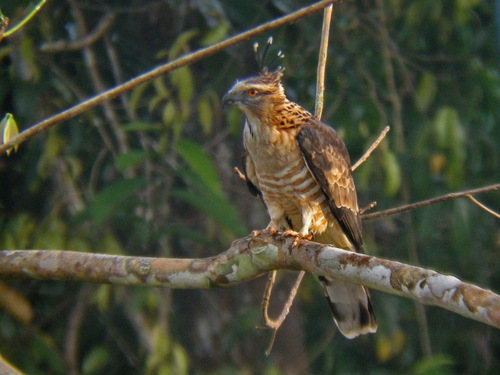 jerdon's baza
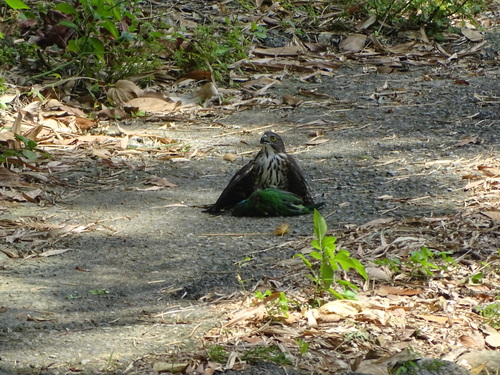 crested goshawk
Em resumo
A marca de campo mais confiável entre jerdon's baza e crested goshawk é a longa, fina e preta com ponta branca de jerdon's baza, que é visivelmente mais longa e ereta do que a curta crista de crested goshawk. Em voo, jerdon's baza exibe asas muito largas e em forma de pá e partes inferiores principalmente pálidas e simples, enquanto crested goshawk tem asas mais curtas e largas e uma cauda longa, com partes inferiores marcadas por listras e barras ruivas ou marrons. Os juvenis de crested goshawk têm um fundo de partes inferiores mais claro e franjas de penas da cabeça pálidas, o que pode ajudar a separá-los do jerdon's baza mais simples. Ambas as espécies podem ser confundidas em voo, mas a atenção ao comprimento da crista, forma das asas e padrão das partes inferiores é fundamental.
Dicas de identificação
- Comprimento e forma da crista: Jerdon's baza tem uma longa, fina e preta com ponta branca, geralmente mantida ereta e muito proeminente tanto em vistas empoleiradas quanto em voo. A crista de crested goshawk é curta e só é claramente visível de perfil quando empoleirada.
- Forma da asa em voo: Jerdon's baza exibe asas muito largas, arredondadas e em forma de pá, dando-lhe um contorno distintivo. Crested goshawk tem asas mais curtas e largas, mas não tão em forma de pá, e as asas parecem mais pontudas nas pontas.
- Comprimento da cauda: Crested goshawk tem uma cauda visivelmente mais longa em relação ao seu corpo, uma adaptação para manobrar em florestas densas. A cauda de jerdon's baza é mais curta e menos proeminente em voo.
- Padrão das partes inferiores (adultos): Jerdon's baza tem partes inferiores principalmente simples e pálidas com uma faixa preta ousada no centro da garganta e um queixo branco. Os adultos de crested goshawk mostram listras ruivas ou marrons no peito e barras na barriga; as fêmeas são mais marrons, os machos mais ruivos.
- Padrão das partes inferiores (juvenis): Os juvenis de crested goshawk têm um fundo claro nas partes inferiores com listras e barras marrons, e franjas pálidas nas penas da cabeça. Os juvenis de jerdon's baza não são bem descritos, mas espera-se que sejam mais simples na parte inferior.
- Padrão da cabeça: Jerdon's baza tem um queixo branco e uma faixa preta ousada no meio da garganta. Crested goshawk tem uma coroa marrom escura, lados cinzentos na cabeça e listras pretas na bigode e na garganta.
- Estilo de voo: Jerdon's baza tende a planar com asas largas em um voo constante e flutuante. Crested goshawk usa um padrão de 'bater devagar, bater devagar, planar reto', típico dos Accipiters, e é mais ágil em áreas florestais.
- Postura empoleirada: Jerdon's baza muitas vezes parece ter um pescoço mais longo e mais ereto devido à sua longa crista. Crested goshawk parece mais compacto, com uma crista mais curta e uma cauda mais longa.
- Contexto do habitat: Se visto em encostas abertas ou habitats de borda, especialmente no terai, suspeite de jerdon's baza. Em florestas densas ou parques urbanos com muitas árvores, crested goshawk é mais provável.
- Impressão de tamanho: Embora haja alguma sobreposição, jerdon's baza geralmente parece maior e com corpo mais pesado, especialmente em comparação com machos de crested goshawk.
- Confusão potencial em voo: Ambos podem parecer semelhantes à distância, especialmente em silhueta, mas concentre-se na combinação de comprimento da crista, forma da asa e padrão das partes inferiores para separação.
- Diferenças sexuais: As fêmeas de crested goshawk são maiores e mais marrons na parte inferior do que os machos, mas ambos os sexos compartilham a crista curta e as partes inferiores barradas.
- Variação de subespécies: Jerdon's baza tem várias subespécies, mas a longa crista e as partes inferiores simples são consistentes em toda a sua distribuição.
- Nenhuma diferença vocal confiável descrita: A voz não é uma marca de campo primária para separar esses dois nas fontes disponíveis.
- Armadilhas comuns: Os juvenis de crested goshawk com partes inferiores claras e franjas pálidas na cabeça podem parecer mais claros do que os adultos, mas ainda mostram mais listras/barras do que jerdon's baza. Sempre verifique a longa crista e a simplicidade das partes inferiores.
Tamanho
Jerdon's baza é geralmente maior, medindo cerca de 41–48 cm de comprimento com uma envergadura de 117 cm e pesando cerca de 350 gramas. Crested goshawk é mais variável em tamanho (30–46 cm), com fêmeas muito maiores que machos, mas tipicamente tem uma envergadura mais curta e é mais leve no geral. A sobreposição de tamanho significa que a estrutura e a plumagem são mais confiáveis do que o tamanho sozinho para identificação.
Plumagem
- Juvenil/Imaturo: Os juvenis de crested goshawk têm franjas pálidas nas penas da cabeça e um fundo claro nas partes inferiores, que são listradas e barradas de marrom. Os juvenis de jerdon's baza não são descritos em detalhes, mas a espécie como um todo é notada por partes inferiores simples e pálidas e uma faixa preta ousada no meio, sem o padrão denso de listras/barras do goshawk.
- Adulto: Os adultos de jerdon's baza têm uma parte inferior principalmente simples e pálida com um queixo branco e uma faixa preta ousada no centro da garganta. As asas são largas e arredondadas, parecendo em forma de pá em voo. A crista é longa, fina e com ponta branca. Os adultos de crested goshawk têm uma crista curta e visível, coroa marrom escura, lados cinzentos na cabeça, listras pretas na bigode e na garganta, e partes inferiores com listras ruivas no peito e barras na barriga (marrons nas fêmeas). Suas asas são curtas e largas, e a cauda é longa e adaptada para manobrabilidade.
Comportamento
Em voo, jerdon's baza aparece com asas largas e arredondadas e um estilo de voo constante e flutuante. Crested goshawk mostra um padrão de voo característico de 'bater devagar, bater devagar, planar reto', típico dos Accipiters, com batidas de asas mais rápidas e movimentos ágeis e torcidos através das árvores. Empoleirado, jerdon's baza muitas vezes mantém sua longa crista ereta, enquanto a crista de crested goshawk é mais curta e menos conspícua.
Habitat
Jerdon's baza é tipicamente encontrado em encostas, especialmente na região do terai, e é mais raro em florestas perenes e plantações de chá. Crested goshawk é amplamente distribuído na Ásia tropical e é adaptado para manobrar em habitats florestais, frequentemente visto em florestas densas. Embora ambos possam ocorrer em áreas florestais, jerdon's baza é mais provável em habitats de encosta abertos, e crested goshawk é mais um especialista em florestas.