

indian spot-billed duck vs eastern spot-billed duck
Anas poecilorhyncha versus Anas zonorhyncha
Jogue um quiz com indian spot-billed duck e eastern spot-billed duck
 indian spot-billed duck
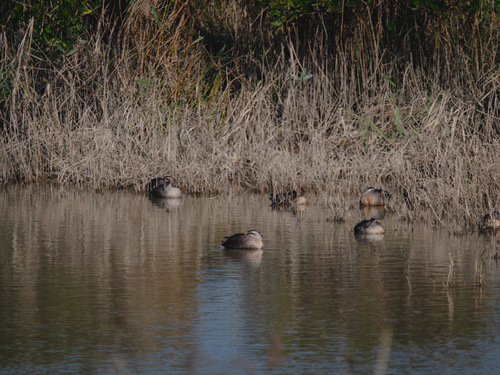 eastern spot-billed duck
Em resumo
A marca de campo mais confiável para separar o indian spot-billed duck do eastern spot-billed duck é a cor e o padrão do especulum em voo: o indian mostra um especulum verde com uma ampla faixa branca na base, enquanto o eastern tem um especulum azul (às vezes descrito como azul-esverdeado) e não possui a ampla faixa branca. Em repouso, o indian spot-billed duck (subespécie do continente) tem uma mancha vermelha distinta na base do bico, que está ausente no eastern spot-billed duck. O eastern também é overall mais escuro e marron, com plumagem mais parecida com o pato-preto-australiano. Ambos são semelhantes em tamanho e estrutura, e ambos os sexos se parecem, mas a atenção cuidadosa ao padrão das asas e à cor da base do bico geralmente confirmará a identificação. Os juvenis de ambos são mais opacos e marrons, então as vistas em voo e a cor do bico são especialmente importantes para aves imaturas.
Dicas de identificação
- Cor do especulum em voo (todas as idades): O indian spot-billed duck mostra um especulum verde com uma ampla faixa branca na base; o eastern spot-billed duck tem um especulum azul e não possui a ampla faixa branca. Esta é a marca de campo mais confiável, especialmente em voo ou quando se arrumando.
- Cor da base do bico (adultos, especialmente machos): O indian spot-billed duck (continente) tem uma mancha vermelha ou vermelho-alaranjada na base do bico; o eastern spot-billed duck não possui essa mancha vermelha. As fêmeas podem ter uma mancha menos óbvia, e ela está ausente em algumas subespécies indianas (haringtoni), então use com cautela em regiões de fronteira.
- Tom geral da plumagem: O eastern spot-billed duck é mais escuro e marron overall, com plumagem corporal mais parecida com o pato-preto-australiano. O indian spot-billed duck é mais claro, especialmente na cabeça e no pescoço.
- Ponta do bico: Ambos têm um bico preto com uma ponta amarela, então isso não é diagnóstico.
- Cor das pernas: Ambos têm pernas e pés laranja brilhante a vermelho-coral; não é útil para separação.
- Aparência juvenil: Os juvenis de ambos são mais marrons e opacos, mas a cor do especulum e a marca da base do bico (se presente) continuam sendo úteis. Em aves opacas, priorize o padrão das asas e a base do bico.
- Aves em repouso: Em repouso, procure as tertiais brancas formando uma faixa na lateral no indian spot-billed duck, que pode ser menos óbvia no eastern.
- Diferenças sexuais: Ambos os sexos são semelhantes; o macho do indian spot-billed duck tem uma mancha vermelha no bico mais óbvia, mas isso nem sempre é confiável para determinar o sexo ou separar as espécies.
- Plumagem de eclipse: Nenhuma das espécies tem uma plumagem de eclipse distinta; os adultos mantêm uma aparência semelhante durante todo o ano.
- Comportamento em voo: Ambas as espécies são semelhantes em voo, sem diferenças notadas na forma das asas, projeção primária ou cauda.
- Habitat e distribuição: O indian spot-billed duck é residente no subcontinente indiano; o eastern spot-billed duck se reproduz no Leste/Sudeste Asiático e é migratório. Se visto fora da zona de sobreposição, a distribuição é uma forte pista.
- Comportamento em grupo: O indian spot-billed duck é frequentemente visto em pares ou pequenos grupos; o eastern spot-billed duck é mais propenso a ser visto em pequenos bandos, especialmente fora da temporada de reprodução, mas isso não é diagnóstico.
- Voz: Ambos soam como pato-real; não use a voz para separação.
- Cuidado com híbridos: Ambos podem hibridizar com pato-real, especialmente no leste da Rússia, então indivíduos estranhos podem mostrar características mistas. Use múltiplas marcas para uma identificação confiante.
- Armadilhas: Cuidado com a ausência da mancha vermelha no bico em algumas subespécies do indian spot-billed duck (haringtoni) e a aparência mais opaca dos juvenis em ambas as espécies. Sempre priorize a cor do especulum e a base do bico em combinação.
Tamanho
Ambas as espécies são muito semelhantes em tamanho, correspondendo às proporções do pato-real: 55–63 cm de comprimento, 83–95 cm de envergadura e massa corporal adulta em torno de 1195 g (indian spot-billed duck; o eastern está na mesma faixa segundo a Wikipedia). Nenhuma diferença significativa em tamanho ou estrutura é notada entre os dois.
Plumagem
- Juvenis/imutáveis: Ambos são mais marrons e opacos do que os adultos, mas a diferença chave permanece na cor do especulum quando a asa está aberta: o indian spot-billed duck (todas as idades) mostra um especulum verde com uma ampla faixa branca na base, enquanto o eastern spot-billed duck tem um especulum azul e não possui a ampla faixa branca. A cor do bico juvenil é menos brilhante, mas a mancha vermelha (indian) ou sua ausência (eastern) ainda é uma pista em juvenis mais velhos.
- Adultos: O indian spot-billed duck (continente) tem uma mancha vermelha na base do bico, um especulum verde com ampla faixa branca, e é overall mais claro. O eastern spot-billed duck não possui a mancha vermelha, tem um especulum azul, e é mais escuro e marron, com plumagem corporal mais próxima do pato-preto-australiano. Ambos têm um bico preto com uma ponta amarela, pernas laranja a vermelho-coral, e um padrão escamoso no corpo. Ambos os sexos são semelhantes, e nenhum tem uma plumagem de eclipse distinta.
Comportamento
Ambas as espécies são patos mergulhadores, alimentando-se principalmente mergulhando em águas rasas, frequentemente à noite ou ao entardecer. O indian spot-billed duck é geralmente visto em pares ou pequenos grupos e pode decolar quase verticalmente da água. O eastern spot-billed duck é mais gregário fora da temporada de reprodução, formando pequenos bandos. Ambos são capazes de mergulhar quando ameaçados, especialmente durante a muda. Nenhuma diferença comportamental significativa é notada que ajude na separação em campo.
Habitat
O indian spot-billed duck é um reprodutor residente em todos os pântanos de água doce do subcontinente indiano e não é migratório. O eastern spot-billed duck se reproduz no Leste e Sudeste Asiático, é migratório e inverna mais ao sul. Ambos preferem lagos de água doce e pântanos em áreas abertas. A sobreposição é limitada ao extremo leste da Índia e ao Sudeste Asiático, então a distribuição é uma forte pista, exceto nas zonas de sobreposição.
Voz
Ambas as espécies têm chamadas semelhantes ao pato-real: as fêmeas emitem um quack alto, os machos um som mais profundo e mais suave. Nenhuma diferença diagnóstica na voz é notada entre os dois.
indian spot-billed duck · eastern spot-billed duck · Minhas aves difíceis