

Indian Spot-billed Duck vs Eastern Spot-billed Duck
Anas poecilorhyncha contro Anas zonorhyncha
Fai un quiz con Indian Spot-billed Duck e Eastern Spot-billed Duck
 Indian Spot-billed Duck
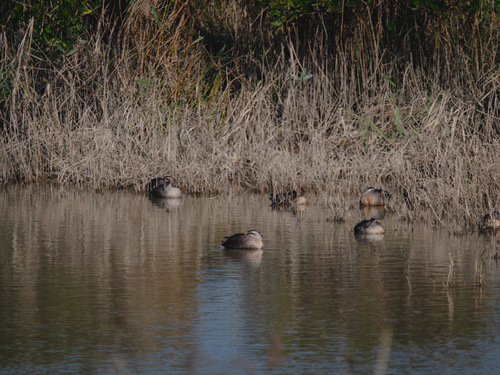 Eastern Spot-billed Duck
In breve
Il segno di campo più affidabile per separare l'Indian Spot-billed Duck dall'Eastern Spot-billed Duck è il colore e il motivo dello speculum in volo: l'Indian mostra uno speculum verde con una larga banda bianca alla base, mentre l'Eastern ha uno speculum blu (a volte descritto come blu-verde) e manca della larga banda bianca. A riposo, l'Indian Spot-billed Duck (sottospecie continentale) ha una distintiva macchia rossa alla base del becco, che è assente nell'Eastern Spot-billed Duck. L'Eastern è anche complessivamente più scuro e marrone, con un piumaggio più simile a quello del Pacific Black Duck. Entrambi sono simili in dimensioni e struttura, e entrambi i sessi si somigliano, ma un'attenta attenzione al motivo delle ali e al colore della base del becco di solito confermerà l'identificazione. I giovani di entrambi sono più opachi e marroni, quindi le viste in volo e il colore del becco sono particolarmente importanti per gli uccelli immaturi.
Consigli di identificazione
- Speculum color in flight (all ages): L'Indian Spot-billed Duck mostra uno speculum verde con una larga banda bianca alla base; l'Eastern Spot-billed Duck ha uno speculum blu e manca della larga banda bianca. Questo è il segno di campo più affidabile, specialmente in volo o quando si pettinano.
- Bill base color (adults, especially males): L'Indian Spot-billed Duck (continentale) ha una macchia rossa o rosso-arancio alla base del becco; l'Eastern Spot-billed Duck manca di questa macchia rossa. Le femmine possono avere una macchia meno evidente, ed è assente in alcune sottospecie indiane (haringtoni), quindi usare con cautela nelle regioni di confine.
- Overall plumage tone: L'Eastern Spot-billed Duck è più scuro e marrone nel complesso, con un piumaggio corporeo più simile a quello del Pacific Black Duck. L'Indian Spot-billed Duck è più chiaro, specialmente sulla testa e sul collo.
- Bill tip: Entrambi hanno un becco nero con una punta gialla, quindi questo non è diagnostico.
- Leg color: Entrambi hanno zampe e piedi di un brillante arancione a rosso corallo; non utile per la separazione.
- Juvenile appearance: I giovani di entrambi sono più marroni e opachi, ma il colore dello speculum e il segno alla base del becco (se presente) rimangono utili. Negli uccelli opachi, dare priorità al motivo delle ali e alla base del becco.
- Resting birds: A riposo, cercare le terziarie bianche che formano una striscia sul lato nell'Indian Spot-billed Duck, che potrebbe essere meno evidente nell'Eastern.
- Sex differences: Entrambi i sessi sono simili; il maschio dell'Indian Spot-billed Duck ha una macchia rossa sul becco più evidente, ma questo non è sempre affidabile per determinare il sesso o separare le specie.
- Eclipse plumage: Nessuna delle due specie ha un piumaggio di eclissi distintivo; gli adulti mantengono un aspetto simile tutto l'anno.
- Flight jizz: Entrambe le specie sono simili in volo, senza differenze note nella forma delle ali, nella proiezione primaria o nella coda.
- Habitat and range: L'Indian Spot-billed Duck è residente nel subcontinente indiano; l'Eastern Spot-billed Duck nidifica in Asia orientale/sudorientale ed è migratorio. Se visto al di fuori della zona di sovrapposizione, l'areale è un forte indizio.
- Group behavior: L'Indian Spot-billed Duck è spesso in coppie o piccoli gruppi; l'Eastern Spot-billed Duck è più probabile che venga visto in piccoli stormi, specialmente al di fuori della stagione di nidificazione, ma questo non è diagnostico.
- Voice: Entrambi suonano come il Germano reale; non usare la voce per la separazione.
- Hybrid caution: Entrambi possono ibridarsi con il Germano reale, specialmente nell'est della Russia, quindi individui strani possono mostrare caratteristiche miste. Usare più segni per un'identificazione sicura.
- Pitfalls: Attenzione all'assenza della macchia rossa sul becco in alcune sottospecie di Indian Spot-billed Duck (haringtoni) e all'aspetto più opaco dei giovani in entrambe le specie. Dare sempre priorità al colore dello speculum e alla base del becco in combinazione.
Taglia
Entrambe le specie sono molto simili in dimensioni, corrispondendo alle proporzioni del Germano reale: 55–63 cm di lunghezza, 83–95 cm di apertura alare e una massa corporea adulta di circa 1195 g (Indian Spot-billed Duck; l'Eastern è nella stessa gamma secondo Wikipedia). Non si nota alcuna differenza significativa in dimensioni o struttura tra le due.
Piumaggio
- Juveniles/immatures: Entrambi sono più marroni e opachi rispetto agli adulti, ma la differenza chiave rimane nel colore dello speculum quando l'ala è spiegata: l'Indian Spot-billed Duck (tutte le età) mostra uno speculum verde con una larga banda bianca alla base, mentre l'Eastern Spot-billed Duck ha uno speculum blu e manca della larga banda bianca. Il colore del becco dei giovani è meno brillante, ma la macchia rossa (Indian) o la sua assenza (Eastern) è ancora un indizio nei giovani più grandi.
- Adults: L'Indian Spot-billed Duck (continentale) ha una macchia rossa alla base del becco, uno speculum verde con una larga banda bianca, ed è complessivamente più chiaro. L'Eastern Spot-billed Duck manca della macchia rossa, ha uno speculum blu, ed è più scuro e marrone, con un piumaggio corporeo più vicino a quello del Pacific Black Duck. Entrambi hanno un becco nero con una punta gialla, zampe arancioni a rosso corallo, e un motivo squamoso sul corpo. Entrambi i sessi sono simili, e nessuno ha un piumaggio di eclissi distintivo.
Comportamento
Entrambe le specie sono anatre di superficie, alimentandosi principalmente galleggiando in acque poco profonde, spesso di sera o di notte. L'Indian Spot-billed Duck è solitamente visto in coppie o piccoli gruppi e può decollare quasi verticalmente dall'acqua. L'Eastern Spot-billed Duck è più gregario al di fuori della stagione di nidificazione, formando piccoli stormi. Entrambi sono capaci di tuffarsi quando minacciati, specialmente durante la muta. Non si notano differenze comportamentali significative che aiutino nella separazione sul campo.
Habitat
L'Indian Spot-billed Duck è un nidificante residente in tutte le zone umide di acqua dolce del subcontinente indiano ed è non migratorio. L'Eastern Spot-billed Duck nidifica in Asia orientale e sudorientale, è migratorio e sverna più a sud. Entrambi preferiscono laghi e paludi d'acqua dolce in campagna aperta. La sovrapposizione è limitata all'estremo est dell'India e del sud-est asiatico, quindi l'areale è un forte indizio tranne che nelle zone di sovrapposizione.
Voce
Entrambe le specie hanno richiami simili a quelli del Germano reale: le femmine emettono un forte quack, i maschi un suono più profondo e più silenzioso. Non si nota alcuna differenza diagnostica nella voce tra le due.
Indian Spot-billed Duck · Eastern Spot-billed Duck · I miei uccelli difficili