

hill blue flycatcher vs indochinese blue flycatcher
Cyornis whitei versus Cyornis sumatrensis
Jogue um quiz com hill blue flycatcher e indochinese blue flycatcher
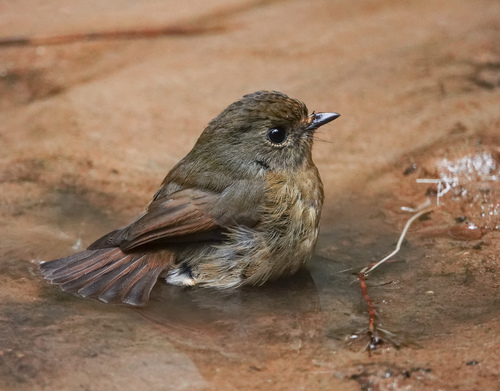 hill blue flycatcher
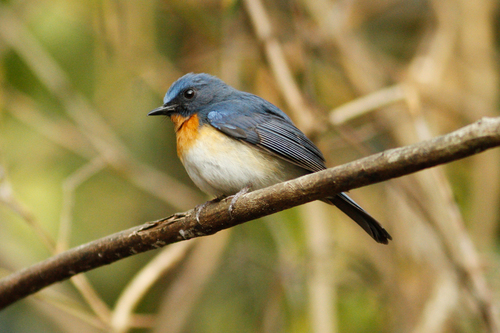 indochinese blue flycatcher
Em resumo
Separating Hill Blue Flycatcher from Indochinese Blue Flycatcher in the field is challenging, especially as both are blue-and-orange Cyornis flycatchers with overlapping ranges in Southeast Asia. The most reliable differences are subtle and often require close views: regional plumage variation in Indochinese Blue Flycatcher can cause confusion, but Hill Blue Flycatcher is generally deeper blue above and richer orange below. Juvenile and immature plumages are not well described in the sources, so adult males in fresh plumage are easiest to separate. Structure and behavior are similar, so focus on subtle color and range cues. Expect overlap and some uncertainty, especially with females and non-breeding birds.
Dicas de identificação
- Adult male plumage: Hill Blue Flycatcher is a deeper, more saturated blue above and has a richer, more extensive orange throat and breast than most Indochinese Blue Flycatchers. This is most reliable in fresh adult males.
- Regional variation in Indochinese Blue Flycatcher: Be aware that Indochinese Blue Flycatcher shows significant regional variation; southern birds can be paler and less saturated, while some northern birds approach Hill Blue Flycatcher in color intensity.
- Females and immatures: Both species have duller, less contrasting females and young birds. Separation in these plumages is extremely difficult and often unreliable without close, direct comparison.
- Juvenile/immature wing pattern: No distinctive age-specific upperwing or flight marks are described for either species, so do not rely on this feature.
- Structure and jizz: Both species share similar proportions, posture, and flight style. Bill shape, tail length, and primary projection are not useful for separation.
- Habitat and elevation: In areas of overlap, Hill Blue Flycatcher is more likely in hill and montane forests, while Indochinese Blue Flycatcher is more common in lowland and foothill forests. Use this as a supporting clue, especially if the bird is seen at higher elevations.
- Range: If seen in southern China or northeastern India, Hill Blue Flycatcher is more likely; in southern Myanmar, Malay Peninsula, or Sumatra, Indochinese Blue Flycatcher is expected. In mainland Southeast Asia, both may occur, so use caution.
- Subspecific confusion: Some Indochinese Blue Flycatcher subspecies (especially in the north) can closely resemble Hill Blue Flycatcher, so always consider the possibility of overlap and individual variation.
- Voice: No distinguishing vocal differences are provided in the sources, so do not rely on song or call for separation.
- Season: Both species are resident or short-distance migrants in their respective ranges; seasonal movement is not a reliable separation tool.
- Pitfalls with Tickell's Blue Flycatcher: Both species were previously considered conspecific with Tickell's Blue Flycatcher, so beware of confusion with that species in overlapping areas.
- Lighting conditions: Blue and orange tones can appear different depending on light and wear; always try for multiple views and angles.
- Photographic documentation: Given the subtlety of differences, obtaining photos for later review or expert consultation is recommended when possible.
- Community input: If uncertain, seek local expertise or community input, especially in regions where both species may occur together.
- Accept uncertainty: In many cases, especially with females and immatures, it may not be possible to confidently identify to species in the field.
Tamanho
Both species are similar in size and structure, typical of medium-sized Cyornis flycatchers, and no distinguishing size or mass differences are noted in the available sources. Do not rely on size for separation in the field.
Plumagem
No detailed notes are available on juvenile or immature upperwing patterns for either species, so age-specific flight marks cannot be used reliably. For adults, Hill Blue Flycatcher is typically a more intense, deeper blue on the upperparts and has a richer, more extensive orange on the throat and breast, while Indochinese Blue Flycatcher shows more regional variation and can appear paler or less saturated, especially in southern populations. Females and immatures of both species are duller and more difficult to separate, as both show muted blue and orange tones. Subspecific variation in Indochinese Blue Flycatcher may cause some individuals to closely resemble Hill Blue Flycatcher, so caution is needed.
Comportamento
Both species behave as typical forest flycatchers, frequently perching upright and sallying for insects from low to mid-level perches. No behavioral differences are noted that would reliably separate the two in the field.
Habitat
Hill Blue Flycatcher is found in southern China, northeastern India, and Southeast Asia, typically in hill and montane forests. Indochinese Blue Flycatcher ranges from southern Myanmar and the Malay Peninsula to Indochina and northeastern Sumatra, often in lowland and hill forests. There is some overlap in Southeast Asia, but Hill Blue Flycatcher is more likely at higher elevations, while Indochinese Blue Flycatcher is more widespread in lowland and foothill forests. Use habitat and elevation as supporting clues, not primary identifiers.
hill blue flycatcher · indochinese blue flycatcher · Minhas aves difíceis