

hammond's flycatcher vs western flycatcher
Empidonax hammondii versus Empidonax difficilis
Jogue um quiz com hammond's flycatcher e western flycatcher
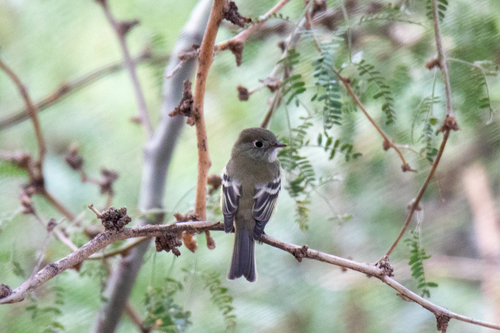 hammond's flycatcher
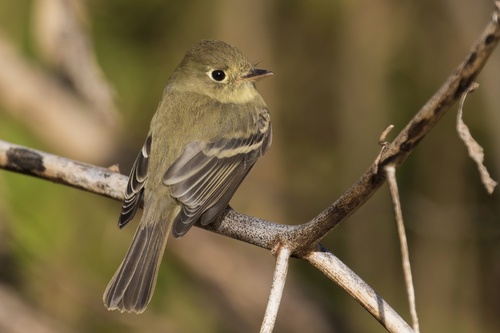 western flycatcher
Em resumo
A maneira mais confiável de separar o hammond's flycatcher do western flycatcher é pela voz, mas diferenças sutis de plumagem e estrutura podem ajudar, especialmente quando os chamados não são ouvidos. Os pássaros imaturos de ambas as espécies parecem muito semelhantes, mas o hammond's tende a ter uma barriga mais cinza, menos amarelada, e uma aparência mais compacta, de cauda curta e bico pequeno. O western flycatcher geralmente apresenta uma barriga amarela mais brilhante e um anel ocular em forma de gota, com um bico ligeiramente mais longo e mais largo. Ambas as espécies se sobrepõem em habitat e tamanho, portanto, atenção cuidadosa a essas marcas sutis e quaisquer vocalizações é essencial para uma identificação confiante.
Dicas de identificação
- Barras alares juvenis/imaturas: Ambas as espécies têm barras alares largas e amareladas quando jovens, então isso não é diagnóstico, mas verifique os tons de cor geral.
- Cor da parte inferior: O hammond's flycatcher é geralmente mais branco embaixo, com apenas um leve tom amarelo nas laterais da barriga, enquanto o western flycatcher é distintamente mais amarelado embaixo, especialmente na barriga. Isso é mais aparente em boa luz e em adultos.
- Forma do anel ocular: O hammond's tem um anel ocular branco, redondo e conspícuo; o western flycatcher apresenta um anel ocular em forma de gota que muitas vezes parece pontudo ou estendido abaixo do olho. Isso pode ser sutil, mas é uma marca útil em vistas próximas.
- Tamanho e forma do bico: O hammond's tem um bico menor e mais curto (fêmeas especialmente, que podem ser mais curtas e largas), enquanto o bico do western é ligeiramente mais longo e mais largo. Isso é melhor julgado com experiência ou comparação lado a lado.
- Comprimento da cauda e aparência: O hammond's parece mais compacto e de cauda curta, enquanto o western pode parecer ligeiramente de cauda mais longa e mais alongada. Essa é uma diferença sutil e pode ser afetada pela postura.
- Cor da parte superior: O hammond's é oliva-cinza por cima, o western é mais oliva ou oliva-esverdeado, mas isso pode ser afetado pela luz e desgaste.
- Lavagem do peito: O hammond's frequentemente mostra uma lavagem cinza no peito, enquanto o western é mais uniformemente amarelado embaixo.
- Bordas secundárias (avançado): O western flycatcher pode mostrar bordas mais amareladas nas secundárias, mas isso é sutil e nem sempre visível no campo.
- Vocalizações: Se você ouvir o pássaro, use a voz como sua pista principal. O hammond's dá um chamado agudo 'peek' e uma canção rouca e multipartida; o western dá uma série rápida de 'pseet, ptsick, seet' e chamadas distintas 'pit pete' ou 'tse-seet'.
- Contexto do habitat: Se o pássaro estiver em uma floresta conífera densa e madura, alta na copa, é mais provável que seja o hammond's; se estiver perto de água corrente em florestas mistas ou decíduas, é mais provável que seja o western. No entanto, ambos podem ocorrer em habitats semelhantes.
- Empoleirado vs. em voo: Ambas as espécies frequentemente se empoleiram eretas e saem para pegar insetos, mas o hammond's pode ser visto mais alto na copa.
- Sobreposição de distribuição: Ambas as espécies se reproduzem no oeste da América do Norte com distribuições sobrepostas, portanto, não confie apenas na distribuição para identificação.
- Sexo e estação: As fêmeas do hammond's podem ter um bico ligeiramente mais curto e mais largo, mas as diferenças sexuais são sutis e geralmente não são úteis no campo.
- Confusão de imaturos: Os pássaros imaturos de ambas as espécies são muito semelhantes; concentre-se na cor da parte inferior e na forma do anel ocular, e tente obter vocalizações para confirmação.
- Quando em dúvida: Se as marcas visuais forem ambíguas, priorize a voz e o contexto do habitat, mas seja honesto sobre a incerteza—muitos Empidonax são melhor deixados não identificados sem evidência vocal.
Tamanho
Tanto o hammond's quanto o western flycatcher são muito próximos em tamanho, com o hammond's medindo 12–14 cm de comprimento e o western flycatcher semelhante. Ambos têm caudas curtas e bicos pequenos, mas o hammond's é tipicamente um pouco mais compacto no geral. O peso e a envergadura são quase idênticos, então o tamanho sozinho não é um separador confiável no campo.
Plumagem
Pássaros juvenis e imaturos de ambas as espécies são extremamente semelhantes, com barras alares amareladas e padrão geral de Empidonax. O hammond's flycatcher (adultos e imaturos) apresenta partes superiores oliva-cinza, um anel ocular branco e partes inferiores esbranquiçadas com peito lavado de cinza e apenas um leve tom amarelado nas laterais da barriga. Os imaturos têm barras alares mais largas e mais amareladas, mas de outra forma se assemelham aos adultos. Os adultos e imaturos do western flycatcher são mais oliva por cima e notavelmente mais amarelos embaixo, especialmente na barriga, e o anel ocular é em forma de gota em vez de redondo. Estudos de DNA notam bordas amareladas nas secundárias como uma marca para o western, mas isso é sutil e nem sempre visível no campo. Ambos têm barras alares brancas e padrões de parte superior semelhantes, então concentre-se na cor da parte inferior e na forma do anel ocular para pistas de plumagem.
Comportamento
Ambas as espécies se alimentam saindo de poleiros para pegar insetos em voo (caçando) e por meio da coleta de folhagem. O hammond's frequentemente se empoleira mais alto na copa, enquanto o western flycatcher pode ser encontrado mais baixo e mais perto da água, mas isso nem sempre é confiável. Ambos podem pairar brevemente enquanto forrageiam. O comportamento não é um separador forte entre esses dois.
Habitat
Ambas as espécies se reproduzem em florestas coníferas e mistas do oeste da América do Norte, frequentemente em áreas sobrepostas. O hammond's está mais estritamente associado a florestas coníferas maduras, especialmente mais alto na copa, enquanto o western flycatcher é mais flexível, utilizando tanto florestas coníferas quanto decíduas, frequentemente perto de água corrente e em elevações mais baixas. No entanto, o habitat sozinho não é diagnóstico devido à sobreposição e variabilidade.
Voz
As vocalizações são o separador de campo mais confiável. O hammond's flycatcher dá uma canção rouca e multipartida (ssilit, greeep, silit, pweet) e um chamado agudo 'peek'. O western flycatcher tem uma série rápida de notas (pseet, ptsick, seet), com pássaros do Pacífico dando um 'ptik' ou 'ptsick' distinto onde a primeira sílaba é mais aguda. O chamado típico é um 'pit pete' ou 'tse-seet' alto, às vezes um 'tsweep' ascendente ou 'tseeweep' arrastado. Se você ouvir o pássaro, use a voz como sua ferramenta principal de identificação.
hammond's flycatcher · western flycatcher · Minhas aves difíceis