
Hammond's Flycatcher vs Western Flycatcher
Empidonax hammondii contro Empidonax difficilis
Fai un quiz con Hammond's Flycatcher e Western Flycatcher
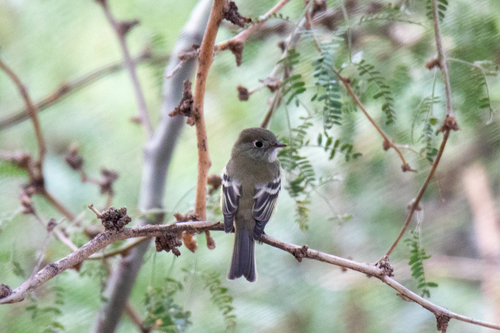 Hammond's Flycatcher
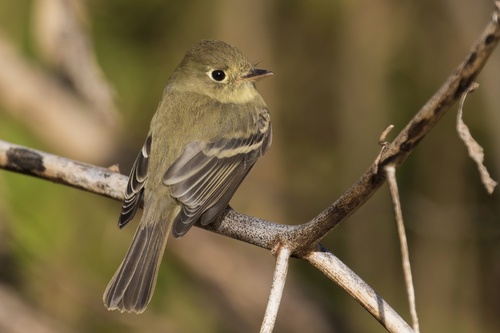 Western Flycatcher
In breve
Il modo più affidabile per separare Hammond's Flycatcher da Western Flycatcher è attraverso il canto, ma sottili differenze nel piumaggio e nella struttura possono aiutare, specialmente quando non si sentono i richiami. Gli uccelli immaturi di entrambe le specie sembrano molto simili, ma Hammond's tende ad avere un ventre più grigio, meno giallo, e un aspetto più compatto, con una coda corta e un becco piccolo. Western Flycatcher di solito mostra un ventre giallo più brillante e un anello oculare a forma di goccia, con un becco leggermente più lungo e più largo. Entrambe le specie si sovrappongono in habitat e dimensioni, quindi prestare attenzione a questi segni sottili e a eventuali vocalizzazioni è essenziale per un'identificazione sicura.
Consigli di identificazione
- Juvenile/immature wing bars: Entrambe le specie hanno ampie barre alari color crema quando sono giovani, quindi questo non è diagnostico, ma controlla i toni di colore complessivi.
- Underpart color: Hammond's Flycatcher è generalmente più bianco sotto con solo una leggera sfumatura gialla sui lati del ventre, mentre Western Flycatcher è decisamente più giallastro sotto, specialmente sul ventre. Questo è più evidente in buona luce e sugli adulti.
- Eye ring shape: Hammond's ha un anello oculare bianco rotondo e conspicuo; Western Flycatcher mostra un anello oculare a forma di goccia che spesso appare appuntito o allungato sotto l'occhio. Questo può essere sottile ma è un segno utile in visioni ravvicinate.
- Bill size and shape: Hammond's ha un becco più piccolo e corto (soprattutto le femmine, che possono essere più corte e larghe), mentre il becco di Western è leggermente più lungo e più largo. Questo è meglio giudicato con esperienza o confronto affiancato.
- Tail length and jizz: Hammond's appare più compatto e con una coda corta, mentre Western può sembrare leggermente più lungo e più allungato. Questa è una differenza sottile e può essere influenzata dalla postura.
- Upperpart color: Hammond's è grigio-oliva sopra, Western è più oliva o verde-oliva, ma questo può essere influenzato dalla luce e dall'usura.
- Breast wash: Hammond's mostra spesso una sfumatura grigia sul petto, mentre Western è più uniformemente giallastro sotto.
- Secondary edging (advanced): Western Flycatcher può mostrare un bordo più color crema sulle secondarie, ma questo è sottile e non sempre visibile sul campo.
- Vocalizations: Se senti l'uccello, usa il canto come tuo indizio principale. Hammond's emette un 'peek' acuto e un canto rauco e multiforme; Western emette una serie rapida di 'pseet, ptsick, seet' e distintivi richiami 'pit pete' o 'tse-seet'.
- Habitat context: Se l'uccello si trova in una foresta conifera densa e matura in alto nella chioma, è più probabile che sia Hammond's; se vicino a corsi d'acqua in boschi misti o decidui, è più probabile che sia Western. Tuttavia, entrambi possono verificarsi in habitat simili.
- Perched vs. in flight: Entrambe le specie spesso si posano erette e si lanciano per catturare insetti, ma Hammond's può essere visto più in alto nella chioma.
- Range overlap: Entrambe le specie nidificano nell'America del Nord occidentale con aree sovrapposte, quindi non fare affidamento solo sull'area per l'ID.
- Sex and season: Le femmine di Hammond's possono avere un becco leggermente più corto e più largo, ma le differenze sessuali sono sottili e di solito non sono utili sul campo.
- Immature confusion: Gli uccelli immaturi di entrambe le specie sono molto simili; concentrati sul colore della parte inferiore e sulla forma dell'anello oculare, e cerca di ottenere vocalizzazioni per conferma.
- When in doubt: Se i segni visivi sono ambigui, dai priorità al canto e al contesto dell'habitat, ma sii onesto riguardo all'incertezza—molti Empidonax sono meglio lasciati non identificati senza prove vocali.
Taglia
Entrambi Hammond's e Western Flycatchers sono molto simili in dimensioni, con Hammond's che misura 12–14 cm di lunghezza e Western Flycatcher simile. Entrambi hanno code corte e becchi piccoli, ma Hammond's è tipicamente un po' più compatto nel complesso. Peso e apertura alare sono quasi identici, quindi la dimensione da sola non è un separatore affidabile sul campo.
Piumaggio
Gli uccelli giovanili e immaturi di entrambe le specie sono estremamente simili, con barre alari color crema e un modello complessivo di Empidonax. Hammond's Flycatcher (adulti e immaturi) mostra parti superiori grigio-olive, un anello oculare bianco e parti inferiori bianche con un petto grigio e solo una leggera sfumatura giallastra sui lati del ventre. Gli immaturi hanno barre alari più ampie e più color crema, ma altrimenti somigliano agli adulti. Gli adulti e gli immaturi di Western Flycatcher sono più oliva sopra e notevolmente più gialli sotto, specialmente sul ventre, e l'anello oculare è a forma di goccia piuttosto che rotondo. Gli studi sul DNA notano un bordo color crema sulle secondarie come un segno per Western, ma questo è sottile e non sempre visibile sul campo. Entrambi hanno barre alari bianche e modelli simili sulle ali superiori, quindi concentrati sul colore della parte inferiore e sulla forma dell'anello oculare per indizi sul piumaggio.
Comportamento
Entrambe le specie si nutrono lanciandosi da posatoi per catturare insetti in volo (hawking) e raccogliendo dalla vegetazione. Hammond's spesso si posa più in alto nella chioma, mentre Western Flycatcher può essere trovato più in basso e vicino all'acqua, ma questo non è sempre affidabile. Entrambi possono sospendersi brevemente mentre cercano cibo. Il comportamento non è un forte separatore tra questi due.
Habitat
Entrambe le specie nidificano in foreste conifere e miste dell'America del Nord occidentale, spesso in aree sovrapposte. Hammond's è più strettamente associato a foreste conifere mature, specialmente più in alto nella chioma, mentre Western Flycatcher è più flessibile, utilizzando sia boschi coniferi che decidui, spesso vicino a corsi d'acqua e a quote più basse. Tuttavia, l'habitat da solo non è diagnostico a causa della sovrapposizione e della variabilità.
Voce
Le vocalizzazioni sono il separatore più affidabile sul campo. Hammond's Flycatcher emette un canto rauco e multiforme (ssilit, greeep, silit, pweet) e un richiamo acuto 'peek'. Western Flycatcher ha una serie rapida di note (pseet, ptsick, seet), con gli uccelli del Pacifico che emettono un distintivo 'ptik' o 'ptsick' dove la prima sillaba è più acuta. Il richiamo tipico è un forte 'pit pete' o 'tse-seet', a volte un 'tsweep' ascendente o un 'tseeweep' slurato. Se senti l'uccello, usa il canto come tuo strumento principale per l'ID.
Hammond's Flycatcher · Western Flycatcher · I miei uccelli difficili