

gray teal vs crested pigeon
Anas gracilis versus Ocyphaps lophotes
Jogue um quiz com gray teal e crested pigeon
 gray teal
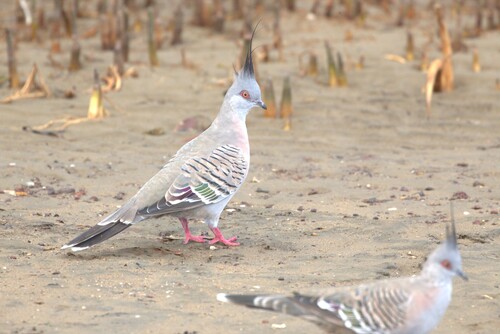 crested pigeon
Em resumo
A marca de campo mais confiável para separar gray teal de crested pigeon é a estrutura geral e o jizz: gray teal é um pato mergulhador compacto e de pescoço curto, com um bico azul-acinzentado e pés palmados, enquanto crested pigeon é um pombo esguio e de cauda longa, com uma crista preta proeminente e um anel ocular laranja. Em voo, gray teal mostra flashes brancos e verdes na asa, enquanto crested pigeon tem asas com listras pretas e um bronzeado iridescente, produzindo um som característico de assobio com suas asas. Gray teal juvenil pode ser mais pálido, com olhos marrons opacos, mas nunca mostra uma crista ou o padrão de asa do pombo. Ambas as espécies podem ser vistas em bandos e habitats abertos, mas sua forma corporal, estilo de voo e características da cabeça são inconfundivelmente diferentes.
Dicas de identificação
- Crista: Apenas crested pigeon tem uma crista preta longa e esbelta na cabeça, mantida ereta tanto em repouso quanto em movimento. Gray teal nunca mostra uma crista em nenhuma idade.
- Forma e cor do bico: Gray teal tem um bico azul-acinzentado, plano e espatulada, típico de patos; crested pigeon tem um bico curto, esbelto e semelhante ao de um pombo.
- Cor dos olhos: O gray teal adulto tem uma íris carmesim, especialmente nos machos; os juvenis têm um olho marrom opaco. Crested pigeon tem um anel periorbital laranja brilhante, visível em todas as idades.
- Padrão de asa em voo: Gray teal (todas as idades) mostra flashes brancos e verdes na asa; crested pigeon tem asas com listras pretas e bronzeado iridescente (adultos) ou mais opacas (imaturos), mas nunca flashes brancos/verdes.
- Padrão da cabeça: Gray teal tem um rosto liso ou levemente riscado, com uma coroa escura e queixo/garganta/bochecha pálidos; crested pigeon tem uma cabeça cinza uniforme com a crista óbvia e anel ocular laranja.
- Forma da cauda: Crested pigeon tem uma cauda longa e afilada, frequentemente levantada ao pousar; gray teal tem uma cauda curta e arredondada, típica de patos.
- Pernas e pés: Gray teal tem pés palmados para nadar; crested pigeon tem pés não palmados para andar/correr.
- Forma do corpo e postura: Gray teal é compacto, atarracado e fica baixo na água; crested pigeon é esguio, ereto e anda/corre em terra.
- Estilo de voo: Gray teal voa baixo sobre a água com batidas rápidas das asas; crested pigeon decola com um alto assobio das asas e voa diretamente, frequentemente sobre a terra.
- Vocalizações: Ouça os grasnidos e preeps do teal, especialmente à noite; o som mais óbvio de crested pigeon é o assobio de suas asas ao decolar, não um chamado vocal.
- Confusão juvenil: Os jovens gray teal são mais pálidos, especialmente na cabeça, e têm olhos marrons opacos, mas ainda carecem de qualquer crista ou características semelhantes a um pombo. O imaturo crested pigeon carece do bronzeado iridescente nas asas, mas sempre mostra a crista e as asas listradas.
- Contexto do habitat: Se o pássaro está nadando ou mergulhando em água aberta, é um gray teal. Se está andando ou correndo no chão, especialmente longe da água, é um crested pigeon.
- Sexo e idade: Ambas as espécies têm plumagem semelhante em ambos os sexos; apenas as diferenças relacionadas à idade são relevantes (cor dos olhos em gray teal, iridescência das asas em crested pigeon).
- Comportamento em bando: Ambas podem ser gregárias, mas bandos mistos são improváveis. Observe o contexto: patos se reúnem na água, pombos em terra.
- Armadilhas comuns: Em luz fraca, o rosto liso de um gray teal e a falta de crista são fundamentais; nunca confunda a silhueta ereta e com crista de um pombo com a de um pato, mesmo que a plumagem seja opaca ou o pássaro esteja à distância.
Tamanho
Gray teal é um pato de tamanho médio, geralmente menor e mais compacto do que a maioria dos patos domésticos, mas com um corpo robusto e cauda relativamente curta. Crested pigeon é ligeiramente mais longo em comprimento corporal (30–34 cm segundo [wikipedia]), mas muito mais esguio, com uma cauda longa e afilada e uma postura mais ereta. As proporções do pombo são mais alongadas e delicadas em comparação com a silhueta arredondada e atarracada do teal. Ambas as espécies são semelhantes em comprimento, mas o pato é mais robusto e de corpo mais pesado, enquanto o pombo é esguio e leve.
Plumagem
Gray teal juvenil é mais pálido em geral, especialmente na cabeça, e tem um olho marrom opaco (não a íris carmesim dos adultos). Suas asas em todas as idades mostram flashes brancos e verdes quando abertas, mas, de outra forma, a plumagem é marrom manchado com um rosto liso ou levemente riscado, uma coroa escura e um queixo/garganta/bochecha pálidos. Os imaturos de crested pigeon são mais opacos do que os adultos e carecem da iridescência bronzeada nas asas, mas ainda mostram listras pretas nas asas e a crista característica. Os adultos têm plumagem cinza tingida de marrom, rosa e verde, um anel ocular laranja brilhante e iridescência marrom, roxa, azul e verde nas primárias. O padrão de asa do pombo é sempre listrado e bronzeado, nunca mostrando os flashes brancos/verdes do pato. Nenhuma idade ou sexo de qualquer uma das espécies pode ser confundido com o outro em termos de padrão da cabeça: apenas o pombo tem uma crista e anel ocular laranja; apenas o teal tem uma cabeça lisa e (nos adultos) uma íris carmesim.
Comportamento
Gray teal são patos mergulhadores, frequentemente vistos nadando, se alimentando na água ou descansando na beira da água. Eles são altamente gregários e podem formar grandes bandos, especialmente após a reprodução ou durante a muda. O voo é direto e baixo sobre a água, com batidas rápidas das asas. Crested pigeons são forrageadores terrestres, frequentemente vistos andando ou correndo no chão com a crista ereta. Quando assustados, decolam com um rápido e assobiado batida de asas e voam de maneira forte e direta, frequentemente pousando com a cauda levantada. Ambas as espécies podem ser sociais, mas seu movimento e postura são totalmente diferentes: patos nadam e mergulham, pombos andam e correm.
Habitat
Gray teal são encontrados em pântanos abertos, lagos e charcas, geralmente perto de água doce, mas às vezes em estuários após a reprodução. Eles são amplamente distribuídos na Austrália e na Nova Zelândia. Crested pigeon prefere campos gramados levemente arborizados, parques rurais e urbanos, jardins e terras agrícolas, frequentemente longe da água. Seu alcance se expandiu com a agricultura, e agora são comuns em muitas paisagens abertas modificadas pelo homem. Embora ambas possam ser vistas em áreas abertas, apenas o teal é rotineiramente encontrado na água.
Voz
Gray teal são vocais, especialmente à noite: os machos emitem um suave 'preep', as fêmeas um alto grasnido. Crested pigeon geralmente é silencioso quando assustado, mas suas asas fazem um som característico de assobio ao decolar devido a uma pena primária modificada. Durante o acasalamento, os machos emitem um suave chamado de hoot enquanto se balançam. No campo, os grasnidos e preeps do teal são muito diferentes do assobio mecânico das asas do pombo.