
Gray Teal vs Crested Pigeon
Anas gracilis contro Ocyphaps lophotes
Fai un quiz con Gray Teal e Crested Pigeon
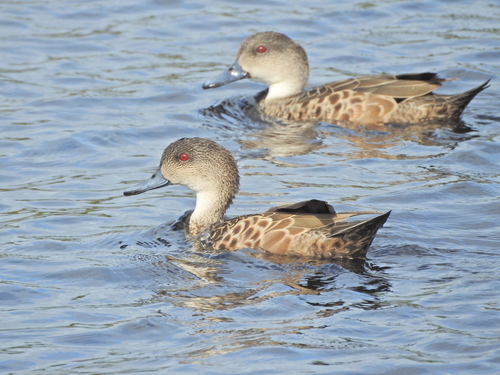 Gray Teal
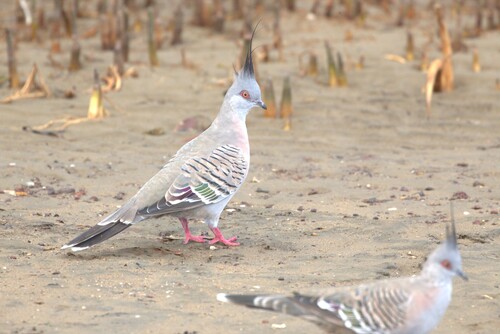 Crested Pigeon
In breve
Il segno distintivo più affidabile per separare il Gray Teal dal Crested Pigeon è la struttura generale e il jizz: il Gray Teal è un'anatra dabbling compatta e dal collo corto con un becco blu-grigio e piedi palmati, mentre il Crested Pigeon è un piccione snello e dalla coda lunga con una prominente cresta nera e un anello arancione attorno all'occhio. In volo, il Gray Teal mostra lampi bianchi e verdi sulle ali, mentre il Crested Pigeon ha ali barrate di nero con una bronzatura iridescente e produce un suono distintivo di fischio con le sue ali. I giovani Gray Teal possono essere più chiari con occhi marroni opachi, ma non mostrano mai una cresta o il motivo delle ali del piccione. Entrambe le specie possono essere viste in stormi e habitat aperti, ma la loro forma corporea, stile di volo e caratteristiche della testa sono indiscutibilmente diverse.
Consigli di identificazione
- Crest: Solo il Crested Pigeon ha una lunga, sottile cresta nera sulla testa, mantenuta eretta sia a riposo che in movimento. Il Gray Teal non mostra mai una cresta a nessuna età.
- Bill shape and color: Il Gray Teal ha un becco blu-grigio, piatto, spatolato tipico delle anatre; il Crested Pigeon ha un becco corto, snello e simile a quello di un piccione.
- Eye color: L'adulto Gray Teal ha un'iride cremisi, specialmente nei maschi; i giovani hanno un occhio marrone opaco. Il Crested Pigeon ha un anello periorbitale arancione brillante, visibile in tutte le età.
- Wing pattern in flight: Il Gray Teal (tutte le età) mostra lampi bianchi e verdi sulle ali; il Crested Pigeon ha ali barrate di nero con bronzatura iridescente (adulti) o più opache (immaturi), ma non mostra mai lampi bianchi/verdi.
- Head pattern: Il Gray Teal ha un volto semplice o leggermente striato con una corona scura e un mento/gola/guancia chiara; il Crested Pigeon ha una testa grigia uniforme con la cresta evidente e l'anello arancione attorno all'occhio.
- Tail shape: Il Crested Pigeon ha una lunga coda affusolata, spesso sollevata quando atterra; il Gray Teal ha una coda corta e arrotondata tipica delle anatre.
- Legs and feet: Il Gray Teal ha piedi palmati per nuotare; il Crested Pigeon ha piedi non palmati per camminare/correre.
- Body shape and posture: Il Gray Teal è compatto, tozzo e si siede basso nell'acqua; il Crested Pigeon è snello, eretto e cammina/corre sulla terra.
- Flight style: Il Gray Teal vola basso sull'acqua con battiti d'ali rapidi; il Crested Pigeon decolla con un forte fischio delle ali e vola direttamente, spesso sopra la terra.
- Vocalizations: Ascolta i quack e i preep del teal, specialmente di notte; il suono più ovvio del Crested Pigeon è il fischio delle sue ali al decollo, non un richiamo vocale.
- Juvenile confusion: I giovani Gray Teal sono più chiari, specialmente sulla testa, e hanno occhi marroni opachi, ma mancano comunque di qualsiasi cresta o caratteristiche simili a quelle di un piccione. Il Crested Pigeon immaturo non ha l'iridescenza bronzata sulle ali ma mostra sempre la cresta e le ali barrate.
- Habitat context: Se l'uccello sta nuotando o dabbling su acqua aperta, è un Gray Teal. Se sta camminando o correndo a terra, specialmente lontano dall'acqua, è un Crested Pigeon.
- Sex and age: Entrambe le specie hanno un piumaggio simile in entrambi i sessi; solo le differenze legate all'età sono rilevanti (colore degli occhi nel Gray Teal, iridescenza delle ali nel Crested Pigeon).
- Flock behavior: Entrambi possono essere gregari, ma stormi misti sono improbabili. Fai attenzione al contesto: le anatre si radunano sull'acqua, i piccioni sulla terra.
- Common pitfalls: In scarsa luce, il volto semplice del Gray Teal e la mancanza di cresta sono fondamentali; non confondere mai il profilo eretto e crestato di un piccione con un'anatra, anche se il piumaggio è opaco o l'uccello è a distanza.
Taglia
Il Gray Teal è un'anatra di dimensioni medie, generalmente più piccola e compatta rispetto alla maggior parte delle anatre domestiche, ma con un corpo massiccio e una coda relativamente corta. Il Crested Pigeon è leggermente più lungo in lunghezza corporea (30–34 cm secondo [wikipedia]), ma molto più snello, con una coda lunga e affusolata e una postura più eretta. Le proporzioni del piccione sono più allungate e delicate rispetto alla silhouette arrotondata e tozza del teal. Entrambe le specie sono simili in lunghezza, ma l'anatra è più robusta e pesante, mentre il piccione è snello e leggero.
Piumaggio
I giovani Gray Teal sono complessivamente più chiari, specialmente sulla testa, e hanno un occhio marrone opaco (non l'iride cremisi degli adulti). Le loro ali in tutte le età mostrano lampi bianchi e verdi quando sono spiegate, ma altrimenti il piumaggio è marrone maculato con un volto semplice o leggermente striato, una corona scura e un mento/gola/guancia chiara. I giovani Crested Pigeon sono più opachi degli adulti e mancano dell'iridescenza bronzata sulle ali, ma mostrano comunque strisce nere sulle ali e la caratteristica cresta. Gli adulti hanno un piumaggio grigio con sfumature di marrone, rosa e verde, un anello attorno all'occhio arancione brillante e iridescenze marroni, viola, blu e verdi sulle primarie. Il motivo delle ali del piccione è sempre barrato e bronzato, non mostrando mai i lampi bianchi/verdi dell'anatra. Nessuna età o sesso di entrambe le specie può essere confuso con l'altro in termini di motivo della testa: solo il piccione ha una cresta e un anello arancione attorno all'occhio; solo il teal ha una testa semplice e (negli adulti) un'iride cremisi.
Comportamento
I Gray Teal sono anatre dabbling, spesso viste nuotare, nutrirsi sull'acqua o oziare a riva. Sono altamente gregari e possono formare grandi stormi, specialmente dopo la riproduzione o durante la muta. Il volo è diretto e basso sull'acqua, con battiti d'ali rapidi. I Crested Pigeons sono foraggiatori terrestri, spesso visti camminare o correre a terra con la cresta eretta. Quando vengono spaventati, decollano con un battito d'ali rapido e fischiante e volano in modo forte e diretto, spesso atterrando con la coda sollevata. Entrambe le specie possono essere sociali, ma il loro movimento e postura sono completamente diversi: le anatre nuotano e dabblano, i piccioni camminano e corrono.
Habitat
I Gray Teal si trovano in zone umide aperte, laghi e paludi, di solito vicino a acqua dolce ma talvolta in estuari dopo la riproduzione. Sono diffusi in Australia e Nuova Zelanda. Il Crested Pigeon preferisce praterie leggermente boschive, parchi rurali e urbani, giardini e terreni agricoli, spesso lontano dall'acqua. Il loro raggio si è espanso con l'agricoltura e ora sono comuni in molti paesaggi aperti modificati dall'uomo. Anche se entrambe le specie possono essere viste in campagna aperta, solo il teal è regolarmente trovato sull'acqua.
Voce
I Gray Teal sono vocali, specialmente di notte: i maschi emettono un 'preep' morbido, le femmine un forte quack. Il Crested Pigeon è solitamente silenzioso quando viene spaventato, ma le sue ali producono un suono distintivo di fischio al decollo a causa di una penna primaria modificata. Durante il corteggiamento, i maschi emettono un richiamo morbido mentre si muovono. Sul campo, i quack e i preep del teal sono molto diversi dal fischio meccanico delle ali del piccione.